Christmas tables do not always need deep reds, heavy greenery, or layers of traditional decorations to feel festive. In a coastal Mediterranean home, the celebration can take a lighter direction, shaped by natural light, pale surfaces, sea-inspired colors, and the relaxed beauty of the landscape outside.
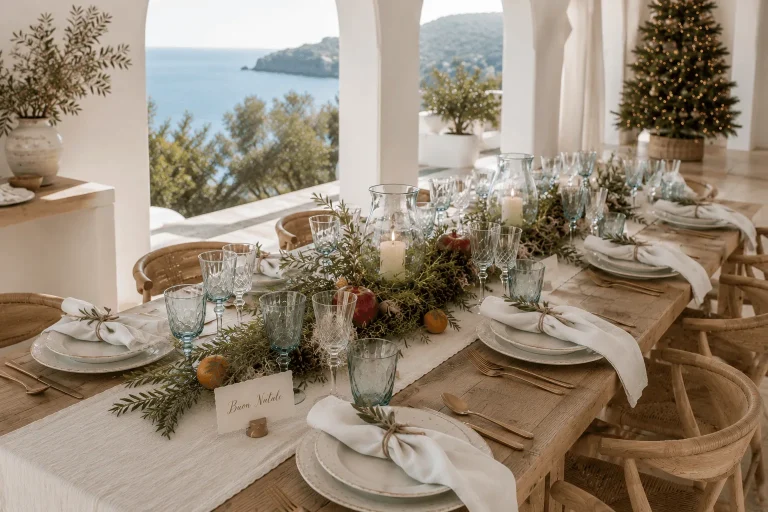
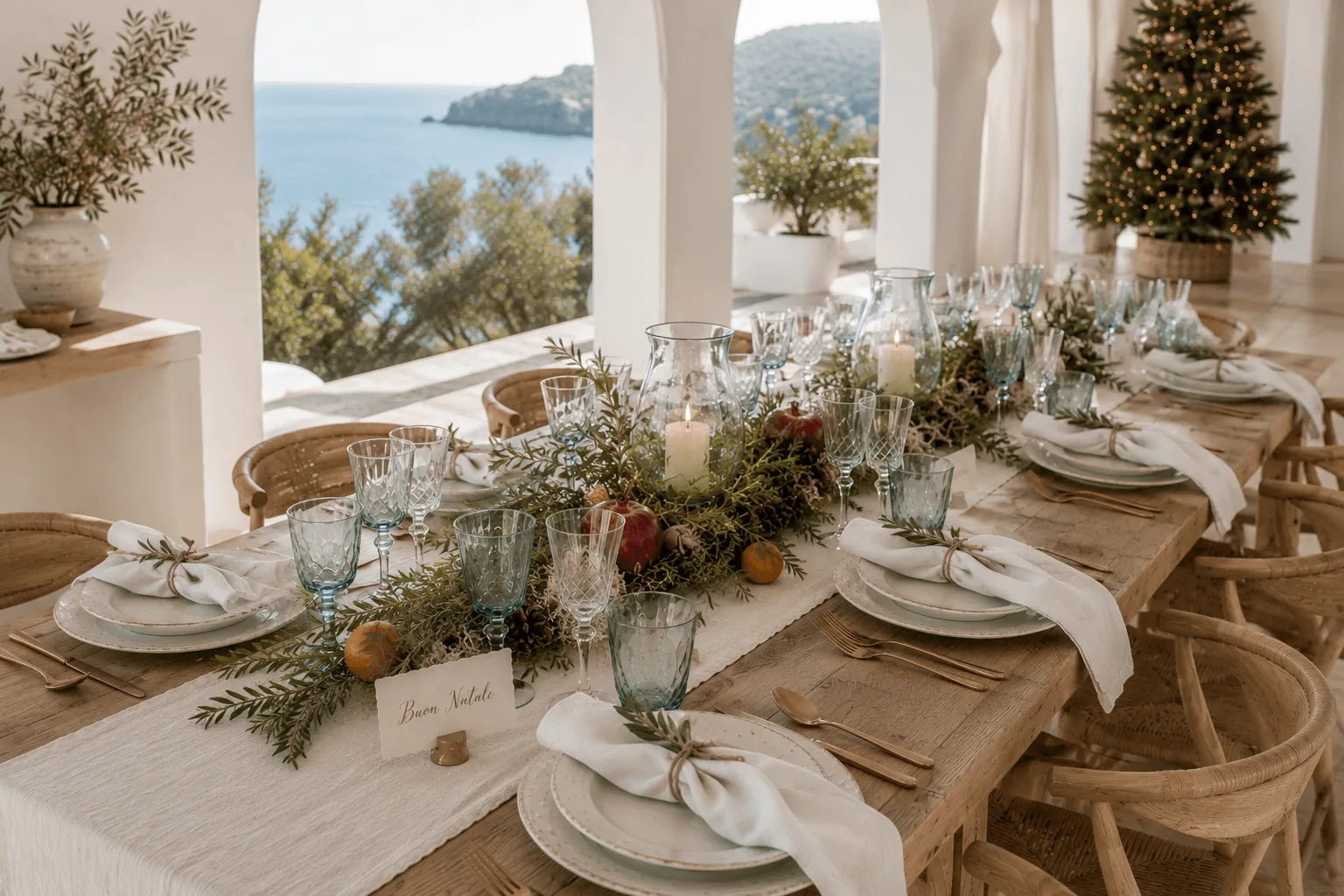
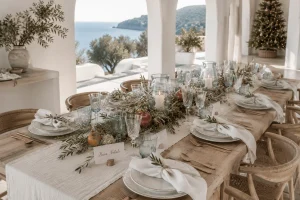
This coastal Mediterranean Christmas table setting brings together many of those qualities. Whitewashed architecture creates a luminous backdrop, while a weathered wood table, natural linen, olive branches, soft blue glassware, and candlelight give the setting warmth and depth. The result feels festive without becoming overly decorated elegant, relaxed, and closely connected to its surroundings.
Instead of treating Christmas as something that needs to be added on top of the room, this approach allows the holiday atmosphere to grow naturally from the materials and colors already present. A few seasonal details, such as pomegranates, citrus fruits, pinecones, greenery, and candles, are enough to make the table feel special.
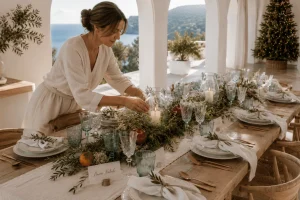
One thing designers often notice about Mediterranean interiors is how much their beauty depends on restraint. The materials are allowed to speak for themselves. Here, the same principle makes the Christmas table feel particularly inviting: the linen does not compete with the wood, the blue glass does not overpower the white setting, and the greenery adds movement without turning the centerpiece into a formal arrangement.
The effect is a Christmas table that feels bright during the day and warm as the candles begin to glow a setting made for long lunches, relaxed dinners, and gatherings where the landscape beyond the windows becomes part of the experience.
What Makes a Coastal Mediterranean Christmas Table Feel Different
A coastal Mediterranean Christmas table has a distinct sense of place. It is festive, but the celebration is filtered through the visual language of the coast: bright interiors, natural materials, muted colors, organic shapes, and a strong relationship with outdoor light.
This is what separates the look from a more traditional Christmas table. Rather than building the composition around a single holiday color, the design begins with the environment.
White surfaces reflect the sunlight. Pale wood introduces warmth. Linen softens the table. Olive branches bring an unmistakable Mediterranean reference, while blue-gray glassware quietly echoes the sea beyond the windows.
The Christmas elements are then woven into this existing palette.
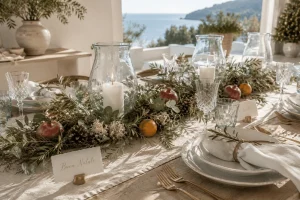
Pomegranates add a rich seasonal note without introducing an overwhelming amount of red. Citrus fruits bring a warmer accent and reinforce the connection to the Mediterranean landscape. Pinecones provide a subtle reference to winter, while candles create a sense of intimacy as the natural light changes throughout the day.
The result is neither strictly rustic nor formally elegant. It sits somewhere between the two.
It is a table that feels carefully considered but still comfortable enough for real people to sit around it.
That balance is important. A beautiful Christmas table should not feel as though guests are afraid to touch anything.
Here, the natural materials help create that sense of ease. The wood table has visible character. The linen is relaxed rather than perfectly rigid. The greenery extends naturally along the center rather than being confined to a formal vase.
The setting feels designed, but it also feels lived in.
That is one of the reasons this style works so well for Christmas gatherings. It creates atmosphere without making the holiday feel overly staged.
Start With a Light, Natural Foundation
The easiest way to create a coastal Mediterranean Christmas table is to begin with the simplest possible foundation.
In this setting, the table itself does much of the visual work.
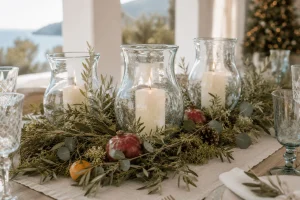
The pale wood provides warmth and texture, while the white linen runner creates a soft central surface for the place settings and centerpiece. Together, they create enough contrast to prevent the composition from feeling flat while keeping the overall atmosphere light.
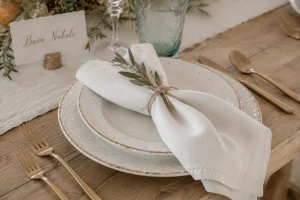
This is particularly effective in a room filled with natural light.
When sunlight enters through large openings and reflects against white walls, darker or heavier table decorations can sometimes feel visually disconnected from the space. A lighter foundation allows the table to remain part of the architecture rather than becoming a separate decorative object.
The linen is also important because it introduces texture without adding visual weight.
A perfectly pressed white tablecloth would create a more formal impression. The slightly relaxed quality of linen feels more appropriate for a Mediterranean setting, especially one designed around long meals and informal gatherings.
One trick designers use when working with light interiors is to vary texture before adding more color. Instead of immediately introducing another decorative element, look at what happens when wood, linen, glass, ceramic, and greenery are placed together.
The room often becomes richer without becoming busier.
That principle is especially useful for Christmas decorating.
You do not necessarily need more ornaments. You may simply need more variation in the materials already on the table.
The combination of pale wood, natural linen, clear and blue-tinted glass, white ceramics, and fresh greenery creates a layered composition while maintaining a calm visual rhythm.
The white foundation also makes the seasonal elements more noticeable.
A red pomegranate placed among the greenery becomes a small point of warmth.
An orange becomes a sunny accent.
A candle flame becomes more visible against the pale surroundings.
Nothing needs to be oversized to make an impression.
Let Soft Blue Glass Bring the Sea to the Table
Among all the details in this coastal Mediterranean Christmas table setting, the blue-gray glassware is one of the elements that most clearly establishes the connection with the sea.
The color is soft rather than intensely saturated. Depending on the light, the glasses can appear pale blue, gray, or almost transparent. This subtle variation makes them feel integrated into the setting rather than used as obvious seasonal decoration.
The effect is particularly beautiful when several types of glassware are combined.
Tall glasses, smaller tumblers, and textured pieces catch the daylight differently. Some reflect the view outside, while others reveal the warm glow of candles placed along the table.
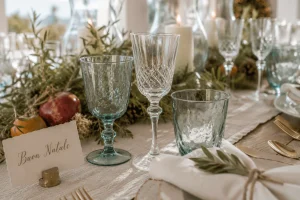
This creates movement without requiring additional decoration.
The glassware also demonstrates how one carefully chosen color can give an entire table a visual identity.
The rest of the palette remains restrained: white, cream, natural wood, soft green, and muted beige. Against this background, the blue glass becomes a quiet signature.
It is enough to make the table feel distinctive.
This is a useful idea to borrow even if you are not recreating the entire Mediterranean look.
Choose one color inspired by your surroundings and repeat it through a few functional objects.
You might use blue glasses, as shown here, or perhaps pale green ceramics, amber tumblers, or smoky gray glass. The important point is that the color should appear more than once.
Repetition creates cohesion.
When the same tone appears in several places across the table, the eye naturally moves through the composition. This makes the arrangement feel intentional even when the individual pieces are relatively simple.
Here, the blue glassware performs that role beautifully.
It connects the dining table to the blue horizon outside without trying to imitate it too literally.
And because glass is transparent, the color never becomes visually heavy.
That makes it particularly well suited to a Christmas table designed around natural light.
| Element | How It Shapes the Table |
|---|---|
| White and natural tones | Keep the composition light and connected to the Mediterranean setting |
| Weathered wood | Adds warmth and a relaxed coastal character |
| Blue-gray glassware | Introduces a subtle reference to the sea |
| Hand-blown glass | Brings texture and individuality to the table |
| Olive branches and greenery | Create a natural, understated centerpiece |
| White linen | Softens the table and reinforces the sense of simplicity |
| Candles in glass hurricanes | Add warmth without making the centerpiece feel heavy |
| Pomegranates and citrus | Bring seasonal color and a connection to Mediterranean landscapes |
| Natural ceramics | Balance the transparency of the glass and the brightness of the setting |
| Sea view and natural light | Become part of the table’s visual composition |
How to Create a Coastal Mediterranean Christmas Table Setting
One of the reasons this style feels so inviting is that it does not rely on expensive decorations or elaborate centerpieces. Instead, it begins with a few timeless materials and layers them thoughtfully.
Start by choosing a light foundation. A weathered wood table or a white linen tablecloth immediately establishes the relaxed Mediterranean atmosphere. From there, introduce white dinnerware, soft blue or clear glassware, and natural textures such as woven chargers or linen napkins.
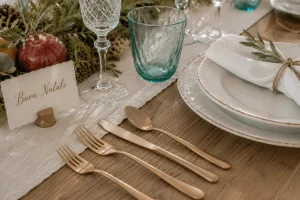
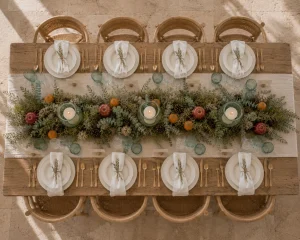
The centerpiece should feel organic rather than formal. Olive branches, eucalyptus, fresh greenery, and a few seasonal elements like pomegranates or citrus fruits create movement across the table without blocking conversation. Instead of arranging everything inside one large vase, allow the greenery to flow naturally along the center.
Lighting also plays an important role. During the day, natural sunlight becomes part of the decoration. As evening arrives, glass hurricanes or simple candle holders create warmth while preserving the light, airy character of the table.
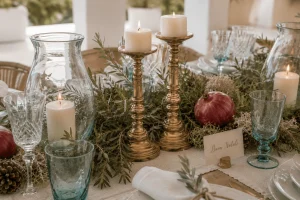
The goal is not to recreate a traditional Christmas dining room. Instead, the table should feel connected to the Mediterranean landscape, where natural materials, daylight, and relaxed entertaining define the atmosphere.
Choosing Natural Christmas Decorations for a Mediterranean Home
One of the most distinctive characteristics of Mediterranean decorating is the preference for natural materials over highly manufactured seasonal décor.
Rather than filling the table with ornaments, ribbons, or glitter, this style celebrates ingredients and greenery that already belong to the landscape.
Olive branches are perhaps the strongest visual reference. Their soft gray-green leaves complement white ceramics and weathered wood beautifully while introducing movement across the table.
Fresh rosemary, bay leaves, eucalyptus, pinecones, oranges, lemons, and pomegranates also work naturally within the same palette.
These elements provide seasonal interest without overwhelming the composition.
Because the colors remain restrained, each decorative detail feels intentional instead of competing for attention.
This restrained approach is one reason Mediterranean Christmas tables continue to feel timeless year after year.
Why This Style Works for Christmas Gatherings
Beyond its appearance, a coastal Mediterranean Christmas table encourages a different way of gathering.
The atmosphere feels relaxed rather than formal.
Guests are invited to stay longer, share food slowly, and enjoy conversation without feeling surrounded by elaborate decorations.
Natural materials help create this mood because they feel approachable.
The linen develops soft folds throughout the meal.
Wood gains character with use.
Glass catches changing daylight and candlelight.
Fresh greenery evolves naturally as the evening progresses.
Nothing feels too precious to enjoy.
This balance between elegance and comfort makes the style especially suitable for family lunches, Christmas Eve dinners, and long holiday celebrations where the experience matters just as much as the table itself.
Conclusion
A coastal Mediterranean Christmas table setting proves that holiday decorating does not need to rely on traditional colors or heavy ornamentation to feel festive.
By combining natural linen, weathered wood, white ceramics, soft blue glassware, olive branches, seasonal fruit, and candlelight, it is possible to create a table that feels elegant, relaxed, and deeply connected to its surroundings.
Rather than competing with the architecture or the landscape, the table becomes an extension of both. The result is a Christmas celebration that feels bright during the day, warm in the evening, and welcoming throughout the season.
Whether you live by the sea or simply appreciate Mediterranean interiors, this approach offers timeless inspiration for creating memorable holiday gatherings.
FAQ
What is a coastal Mediterranean Christmas table setting?
A coastal Mediterranean Christmas table setting combines natural materials, white and neutral tones, soft blue accents, olive branches, seasonal greenery, candles, and relaxed styling inspired by seaside homes.
How do you create a coastal Mediterranean Christmas table at home?
Start with a light foundation using linen and natural wood. Add white dinnerware, blue or clear glassware, olive branches, candles, and seasonal fruits such as oranges or pomegranates to achieve a relaxed Mediterranean atmosphere.
What colors work best for a coastal Mediterranean Christmas table?
White, cream, natural wood, soft blue, muted green, beige, and subtle seasonal reds from pomegranates work beautifully together while maintaining a calm, elegant palette.
How can natural light change a coastal Mediterranean Christmas table setting?
Natural light enhances the textures of linen, wood, ceramics, and glass throughout the day, while candles create warmth after sunset without changing the overall light and airy feeling of the table.
Design Takeaways
- Build the table around a warm wood foundation that remains visible.
- Let evergreen branches create continuity across the entire table.
- Use red berries as small accents instead of overwhelming the color palette.
- Layer chargers, dinnerware, and linen napkins to create depth.
- Choose blue-and-white dinnerware for a timeless interpretation of Christmas.
- Keep the centerpiece low enough for comfortable conversation.
- Combine brass candleholders with crystal-style glassware for warmth and sparkle.
- Repeat natural materials throughout the table for a cohesive look.
Decision Guide
Is a Classic American Christmas Table Right for Your Home?
This style may be perfect if you:
✔ Love traditional Christmas decorating with timeless appeal.
✔ Enjoy hosting family dinners and holiday gatherings.
✔ Prefer natural greenery over highly themed decorations.
✔ Want a table that feels elegant without becoming overly formal.
✔ Appreciate layered place settings and collected dinnerware.
You may prefer another Christmas style if you enjoy minimalist décor, contemporary color palettes, or highly modern table settings.
Styling Tips
- Let the wood table remain visible whenever possible.
- Use greenery as a continuous runner instead of one large centerpiece.
- Repeat red berries in several small locations across the table.
- Mix heirloom and newer tableware for a collected look.
- Layer chargers, plates, and linen napkins to create richness.
- Use white taper candles to add height without visual heaviness.
- Keep glassware transparent to balance the stronger seasonal colors.
Common Mistakes to Avoid
Avoid making a traditional Christmas table feel cluttered.
Instead:
- Avoid oversized centerpieces that block conversation.
- Avoid using red on every decorative element.
- Avoid mixing too many holiday themes in one table.
- Avoid covering beautiful wood surfaces unnecessarily.
- Avoid excessive metallic accents that compete with the greenery.
- Avoid decorating every place setting differently, which can disrupt visual harmony.
Why This Look Works
A classic American Christmas table remains timeless because it is built on familiar materials rather than passing holiday trends.
Natural greenery, traditional dinnerware, warm wood, brass candleholders, crystal-style glassware, and linen textiles work together to create a setting that feels welcoming year after year. Instead of relying on elaborate decorations, the table gains its character through repetition, balance, and thoughtful layering, making it equally suited to festive celebrations and meaningful family traditions.
You May Also Like
- #293 — Christmas Table Setting Ideas for Every Style and Celebration
- #303 — Christmas Centerpiece Ideas Using Natural Greenery
- #306 — Elegant Christmas Tables That Never Go Out of Style
- #321 — Coastal Mediterranean Christmas Table Setting Ideas
- #330 — Velvet Christmas Table Decor Ideas
- #325 — Elegant White Christmas Tablescape