
Creating a beautiful table doesn’t always require ornate china or complicated styling. In many cases, one distinctive dinner plate is enough to define the entire composition—provided the surrounding layers know when to support rather than compete.
Decorative dinner plates with marble effects, stone-inspired finishes, botanical motifs, or handcrafted glazes naturally draw the eye. The challenge is allowing those details to remain the focal point while every other element quietly contributes texture, color, and balance.
In this guide, you’ll learn how to layer decorative dinner plates using complementary materials, restrained color palettes, and natural textures that create an elegant table without feeling overly styled.
In This Article
- Learn why decorative dinner plates should become the visual focal point.
- Discover how to balance bold patterns with quieter supporting layers.
- See how natural textures prevent layered tables from feeling heavy.
- Understand why limiting colors often creates a more sophisticated result.
- Find simple ideas you can adapt for everyday dining or entertaining.
A thoughtfully layered table doesn’t depend on expensive collections—it depends on giving each element enough space to shine.

Featured Table Elements
Dinner Plate
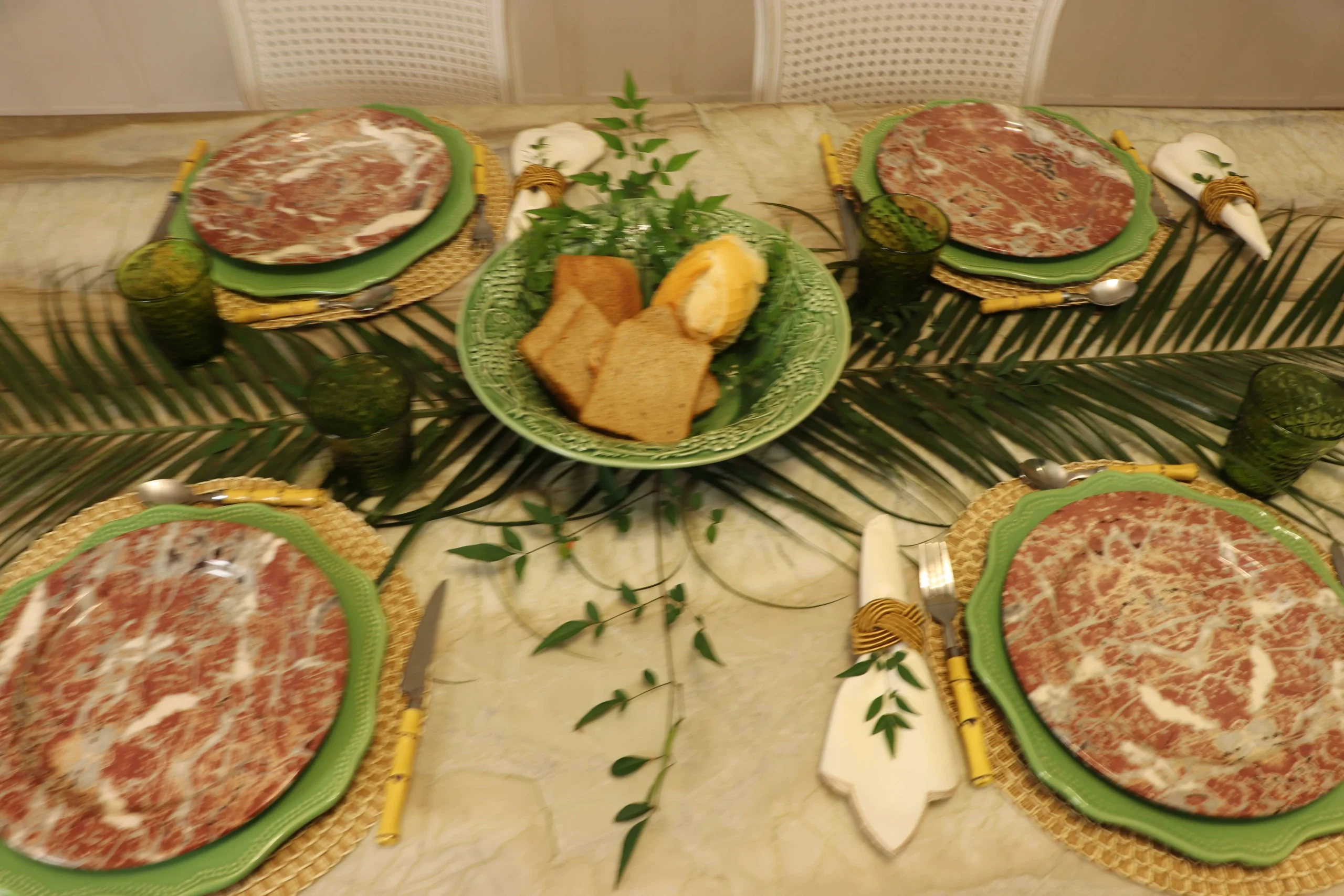
A marble-effect ceramic dinner plate becomes the visual centerpiece, introducing rich earthy tones and an organic stone-inspired pattern.
Charger Plate
A scalloped green ceramic charger frames the setting and adds a fresh botanical layer beneath the dinner plate.
Place Mat
A handwoven natural straw placemat softens the composition while bringing warmth and subtle texture.
Glassware
Green Zafferano Balloton glasses reinforce the botanical palette and catch the light with their textured surface.
Centerpiece
A Bordallo Pinheiro serving bowl styled with bread, citrus, and layered greenery connects every place setting to the center of the table.
Natural Details
Palm leaves, eucalyptus stems, and woven napkin rings complete the relaxed, nature-inspired atmosphere.
Why Decorative Dinner Plates Deserve the Spotlight
Decorative dinner plates naturally attract attention because they sit at the center of every place setting. Their pattern, color, and finish immediately influence how the entire table feels.
One thing interior stylists often notice is that people frequently treat every layer as equally important. They choose patterned placemats, textured chargers, colorful napkins, bold glasses, and decorative plates all at once.
The result is visual competition.
Instead, begin with the dinner plate.
Ask yourself what makes it special. Is it the veining? The glaze? The illustration? The handcrafted texture?
Once you identify its strongest feature, every surrounding element should reinforce rather than distract from it.
In this table, the marble-inspired dinner plate already provides movement and variation. The green charger, woven placemat, and botanical details simply frame that beauty.
The eye immediately knows where to rest.
Balance Bold Patterns with Quiet Foundations
Decorative plates rarely need equally decorative companions.
Instead, combine one expressive element with quieter supporting layers.
Notice how each layer in this setting plays a different role:
| Layer | Purpose |
|---|---|
| Woven placemat | Adds natural texture |
| Green charger | Frames the plate |
| Marble dinner plate | Creates the focal point |
| Botanical centerpiece | Connects the palette |
Each material introduces a different texture without introducing unnecessary visual noise.
A surprisingly simple trick designers use is allowing texture—not additional patterns—to create richness.
Natural fibers, ceramics, linen, glass, and greenery all reflect light differently, creating depth even when the color palette remains restrained.
This layered approach feels collected rather than busy.
Let Nature Tie Everything Together
Natural materials have an unusual ability to unify different colors and finishes.
In this composition, several distinct elements coexist:
- Green ceramic
- Marble-inspired pattern
- Natural woven fibers
- Green textured glass
- Palm leaves
- Fresh greenery
- Bread and citrus
On paper, these materials seem unrelated.
On the table, they feel cohesive because every element belongs to the same organic story.
Rather than forcing perfect coordination, natural textures create visual continuity through repetition of shapes, softness, and color temperature.
That subtle consistency is often what makes a layered table feel effortless.
Choose Supporting Colors Instead of Matching Everything
Matching every piece is no longer the goal of modern table styling.
Instead, successful layered tables rely on color relationships.
The marble dinner plate introduces warm terracotta, ivory, gray, and soft brown tones.
Rather than searching for identical colors elsewhere, the surrounding pieces simply echo nature:
- botanical green
- woven straw
- warm ivory
- bamboo cutlery
- fresh foliage
These colors complement rather than imitate one another.
Many beautifully layered tables use only three or four dominant colors, allowing texture to create most of the visual interest.
That approach feels calmer and more timeless than relying on numerous accent colors.
Texture Creates Luxury More Than Decoration
People often associate elegant tables with expensive porcelain.
In reality, texture usually creates a stronger impression than price.
Imagine removing the woven placemat.
Now imagine replacing the textured glass with plain clear tumblers.
Finally, remove the greenery.
The marble plate would remain beautiful—but much of the atmosphere would disappear.
Luxury is rarely created by one object.
Instead, it emerges from the conversation between materials.
Ceramic beside woven fiber.
Glass beside linen.
Leaves beside stone-inspired finishes.
These subtle contrasts create depth that feels refined without becoming formal.
How to Mix Decorative Dinner Plates with Solid-Colored Pieces
One of the easiest ways to make decorative dinner plates feel sophisticated is by surrounding them with simpler companions.
Instead of trying to coordinate every pattern, think about creating a visual hierarchy. The decorative plate becomes the statement, while the remaining pieces provide structure and balance.
In this table, the green charger performs exactly that role. Although it introduces color, its surface remains clean and consistent, allowing the marble-inspired dinner plate to stand out naturally.
The woven placemat works differently. Rather than adding another printed layer, it contributes warmth through texture alone.
This combination demonstrates an important styling principle: every layer should have a distinct purpose.
One layer introduces color.
Another provides texture.
Another creates visual interest.
When each element contributes something unique, the overall setting feels intentional instead of crowded.
Many beautifully styled tables rely on this quiet balance, where every piece supports the composition without competing for attention.
Why Organic Patterns Feel More Timeless Than Perfect Symmetry
Marble-inspired ceramics have become increasingly popular because they introduce movement without appearing overly decorative.
Unlike highly graphic patterns or seasonal motifs, natural veining feels irregular and relaxed.
No two plates look exactly alike.
That slight variation gives the table personality while maintaining elegance.
One thing designers often appreciate about organic patterns is their flexibility.
They pair effortlessly with linen, woven fibers, botanical arrangements, wood, ceramics, and handmade accessories because all of those materials share a naturally imperfect character.
This creates harmony without requiring identical colors or matching collections.
Imagine setting this same table with perfectly geometric plates instead.
The atmosphere would immediately become more formal.
The marble pattern softens the composition, making it feel welcoming enough for everyday meals while remaining refined enough for entertaining.
That versatility is one reason natural finishes continue to feel current year after year.
Creating Depth Through Layering Instead of Decoration
People often assume an elegant table requires more decorative objects.
In reality, depth usually comes from thoughtful layering rather than additional accessories.
Consider this place setting.
The woven placemat establishes a warm foundation.
The ceramic charger introduces color.
The marble-effect dinner plate adds movement.
The linen napkin softens the arrangement.
The textured green glass reflects light differently from the ceramics.
Each layer contributes a new visual experience.
None of them feels unnecessary.
A surprisingly simple trick designers use is evaluating every piece by asking one question:
“Does this layer introduce something new?”
If the answer is no, it may not need to stay.
Sometimes removing one decorative object allows the remaining elements to feel stronger.
That restraint often creates the sophisticated look people associate with professionally styled tables.
Styling Decorative Dinner Plates for Different Occasions
One advantage of marble-inspired dinner plates is their remarkable versatility.
With only a few adjustments, the same collection can suit many different occasions.
For everyday meals, pair them with woven placemats, simple linen napkins, textured drinking glasses, and fresh greenery.
The result feels relaxed, natural, and inviting.
For weekend lunches, introduce seasonal fruit, artisanal bread, and ceramic serving bowls that echo the organic color palette.
The table immediately feels more abundant without becoming formal.
When hosting dinner guests, replace casual napkins with linen, add candlelight, and include layered serving pieces that repeat the same earthy tones.
The overall composition becomes more elegant while preserving the relaxed atmosphere.
Rather than purchasing multiple dinnerware collections, many experienced hosts simply change the supporting accessories.
This approach is practical, economical, and allows one beautiful plate collection to serve many different purposes throughout the year.

Designer’s Take
Beautiful tables rarely depend on the most decorative dinner plate.
They depend on knowing when to stop.
The marble-inspired plate in this setting succeeds because it has room to breathe. The green charger frames it instead of competing with it. The woven placemat adds warmth without introducing another pattern. Even the textured glass quietly supports the botanical color palette instead of demanding attention.
One lesson experienced stylists learn over time is that every new object changes the visual balance of the table.
Before adding another accessory, try removing one instead.
More often than not, the remaining pieces will appear even more beautiful.
A thoughtfully layered table isn’t about filling every surface it’s about giving each element a clear role within the composition.
Common Mistakes When Styling Decorative Dinner Plates
Even beautiful plates can lose their impact if the surrounding styling becomes too busy.
Try to avoid:
- Pairing several bold patterns together.
- Using too many competing accent colors.
- Choosing heavily textured pieces for every layer.
- Filling every empty area of the table.
- Ignoring negative space around each place setting.
One thing designers rarely overlook is breathing room.
Empty space allows decorative elements to feel intentional rather than crowded.
Sometimes removing one accessory improves the composition more than adding another.
How to Build a Layered Table That Feels Collected Over Time
One of the biggest misconceptions about beautiful table settings is believing everything has to come from the same collection.
In reality, many of the most inviting tables are built gradually. A favorite charger might be purchased one year, textured glasses added later, and decorative dinner plates discovered during a trip or while browsing a local artisan shop.
Because each piece has its own character, the final table feels personal rather than perfectly matched.
This layered approach also makes decorating far more flexible. Instead of replacing an entire dinnerware set whenever your style evolves, you can simply introduce one new element that complements what you already own.
The marble-effect dinner plate shown here is a perfect example. Although it has a distinctive pattern, it works effortlessly with a simple green charger, woven placemats, botanical greenery, and textured glassware.
Nothing feels forced.
Everything feels intentionally collected.
One thing designers often notice is that homes become more interesting when they reflect gradual choices instead of instant purchases.
A table layered over time tells a richer story because every piece contributes something unique while still supporting the overall composition.
Rather than chasing perfectly coordinated collections, focus on selecting pieces you’ll continue enjoying for years.
Beautiful tables rarely happen all at once.
They evolve naturally, one thoughtful layer at a time.
Elegant-layered-table-with-decorative-dinner-plates-green-chargers-woven-placemats-and-botanical-centerpiece
Final Thoughts
Decorative dinner plates work best when they become the hero of the table instead of one more competing element.
By combining restrained color palettes, natural textures, woven materials, botanical accents, and supportive ceramic layers, you create a composition that feels sophisticated without appearing overly designed.
The most memorable tables rarely rely on excess.
They rely on balance.
And when each layer serves a clear purpose, even a single decorative dinner plate can transform the entire dining experience.
Frequently Asked Questions
Can decorative dinner plates be used every day?
Yes. Many decorative ceramic plates are durable enough for everyday meals while adding personality to your dining table.
What charger works best with patterned dinner plates?
Simple ceramic chargers in solid colors usually create the most balanced foundation for decorative dinner plates.
Should placemats match decorative plates?
Not exactly. Natural woven placemats often complement decorative plates better than perfectly matching materials because they add texture without competing visually.
How many layers are enough?
Three to four layers including a placemat, charger, dinner plate, and optional salad or dessert plate usually create plenty of visual depth.
You May Also Like
If you’re building a layered table collection, these guides expand on the same styling approach:
- Layering Plates: The Secret to a More Elegant Table
- Mixing Dinnerware: How to Combine Plates Like a Designer (#177)
- Natural Table Decor Ideas That Feel Fresh Year-Round (#150)
Together, these articles will help you create cohesive, elegant table settings using texture, color, and thoughtfully layered pieces rather than matching collections alone.