
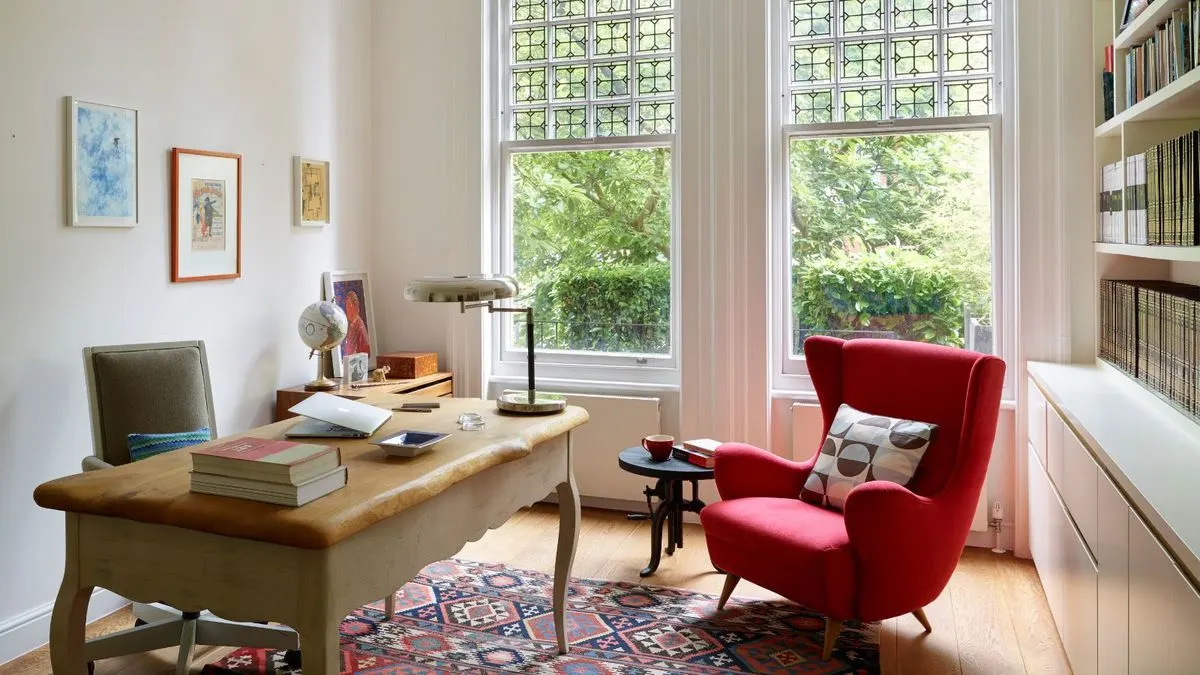
Working from home has become increasingly common, which has turned the home office into one of the most important spaces in contemporary homes.
Yet many people still rely on improvised setups such as kitchen tables, sofas, or temporary desks. These arrangements may seem practical at first, but over time they often create distractions, discomfort, and a constant sense that work is competing with daily life.
A functional home office creates clearer boundaries. It supports focus, improves physical comfort, and allows work tasks to happen in a space designed to handle them consistently.
This does not require a large room. Even small areas can become highly effective when layout, storage, lighting, and furniture choices are aligned with daily routines.
When each decision reduces friction, the workspace becomes easier to use, easier to maintain, and far more sustainable over time.
Why a Functional Home Office Matters
A well-designed home office improves far more than work efficiency alone.
It changes how easily focus begins, how long concentration can be maintained, and how naturally work fits within the rhythm of daily life.
Without a dedicated workspace, professional tasks often begin to spread into other parts of the home. Laptops move onto dining tables, paperwork remains visible in shared areas, and the feeling of being finished with work becomes less clear at the end of the day.
A functional office creates a stronger sense of separation, even when the space itself is small.
This often leads to practical benefits such as:
• improved concentration
• better organization of work materials
• increased productivity
• healthier posture
• clearer work-life balance
When the workspace supports daily tasks consistently, working from home tends to feel more stable, less fragmented, and easier to sustain over time.
Choosing the Right Location for Your Home Office
The first decision usually has less to do with furniture and more to do with placement.
Where the workspace sits inside the home often determines how easily concentration can happen throughout the day.
Ideally, the office should occupy an area with fewer interruptions and enough visual separation to create a sense of routine.
In larger homes, this may be a dedicated room. In smaller homes or apartments, it often means identifying an underused area that can support focused work without competing too heavily with everyday movement.
Common locations include:
• spare bedrooms
• quiet corners of living rooms
• unused hallway areas
• sections of larger bedrooms
• converted closets or alcoves
What matters most is that the workspace feels intentionally defined rather than temporarily improvised.
Even subtle boundaries such as rugs, shelves, or lightweight dividers help signal that this area serves a different purpose from the rest of the room.
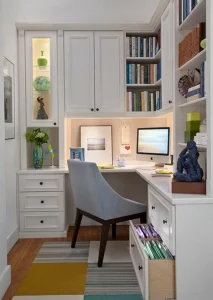
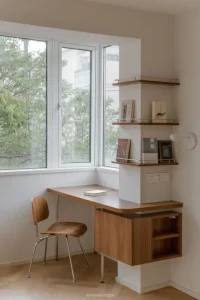
small-home-office-corner-with-compact-desk-and-defined-workspace
Selecting the Right Desk
The desk is the element that defines how the workspace functions on a practical level.
Its size, shape, and position influence not only how work materials are handled, but also how comfortable the space remains during repeated daily use.
A compact desk may be enough for laptop-based work, while activities involving paperwork, monitors, or creative tools usually require more surface area to avoid constant repositioning.
Common desk options include:
• minimalist writing desks
• L-shaped desks for corner spaces
• wall-mounted desks for small rooms
• adjustable standing desks
• desks with built-in drawers
The goal is not simply choosing a desk that fits the room, but one that supports the type of work being done without creating visual or physical congestion.
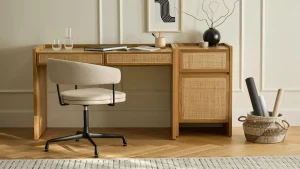
Placement also changes how the space feels. Whenever possible, positioning the desk near natural light tends to improve comfort, alertness, and the overall sense of energy throughout the day.
Choosing an Ergonomic Chair
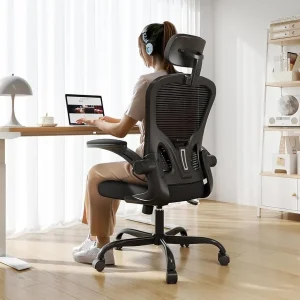
Comfort often determines whether a workspace remains functional beyond the first few hours of use.
A chair that feels acceptable for short periods can become a source of fatigue when work sessions extend throughout the day.
Poor support usually appears gradually through back tension, shoulder discomfort, and reduced concentration.
An ergonomic chair helps prevent this by allowing the body to remain properly supported during longer periods of sitting.
Important features to look for include:
• adjustable seat height
• lumbar support
• comfortable cushioning
• adjustable armrests
• breathable materials
Even in small home offices, this is often one of the most valuable investments because seating directly influences both physical comfort and work consistency over time.
ergonomic-chair-in-home-office-workspace-for-comfort-and-posture
Lighting for a Productive Workspace
Lighting affects far more than visibility.
It shapes how alert the space feels, how quickly fatigue appears, and how comfortable it is to remain focused throughout the day.
When lighting is insufficient or poorly positioned, eye strain often builds gradually, making concentration harder to maintain.
A productive workspace usually combines different light sources rather than relying on a single one.
These often include:
• natural daylight from windows
• overhead room lighting
• desk lamps for focused tasks
• soft ambient lighting for balance
Natural light is especially valuable because it tends to improve mood and maintain visual comfort during long work periods.
At the same time, screens should be positioned carefully so glare does not interfere with reading or video calls.
Organization Systems That Improve Productivity
A cluttered workspace rarely affects appearance alone.
When documents, chargers, notebooks, and office supplies remain visible without clear placement, attention is repeatedly pulled away from the task itself.
Small interruptions accumulate throughout the day, often creating the sense that work requires more effort than it should.
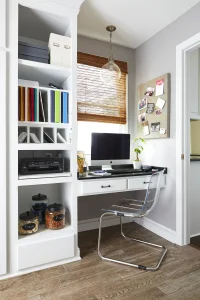
Effective organization systems reduce this friction by making essential items easy to access while keeping the visual field calmer.
Helpful home office organization solutions include:
• drawer organizers
• document trays
• labeled folders
• vertical shelves
• cable management systems
Keeping frequently used items within reach while storing less-used materials elsewhere helps preserve a layout that feels practical without becoming visually heavy.
If you want to expand this approach beyond the workspace, our guide on home organization ideas explains how simple storage systems can improve daily routines across the home.
Vertical Storage for Small Home Offices
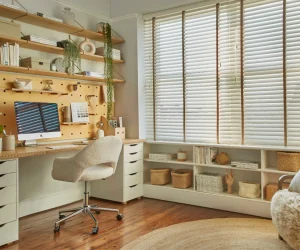
Small workspaces often become more functional when storage moves upward instead of outward.
Walls offer valuable space that can support organization without reducing circulation or making the room feel crowded.
Using vertical storage also helps distribute visual weight more evenly, which often makes compact offices feel less compressed.
Examples include:
• floating shelves
• wall-mounted cabinets
• pegboards
• hanging organizers
• tall bookcases
These solutions allow small offices to remain efficient while keeping important materials accessible.
One of the biggest advantages is that the desk remains clearer, which usually improves both concentration and visual calm during longer work periods.
vertical-storage-in-home-office-with-wall-shelves-and-organized-layout.
Creating a Distraction-Free Environment
One of the main difficulties of working from home is that distractions rarely appear all at once.
They tend to happen in small interruptions: background noise, visible household tasks, unnecessary notifications, or objects competing for attention within the workspace itself.
A more intentional setup helps reduce these interruptions before they become mentally exhausting.
Practical strategies include:
• keeping the workspace separate from entertainment areas
• limiting visual clutter on the desk
• using noise-canceling headphones
• organizing digital notifications
• setting clear work hours
These environmental signals help the brain recognize when focused work is expected.
Over time, this often makes concentration easier to enter and easier to maintain.
Technology and Equipment Setup
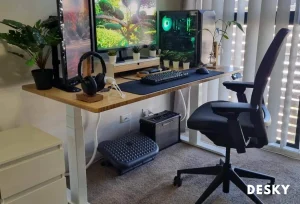
Modern home offices often depend on multiple digital tools, but their effectiveness depends largely on how naturally they fit into the daily workflow.
When cables, screens, and accessories compete for space, even simple tasks begin to feel less fluid.
A well-organized setup allows technology to support the work quietly rather than constantly demanding adjustment.
Important considerations include:
• monitor positioning at eye level
• comfortable keyboard and mouse placement
• proper cable management
• reliable internet connection
• adequate power outlets
When these elements are positioned well, work tends to move with fewer interruptions and less physical strain throughout the day.
Adding Personal Style Without Creating Clutter
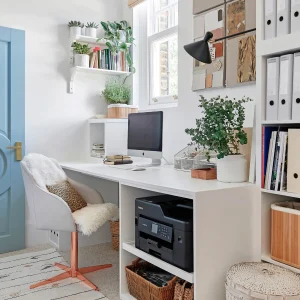
Functionality usually comes first in a home office, but a small amount of personal character often makes the space easier to inhabit every day.
The difference lies in choosing elements that add warmth without competing with concentration.
Subtle details tend to work better than decorative excess, especially in spaces where visual calm is part of what supports productivity.
Simple ways to personalize the workspace include:
• framed artwork
• small plants
• neutral decorative objects
• soft textiles such as rugs or cushions
These additions help the office feel less purely technical while preserving the structure needed for focused work.
Maintaining Organization Over Time
Creating an organized office is often simpler than keeping it organized during busy weeks.
Without small maintenance habits, even efficient systems gradually begin to lose clarity as papers, cables, and temporary items accumulate.
Simple routines usually prevent this from happening before clutter becomes difficult to manage.
Helpful habits include:
• clearing the desk at the end of the day
• organizing documents weekly
• returning items to their storage areas
• archiving unnecessary files regularly
These actions require little time, but they make the workspace easier to return to each morning.
Over time, consistency matters more than perfection.
Creating a Clear Work Routine
Even a well-designed office depends on routine to function fully.
Working from home often removes many of the natural transitions that traditional workplaces create, which means the beginning and end of work can easily become blurred.
Simple routines help rebuild that structure.
Useful strategies include:
• starting work at the same time each day
• planning daily priorities in the morning
• scheduling breaks to avoid fatigue
• limiting distractions such as social media
• ending the workday with a short workspace reset
These patterns help create clearer mental transitions between focused work and personal time.
As they become familiar, concentration often begins more easily and work feels less fragmented across the day.
Storage Solutions for Office Supplies
Office supplies tend to create clutter quickly because they are used often, moved frequently, and easily left visible after small tasks.
Pens, notebooks, chargers, cables, and loose documents can gradually occupy more desk space than expected when no clear storage exists.
Simple storage systems help contain this movement.
Effective solutions include:
• drawer organizers for small supplies
• document trays for current paperwork
• labeled folders for important files
• small containers for cables and electronics
• desktop organizers for frequently used tools
Keeping only essential items visible usually improves visual clarity and reduces the feeling of constant unfinished activity.
When each item has a defined place, daily organization becomes far easier to maintain.
Adapting Your Home Office as Work Needs Change
A home office works best when it remains flexible enough to respond to changing routines.
Work rarely stays identical over time. New equipment, shifting schedules, or different types of tasks often require small adjustments in how the space functions.
A well-planned office allows these changes without needing a complete redesign.
For example:
• adding a second monitor may require adjusting desk placement
• increased paperwork may require additional storage shelves
• new technology may require improved cable organization
• longer work hours may require better lighting or seating
Reviewing the workspace periodically helps identify where small adjustments can remove new sources of friction.
Often, these minor changes are what keep the office comfortable and efficient in the long term.
You May Also Like
If you are improving how your workspace functions at home, some related ideas help extend the same practical thinking into organization, layout, and flexibility across everyday living.
• Home Organization Ideas That Simplify Daily Life shows how small organizational systems reduce visual clutter and make routines easier to maintain throughout the week.
• Apartment Organization Ideas for Small Homes explains how compact spaces can remain efficient when storage is planned with more intention.
• Multifunctional Furniture That Actually Works explores furniture choices that help one room support multiple needs without creating excess.
• Home Office Layout Ideas (#45) expands on how desk placement, circulation, and room balance influence comfort and daily concentration.
Together, these topics help build a home that works more naturally over time, where each space supports both function and ease in daily use.
FAQ – Functional Home Office
What makes a home office functional?
A functional home office combines comfortable furniture, practical layout decisions, good lighting, and organization systems that allow daily tasks to happen with less interruption and more consistency.
How do I create a home office in a small space?
Compact desks, vertical storage, and clearly defined zones usually help small spaces support work without making the room feel overcrowded.
What is the best lighting for a home office?
A balanced combination of natural light, overhead lighting, and focused task lighting usually creates the most comfortable environment for long work sessions.
How can I stay productive while working from home?
A dedicated workspace, fewer visual distractions, and consistent routines often make focus easier to maintain throughout the day.
Designing a Home Office That Supports Well-Being
A functional home office should support more than productivity alone.
Because many people spend several hours each day in the same workspace, the environment gradually begins to influence energy, concentration, and even how mentally demanding work feels over time.
Small design decisions often have a stronger effect than expected.
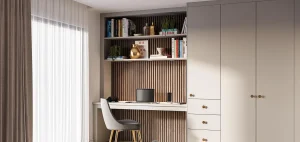
Natural elements such as plants can soften the visual weight of screens, cables, and office equipment, making the room feel less technical and easier to remain in for longer periods.
Color also affects how the space is perceived. Neutral tones, soft whites, warm woods, and muted shades usually create a calmer visual rhythm that supports concentration without drawing attention away from the work itself.
Visual simplicity matters for the same reason.
When too many objects remain visible, the workspace often feels mentally heavier even before tasks begin.
A clearer layout, where only essential tools stay exposed, usually creates a more stable and comfortable atmosphere across the day.
A workspace designed with well-being in mind often becomes easier to use consistently because comfort and focus begin to support each other naturally.
Final Thoughts
A functional home office is rarely defined by size or expensive furniture.
What matters more is whether the space continues to support daily work without creating unnecessary friction.
When location, lighting, seating, and storage are planned with intention, even a small area can begin to feel stable, efficient, and easier to return to each day.
Over time, that consistency becomes one of the most valuable parts of working from home because less energy is spent adjusting the environment and more attention remains available for the work itself.
This is what ultimately makes a workspace functional: not how impressive it looks at first, but how naturally it continues to support focus, comfort, and daily rhythm over time.