Introduction
Visible clutter can make even a beautifully decorated home feel busy and overwhelming.
Books left on tables.
Blankets draped over sofas.
Children’s toys waiting to be put away.
Charging cables, magazines and everyday accessories gradually filling every available surface.
Often, the problem is not owning too many things.
It is having nowhere convenient to store them.
Hidden storage ideas help solve this challenge by keeping everyday essentials close at hand while maintaining a calm and organized appearance.
In this article you will learn:
- Why hidden storage improves both function and appearance
- Which furniture pieces offer the best concealed storage
- How to reduce visual clutter without reducing accessibility
- Hidden storage ideas for every room
- Practical ways to choose solutions that support everyday living
The best storage solutions are often the ones visitors never notice.
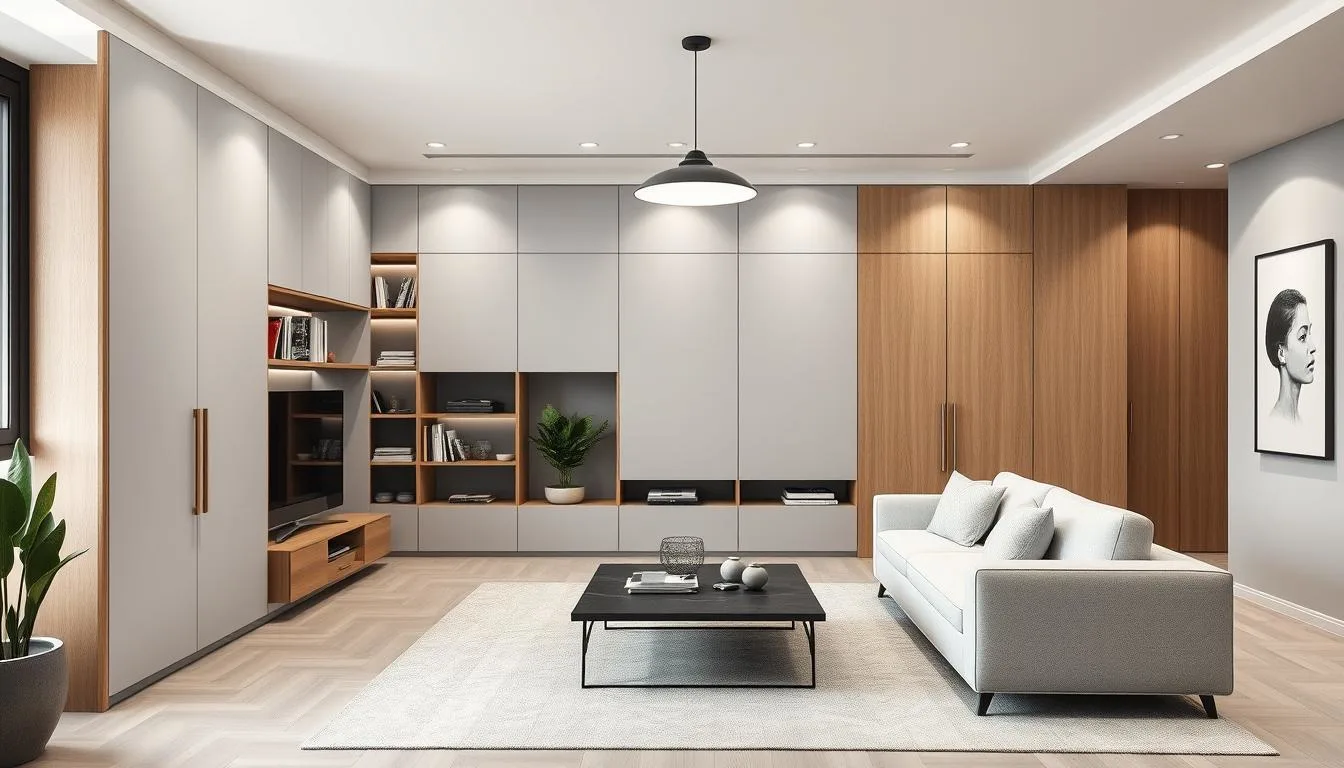
[IMAGE — horizontal rectangle]
Alt text: living room with hidden storage furniture creating a calm and organized appearance
Why Hidden Storage Creates Calmer Rooms
A room does not need to be empty to feel peaceful.
It simply needs less visual interruption.
Open shelves filled with dozens of unrelated objects naturally attract attention.
The eye moves constantly from one item to another.
Hidden storage reduces this visual activity.
When everyday belongings remain behind doors, inside drawers or beneath furniture, the room immediately feels more spacious and balanced.
This does not mean every object should disappear.
Decorative pieces, books and personal collections still deserve to be displayed.
The goal is deciding which items contribute to the room and which ones simply create unnecessary visual noise.
A thoughtful balance between display and concealed storage creates interiors that feel both personal and relaxing.
Start by Identifying Visible Clutter
Before purchasing new furniture, spend time observing which objects remain on display every day.
Many homes reveal the same patterns.
Remote controls remain on the coffee table.
Blankets stay folded over the sofa.
Chargers collect beside chairs.
Children’s toys gradually spread across the floor.
Pet supplies occupy corners of the room.
These recurring items often benefit most from hidden storage because they are used regularly but do not necessarily enhance the appearance of the room.
Creating storage close to where these objects are used makes organization far easier to maintain.
Furniture That Offers Hidden Storage
One of the easiest ways to increase storage without adding more furniture is choosing pieces that already serve multiple purposes.
Storage ottomans provide seating while concealing blankets, games and seasonal accessories.
Coffee tables with drawers keep remote controls, chargers and magazines within reach while maintaining tidy surfaces.
Storage benches work well in entryways, bedrooms and living rooms by combining seating with concealed compartments.
Beds with built-in drawers maximize space in smaller homes where every square foot matters.
Side tables with cabinets provide discreet storage for books, electronics and everyday accessories.
These multifunctional pieces improve organization without increasing visual clutter.
[IMAGE — horizontal rectangle]
Alt text: storage ottoman and coffee table with hidden compartments in a modern living room
Hidden Storage Ideas for Small Homes
Smaller homes benefit especially from concealed storage because visible clutter quickly makes compact spaces feel crowded.
Instead of adding more furniture, look for opportunities to make existing furniture work harder.
Choose beds with storage underneath.
Select benches that hide shoes or seasonal items.
Install floating cabinets instead of open shelving when possible.
Use decorative baskets inside cabinets to separate smaller belongings.
Making storage part of the furniture allows rooms to remain open while still accommodating everyday needs.
In compact homes, every piece should ideally perform more than one function.
Hidden Storage in Every Room
Hidden storage becomes even more effective when it is adapted to the way each room functions.
Every area of the home has different storage needs, and understanding these routines makes it easier to choose solutions that feel natural.
Living Room
The living room often collects blankets, remote controls, magazines, gaming accessories and charging cables.
Coffee tables with drawers, storage ottomans and TV stands with cabinets help keep these everyday items close without leaving them on display.
This allows decorative elements to become the visual focus instead of daily clutter.
Bedroom
Bedrooms benefit from calm surroundings that encourage relaxation.
Under-bed storage works well for seasonal clothing, extra bedding and luggage.
Nightstands with drawers provide convenient places for books, chargers and personal items while keeping bedside surfaces clear.
Entryway
The entrance sets the tone for the rest of the home.
Storage benches, slim cabinets and floating drawers provide discreet places for shoes, bags and accessories that might otherwise accumulate near the door.
Bathroom
Bathrooms usually contain many small items.
Drawer organizers, mirrored cabinets and under-sink storage help keep daily essentials accessible while reducing visual clutter on countertops.
Home Office
Office supplies, paperwork and electronic accessories can quickly make a workspace feel overwhelming.
Closed cabinets and drawer organizers help maintain a cleaner environment that supports better concentration throughout the day.
[IMAGE — horizontal rectangle]
Alt text: hidden storage solutions used throughout different rooms of a modern home
Choosing Hidden Storage That Matches Your Lifestyle
The most successful hidden storage ideas begin with understanding everyday routines rather than following decorating trends.
Ask yourself which belongings are used daily but rarely need to remain visible.
These items are usually the best candidates for concealed storage.
Families with young children often appreciate furniture that allows toys to be put away quickly at the end of the day.
Homes with pets may benefit from cabinets dedicated to leashes, food containers and grooming supplies.
People working from home often prefer desks with enclosed storage that keeps office materials organized after the workday ends.
If entertaining is a regular part of your lifestyle, hidden storage becomes especially valuable.
Games, serving trays, extra cushions and seasonal decorations remain easy to access without making the room feel crowded throughout the year.
The goal is not hiding every possession.
Instead, it is deciding which items deserve to remain visible and which ones support the room better when stored discreetly.
When storage reflects everyday habits, organization becomes easier because every item naturally has a place to return to.
Hidden Storage Without Making Rooms Feel Heavy
Some concealed storage furniture can appear bulky if chosen without considering the proportions of the room.
Large cabinets may provide generous storage but can also dominate smaller spaces.
Balancing storage with openness creates more comfortable interiors.
Furniture with raised legs allows more of the floor to remain visible, making rooms appear lighter.
Light-colored finishes reduce visual weight.
Glass doors, open niches and a combination of concealed and displayed storage prevent furniture from feeling too solid.
Leaving some empty space is equally important.
A room filled entirely with storage furniture may feel more crowded than organized.
Successful hidden storage supports the room rather than becoming its main feature.
[IMAGE — horizontal rectangle]
Alt text: bright living room combining hidden storage furniture with open space for a balanced appearance
Decision Guide: Which Hidden Storage Ideas Work Best?
Choosing hidden storage becomes much easier when you begin with the items that create the most visual clutter.
If blankets are always left on the sofa, a storage ottoman may provide the simplest solution.
If children’s toys regularly spread across the living room, furniture with large concealed compartments allows quick cleanup while keeping play areas flexible.
For apartments and smaller homes, multifunctional furniture usually provides the greatest value because every piece performs more than one role.
Larger homes may benefit from combining built-in cabinetry with movable storage furniture that can adapt as household needs change.
It also helps to think about how often each item is used.
Objects needed every day should remain easy to access.
Seasonal decorations, travel accessories and occasional household supplies can be stored in less accessible locations.
The best hidden storage ideas reduce effort rather than adding complexity.
When putting things away becomes simple, keeping the room organized requires very little extra work.
Common Mistake and How to Avoid It
A common mistake is trying to hide everything.
Completely concealing every object can make storage inconvenient and discourage people from using the system consistently.
Instead, create a balance.
Display meaningful decorative pieces.
Keep frequently used essentials within easy reach.
Hide the items that contribute most to visual clutter.
This combination creates rooms that feel organized without becoming impersonal.
Living With the Space
Hidden storage changes the way a home feels every day.
Surfaces remain clearer.
Cleaning becomes easier.
Finding everyday items takes less time.
Rooms appear calmer because fewer objects compete for attention.
These improvements may seem small individually, but together they create living spaces that feel more comfortable and easier to maintain over time.
The greatest advantage is not achieving a perfectly minimalist home.
It is creating an environment where everyday life feels more organized with less ongoing effort.
Hidden Storage That Adapts as Life Changes
One of the greatest advantages of hidden storage is its ability to adapt over time.
The way a home functions rarely stays the same for years. Children grow, work routines change, hobbies evolve and everyday priorities shift. Storage that can adjust to these changes remains useful much longer than highly specialized solutions.
A storage ottoman that once held children’s toys may later become a place for blankets or books.
Cabinets used for office supplies can eventually store board games or hobby equipment.
This flexibility allows furniture to continue serving the household without needing frequent replacement.
It also helps to review storage habits from time to time.
Items that are no longer used every day do not need to remain in the most accessible locations.
Moving seasonal decorations, sports equipment or rarely used accessories to secondary storage creates more room for the belongings that support daily routines.
Another helpful habit is resisting the temptation to fill every available compartment.
Leaving a little extra space inside drawers and cabinets makes it easier to put items away and allows the storage system to accommodate new belongings without immediately feeling overcrowded.
The most successful hidden storage ideas are not designed for a single moment in time.
They evolve naturally with the household, continuing to simplify everyday life while helping every room remain calm, organized and comfortable to use.
Practical Checklist
✓ Identify the items that create the most visible clutter
✓ Choose multifunctional furniture whenever possible
✓ Keep frequently used belongings easy to access
✓ Store seasonal items separately
✓ Balance open and concealed storage
✓ Avoid oversized furniture in compact rooms
✓ Leave some shelves and surfaces intentionally clear
✓ Review storage needs as routines change
✓ Prioritize convenience over perfection
✓ Build storage around everyday habits
You May Also Enjoy Reading
Simple Storage Ideas for Everyday Clutter
Learn how small storage solutions prevent clutter before it spreads throughout the home.
Discover practical ways to organize shoes, coats and everyday essentials near the entrance.
Explore creative storage strategies that maximize every square foot without sacrificing comfort.
Conclusion
The best hidden storage ideas do far more than conceal everyday belongings.
They create calmer rooms, improve organization and make daily routines easier without requiring additional living space.
By choosing furniture and storage solutions that match the way your household actually functions, it becomes possible to reduce visual clutter while keeping essential items close at hand.
A home does not need fewer possessions to feel peaceful.
It simply needs thoughtful places to store them.
Take Away
- Hidden storage reduces visual clutter without reducing functionality.
- Multifunctional furniture helps maximize available space.
- Every room benefits from storage designed around daily routines.
- A balance of open and concealed storage creates calmer interiors.
- The best systems are easy to maintain and adapt over time.
Frequently Asked Questions
What are hidden storage ideas?
Hidden storage ideas use furniture, built-in solutions and concealed compartments to keep everyday belongings organized while reducing visible clutter.
What furniture offers the best hidden storage?
Storage ottomans, coffee tables with drawers, storage benches, beds with built-in drawers and side tables with cabinets are among the most practical options.
Are hidden storage ideas good for small homes?
Yes. Concealed storage helps compact spaces feel larger by reducing visual clutter while making better use of existing furniture.
Should every room have hidden storage?
Most rooms benefit from some concealed storage, but combining hidden and open storage usually creates the best balance between accessibility and visual appeal.
How do hidden storage ideas improve everyday living?
They make it easier to keep surfaces clear, reduce cleaning time, improve organization and create rooms that feel calmer and more comfortable every day.


