
Introduction
Living room wall decor has the power to completely change how a space feels. Rather than simply filling empty walls, thoughtful decoration creates balance, supports the furniture below, and gives the room personality without overwhelming it.
- Intentional wall decor creates visual balance instead of unnecessary clutter.
- The best walls combine artwork, texture, lighting, and proportion to support everyday living.
Many people assume empty walls always need more decoration.
In reality, the most welcoming living rooms are often the ones where every decorative element has a clear purpose. Instead of adding objects simply because space is available, thoughtful wall styling helps create rooms that feel calm, inviting, and naturally connected to the way people live.
What Makes Living Room Wall Decor Feel Intentional?
Beautiful walls rarely happen by accident.
Intentional decorating begins by understanding the room before choosing any artwork or accessories.
Where does the eye naturally rest?
Which wall deserves attention?
How does the furniture interact with the surrounding architecture?
The answers guide every decorating decision.
Instead of treating every wall equally, successful interiors usually establish one primary focal point while allowing the remaining walls to support the overall composition.
This creates hierarchy rather than competition.
The room immediately feels calmer because every element has a clear role.
Start With the Largest Wall First
The largest wall often becomes the natural visual anchor of the living room.
That doesn’t mean it requires the biggest artwork.
It means it deserves the greatest attention.
A single oversized painting.
A carefully balanced gallery wall.
Architectural paneling.
Textured plaster.
Wood slats.
Large mirrors.
Each solution can work beautifully when it matches the scale of the room.
Beginning with the primary wall also makes decorating the remaining walls much easier because the visual hierarchy has already been established.
Instead of guessing where artwork belongs, the room develops a clear focal point from the beginning.
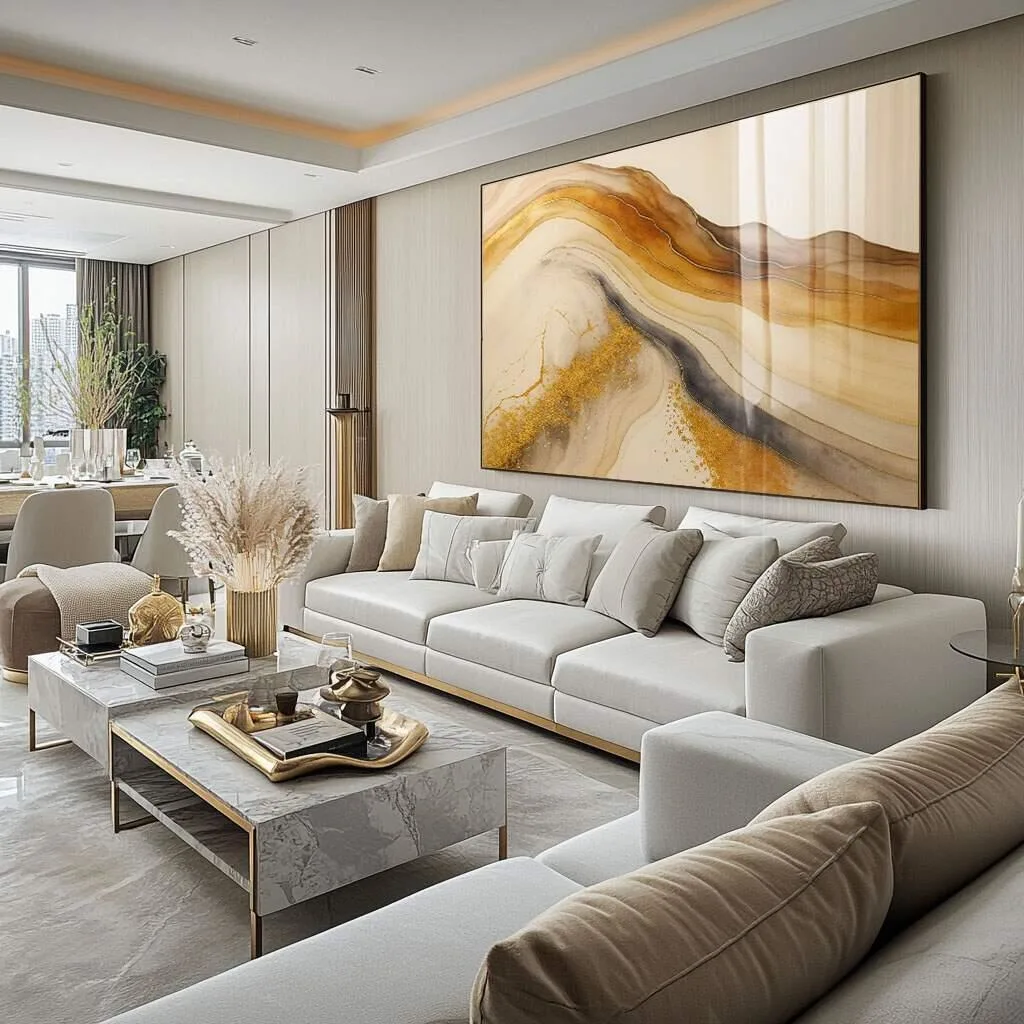
[IMAGE — Contemporary living room featuring a balanced focal wall above the sofa]
Using Scale to Create Balance Instead of Clutter
One of the most common decorating mistakes is choosing artwork that is too small.
Tiny frames floating above a large sofa rarely create visual balance.
Instead, artwork should relate to the furniture beneath it.
As a general principle, the composition should occupy a generous portion of the wall without extending beyond the furniture itself.
Oversized artwork often feels calmer than several unrelated small pieces because the eye immediately understands the composition.
Good scale creates confidence.
Poor scale creates visual noise.
Understanding proportion is often more important than choosing expensive artwork.
Choosing Artwork That Supports the Room
Artwork should complement the atmosphere rather than dominate it.
Abstract paintings can introduce movement.
Landscape photography creates calm.
Botanical prints reinforce natural materials.
Black and white photography provides timeless elegance.
The goal is not matching every color perfectly.
Instead, artwork should repeat subtle tones already present in textiles, rugs, cushions, or furniture.
This repetition quietly connects the room together.
When artwork relates to the overall palette, the living room feels intentionally designed instead of randomly decorated.