
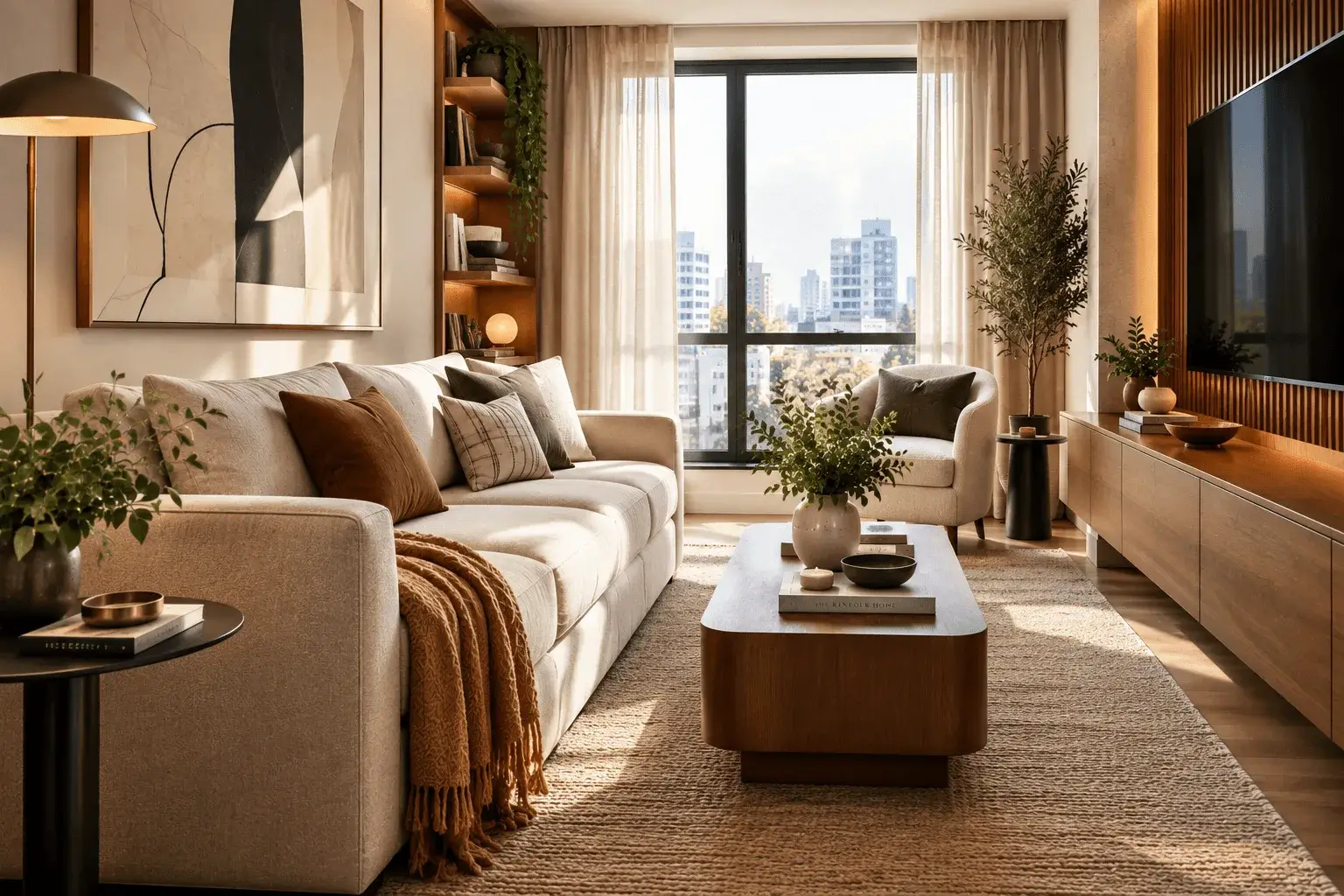
The sofa is almost always the largest piece of furniture in a living room, making it the natural starting point for the entire design. In a small space, this decision becomes even more important because it influences circulation, lighting, rug size, and the placement of every decorative element.
Rather than decorating each corner separately, building the room around the sofa creates a space that feels balanced, functional, and easier to enjoy every day. Every additional piece should support the seating area instead of competing with it.
In this guide, you’ll learn how to make your sofa the foundation of a beautiful and practical living room while creating a space that feels comfortable, organized, and visually harmonious.
Key Takeaways
- Let the sofa guide every decorating decision.
- Choose furniture that supports comfortable circulation.
- Layer lighting and textures instead of adding more furniture.
- Keep accessories balanced so the room feels open.
When the sofa becomes the foundation of the design, every decorating decision feels more intentional. The result is a small living room that looks cohesive, functions comfortably, and adapts easily to everyday life.
Why the Sofa Should Be Your Starting Point
Discuss:
- the sofa as the largest furniture piece
- creating a visual anchor
- defining room proportions
- improving circulation
- influencing every decorating decision
Choosing the Right Rug Around Your Sofa
Cover:
- selecting the correct rug size
- placing the front legs of the sofa on the rug
- choosing neutral colors
- adding texture
- avoiding rugs that are too small
Coffee Tables That Complement the Sofa
Cover:
- choosing the right proportions
- round versus rectangular tables
- nesting tables
- glass coffee tables
- storage coffee tables
Lighting That Makes the Seating Area Feel Complete
Cover:
- floor lamps
- table lamps
- wall sconces
- layered lighting
- warm light bulbs
Decorating the Wall Behind the Sofa
Cover:
- artwork
- mirrors
- floating shelves
- oversized artwork
- gallery walls
Cushions and Throws That Add Personality
Cover:
- layering cushions
- mixing textures
- seasonal updates
- balancing colors
Plants That Work Beside a Sofa
Cover:
- floor plants
- tabletop plants
- adding natural texture
- avoiding overcrowding
Keeping the Space Comfortable to Move Around
Cover:
- circulation
- walking paths
- furniture spacing
- reducing clutter
Choosing Accessories That Support the Whole Room
Cover:
- decorative trays
- coffee table books
- candles
- ceramic accessories
- woven baskets
Common Decorating Mistakes Around a Sofa
Discuss:
- rugs that are too small
- artwork hung too high
- oversized coffee tables
- too many cushions
- blocking natural light
- using too many side tables
Decision Guide: Which Sofa Setup Fits Your Room?
Help readers choose based on:
- apartment living
- family homes
- entertaining guests
- reading and relaxation
- TV-focused spaces
Everyday Life Around a Well-Planned Sofa
Show how the layout supports everyday routines, including:
- morning coffee
- reading
- movie nights
- entertaining visitors
relaxing after work
Decorating the Wall Behind the Sofa
The wall behind the sofa is often the largest uninterrupted surface in a small living room. Instead of leaving it empty or filling it with too many decorative pieces, treat it as an opportunity to reinforce the room’s overall style.
Oversized artwork is one of the simplest ways to create a focal point without adding visual clutter. A single large piece usually feels calmer than several small frames scattered across the wall. If you prefer multiple prints, keep consistent spacing and choose frames that share similar finishes.
Mirrors are another practical option, especially in rooms with limited natural light. Positioned carefully, they reflect light and visually expand the space without requiring additional furniture. Floating shelves can also work well, provided they remain lightly styled with a few books, ceramics, or small plants rather than becoming crowded display areas.
Whatever you choose, aim for balance rather than decoration for its own sake. The wall behind the sofa should complement the seating area and help the room feel complete instead of competing for attention.
Cushions and Throws That Add Personality
Textiles are one of the easiest ways to refresh a living room without changing the main furniture. Cushions and throws introduce color, texture, and seasonal variation while allowing the sofa to remain the visual anchor of the space.
Instead of using many different colors, begin with two or three complementary tones that already appear elsewhere in the room. Repeating these colors through artwork, rugs, or decorative accessories creates a more cohesive appearance.
Texture is just as important as color. Combining linen, cotton, boucle, or knitted fabrics makes the seating area feel more inviting while adding visual depth. Even neutral palettes become richer when different materials interact naturally.
Seasonal updates become simple with this approach. Lightweight linen covers and soft greens work beautifully during spring and summer, while thicker knits, warm earth tones, and textured fabrics create a cozier atmosphere during cooler months. Because these changes involve accessories rather than furniture, the room remains flexible without requiring a complete redesign.
Plants That Work Beside a Sofa
Plants soften the lines of furniture and bring natural movement into a small living room. When placed thoughtfully, they help the seating area feel more relaxed while adding texture that complements wood, fabric, and other natural materials.
A single floor plant positioned beside the sofa often has a greater impact than several small plants scattered throughout the room. Species with upright growth create height without occupying excessive floor space, while compact tabletop plants add subtle greenery to side tables or shelves.
Balance is important. Plants should enhance the seating area without interrupting circulation or blocking natural light. Leaving enough space around pots also makes cleaning easier and prevents the room from feeling crowded.
Natural elements work particularly well in small spaces because they introduce organic shapes that contrast beautifully with the straight lines of sofas, coffee tables, and shelving. Even one carefully placed plant can make the room feel fresher and more welcoming.
Keeping the Space Comfortable to Move Around
A beautiful living room quickly loses its appeal if moving through it feels awkward. In a small space, circulation is just as important as furniture selection because it directly affects how comfortable the room feels every day.
Leave clear pathways between the sofa, coffee table, and other furniture whenever possible. People should be able to walk naturally without constantly turning sideways or moving decorative objects out of the way. Even a few extra inches of clearance can make the room feel significantly more spacious.
Avoid placing large furniture directly in front of windows or doorways. Blocking these areas not only interrupts movement but also reduces the amount of natural light reaching the seating area. Keeping sightlines open helps the room appear brighter and more connected.
Flexible furniture also improves circulation. Nesting tables, lightweight ottomans, and movable accent chairs can be repositioned when guests arrive or when extra floor space is needed. Instead of creating a fixed arrangement that never changes, choose pieces that adapt easily to different situations.
Good circulation is often invisible. When people move naturally through the room without thinking about where to step next, the layout is working exactly as it should.
Choosing Accessories That Support the Whole Room
Accessories should complete the living room rather than compete for attention. Once the sofa, rug, lighting, and main furniture are in place, decorative pieces should reinforce the overall style while remaining practical.
Coffee table styling works best when it combines both function and simplicity. A decorative tray can organize candles, small plants, or books while preventing the surface from feeling cluttered. Instead of filling every corner, leave some open space so the table remains useful for everyday activities.
Baskets are another valuable addition, especially in small living rooms. They provide attractive storage for blankets, magazines, or children’s toys while adding natural texture that softens the furniture.
Ceramics, books, and candles create personality without overwhelming the space when grouped thoughtfully. Rather than displaying many unrelated objects, choose a few meaningful pieces that share similar colors or materials. Repeating finishes such as wood, woven fibers, or matte ceramics helps the room feel intentional.
Remember that accessories should support the sofa instead of becoming separate focal points. When every decorative element contributes to the same visual story, the room feels calm, balanced, and welcoming.
Common Decorating Mistakes Around a Sofa
Many decorating problems are not caused by the sofa itself but by the choices made around it. Avoiding a few common mistakes can dramatically improve both comfort and appearance.
One of the most frequent issues is choosing a rug that is too small. A rug should visually connect the seating area rather than sit isolated beneath the coffee table. Allowing at least the front legs of the sofa to rest on the rug creates a stronger sense of unity.
Artwork is another area where proportions matter. Hanging pictures too high often disconnects them from the furniture below. Position artwork so it relates naturally to the sofa instead of floating independently on the wall.
Large coffee tables can also create unnecessary obstacles. They should provide enough surface area for daily use while leaving comfortable walking space around them. If circulation feels tight, a smaller round table or nesting tables may be a better choice.
Too many cushions are another surprisingly common mistake. While cushions add comfort, excessive layering reduces usable seating and makes the sofa feel crowded. Aim for balance rather than quantity.
Finally, resist the temptation to fill every empty corner with furniture or decorative pieces. Small living rooms benefit from breathing room. Empty space is not wasted space—it allows the furniture you already have to stand out and keeps the room feeling open.
Decision Guide: Which Sofa Setup Fits Your Room?
There is no single decorating solution that works for every small living room. The best arrangement depends on how you use the space every day and which activities are most important in your home.
If your living room is primarily a place for relaxing, choose a comfortable sofa with layered cushions, soft lighting, and a large rug that defines the seating area. Homes that frequently welcome guests may benefit from additional flexible seating, such as lightweight accent chairs or nesting stools that can be moved when needed.
For apartments where the living room also serves as a workspace, prioritize clear circulation and furniture with multiple functions. Storage coffee tables, compact side tables, and adaptable lighting make it easier for the room to support different routines throughout the day.
Whatever your lifestyle, every decorating decision should support comfort before appearance. A sofa arrangement that works naturally for your daily routine will always feel more successful than one designed only to look good in photographs.
Everyday Life Around a Well-Planned Sofa
A thoughtfully decorated living room supports far more than its appearance. It makes everyday routines feel easier, from enjoying a quiet cup of coffee in the morning to relaxing with a book after work or gathering with family for a movie night.
When circulation is comfortable, lighting is layered, and accessories remain purposeful, the room adapts naturally as activities change throughout the day. Guests have space to sit comfortably, children can move around safely, and everyday tasks like cleaning or rearranging furniture become less complicated.
The most successful small living rooms are rarely the ones filled with the most furniture. Instead, they are carefully planned spaces where every element contributes to comfort, balance, and a welcoming atmosphere that continues to work long after the decorating is finished.
Practical Checklist
✔ Is the rug large enough for the seating area?
✔ Can people move comfortably around the furniture?
✔ Is the lighting layered instead of relying on a single source?
✔ Does the artwork fit the width of the sofa?
✔ Are accessories balanced without creating clutter?
✔ Do plants leave enough circulation space?
✔ Are colors repeated throughout the room for visual harmony?
✔ Does the room feel comfortable instead of crowded?
Conclusion
Decorating a small living room is not about filling every available space. When the sofa becomes the starting point of the design, every decision has a clear purpose, from furniture placement to lighting and accessories. The result is a room that feels organized, welcoming, and flexible enough to adapt as everyday life changes.
Take Away
A sofa is more than a place to sit. In a small living room, it defines the layout, influences the color palette, and sets the tone for every decorating decision. Building the room around it creates a space that feels intentional, practical, and welcoming every day.
Frequently Asked Questions
Should the rug go under the sofa?
Yes. Ideally, at least the front legs of the sofa should rest on the rug to create a cohesive seating area.
How much space should be left around a sofa?
Leave comfortable walking paths, generally around 30–36 inches (75–90 cm), depending on the room size and layout.
What should go behind a sofa?
Large artwork, mirrors, floating shelves, or a carefully planned gallery wall usually create the most balanced appearance.
How many cushions are too many?
Use enough cushions to add comfort without reducing usable seating. In small living rooms, a restrained approach usually creates a cleaner and more inviting look.
Can a small living room have a sectional sofa?
Yes. A sectional can work very well, provided its proportions match the room and it doesn’t interrupt circulation.
Continue Exploring Small Living Room Ideas
If you’re planning your living room step by step, these guides can help you make the next decorating decisions with confidence:
- Small Living Room Decor Ideas discover practical ways to style compact spaces while keeping them functional and visually balanced.
- Small Living Room Layout Ideas learn how furniture placement improves circulation, comfort, and everyday living.
- Beige Sofa Living Room Ideas see why neutral sofas remain one of the most versatile choices for small living rooms.
- Grey Sofa Living Room Ideas explore flexible color combinations that work with both modern and classic interiors.
- Brown Leather Sofa Living Room Ideas learn how to build a warm, timeless living room around leather furniture.
Together, these articles show how layout, color, and furniture choices work together to create a small living room that feels comfortable, functional, and easy to enjoy every day.