Shared Kids Bedroom Ideas That Actually Work

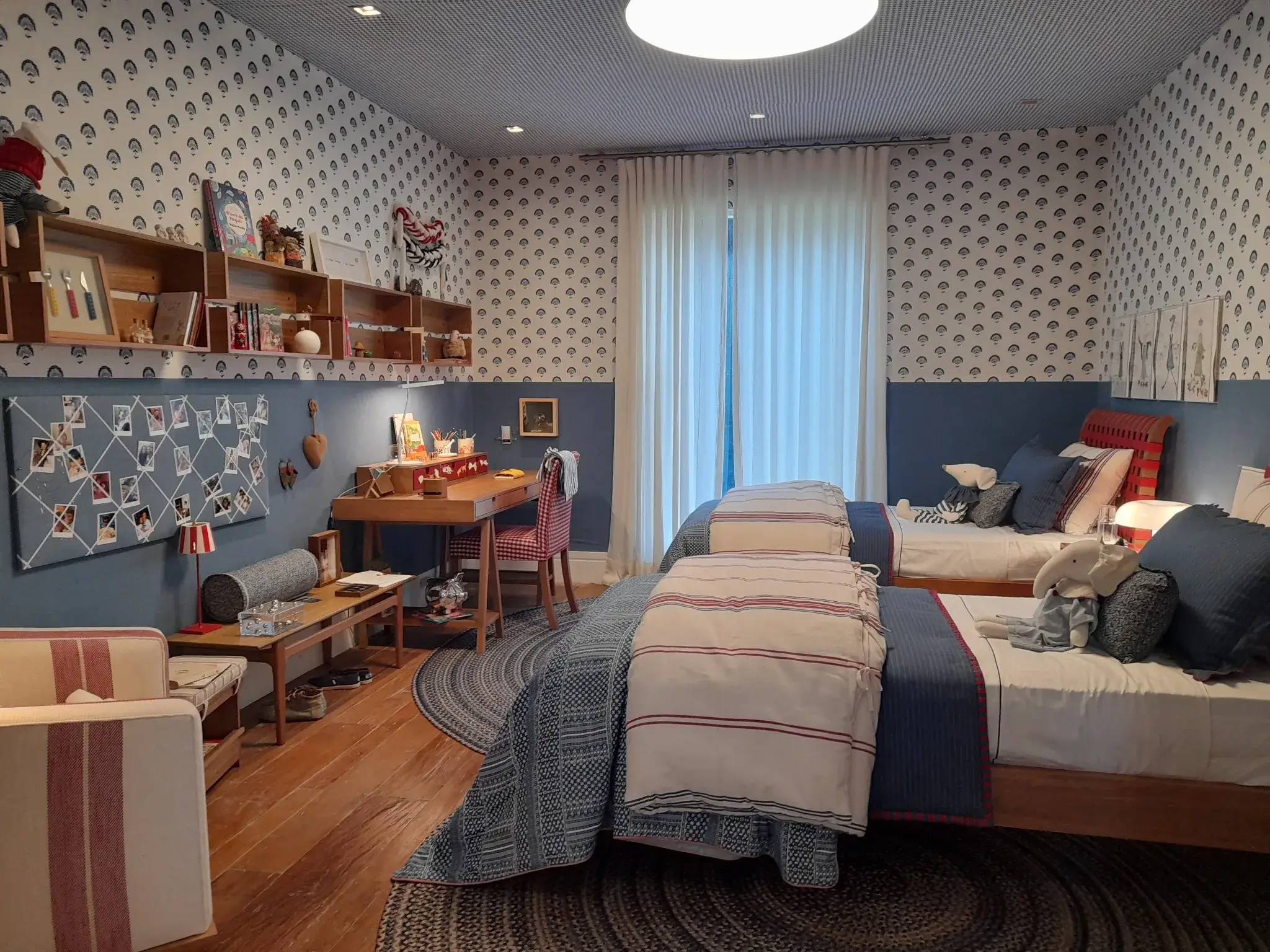
Spacious-shared-kids-bedroom-with-twin-beds-study-desk-layered-storage-and-coordinated-blue-and-red-decor.

Introduction

A shared kids bedroom can become one of the most functional and enjoyable spaces in a home when it is designed around everyday routines instead of simply fitting two beds into one room. Smart layouts, flexible furniture, and thoughtful organization help siblings share a bedroom comfortably while still giving each child a sense of personal space.

  • Good layouts reduce conflict by creating clear individual zones.
  • Flexible furniture and practical storage allow the room to adapt as children grow.

Sharing a bedroom presents unique challenges, but it also creates opportunities. When every design decision supports both independence and togetherness, the room becomes easier to organize, more comfortable to use, and capable of evolving naturally through different stages of childhood.

What Makes a Shared Kids Bedroom Successful?

A shared bedroom is about much more than accommodating two children.

It must support different personalities.

Different routines.

Different interests.

Sometimes even different ages.

The most successful shared kids bedroom designs begin by treating each child as an individual while allowing the room to function as one harmonious space.

This often means creating subtle personal areas without visually dividing the room.

Each child should feel ownership of their side while still sharing a comfortable environment that encourages cooperation and everyday family life.

A thoughtful layout makes this possible.

Planning the Layout Before Buying Furniture

Many families begin by choosing beds.

In reality, the layout should come first.

Before purchasing furniture, consider how children will move through the room.

Can both beds be accessed easily?

Will drawers open completely?

Is there enough floor space to play?

Can both children reach storage independently?

Answering these questions early prevents overcrowding later.

Sometimes placing two beds on opposite walls creates better circulation.

Other rooms benefit from parallel beds.

In compact spaces, bunk beds or loft beds may free valuable floor area for desks or play zones.

Every room has different proportions, making thoughtful planning far more important than copying a layout from a photograph.

[IMAGE — Shared children’s bedroom with balanced layout and generous circulation]

Creating Individual Spaces Without Dividing the Room

One concern many parents have is whether each child will feel they have a space of their own.

Fortunately, complete separation is rarely necessary.

Small design decisions can establish individual identity while preserving a cohesive room.

Different bedding.

Personal artwork.

Separate reading lights.

Individual shelves.

Distinct storage baskets.

Each child gains a recognizable area without making the room feel disconnected.

Repeating similar furniture while allowing personal accessories to vary often produces the most balanced result.

The bedroom feels unified while celebrating each child’s personality.

Choosing Beds That Maximize Space

Beds naturally occupy the largest portion of any children’s bedroom.

Choosing the right configuration dramatically affects how the room functions.

Twin beds placed along opposite walls often create balanced circulation.

Parallel beds work well in wider rooms.

Bunk beds maximize floor space in compact bedrooms.

Loft beds create opportunities for study areas or additional storage beneath.

The best solution depends on room dimensions, ceiling height, and the children’s ages.

Rather than selecting the most fashionable option, prioritize the layout that improves movement and everyday comfort.

Using Color to Create Harmony

Color becomes especially important when two personalities share one room.

Instead of assigning completely different themes to each side, begin with a shared foundation.

Warm white walls.

Soft sage.

Light greige.

Gentle sand tones.

These timeless backgrounds allow each child to introduce favorite colors through bedding, cushions, artwork, rugs, and accessories.

The result feels coordinated instead of divided.

This approach also makes future updates much easier as interests naturally change.

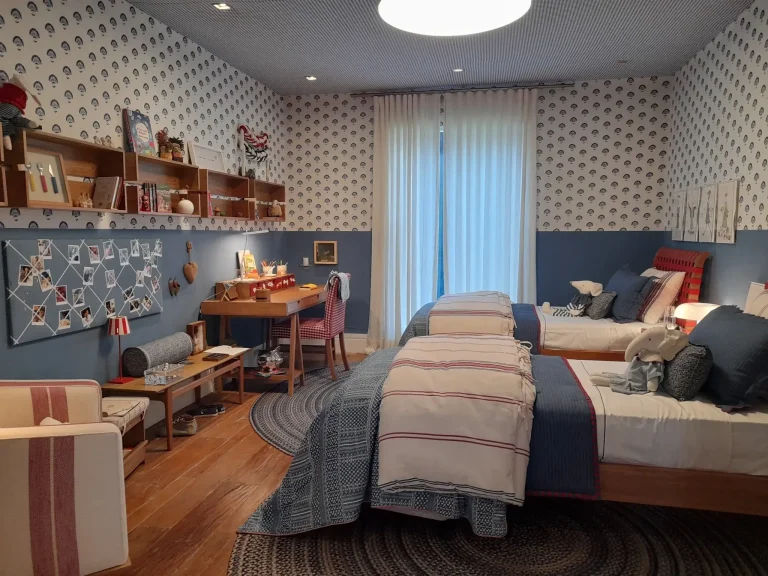
[IMAGE — Shared kids bedroom using neutral walls with colorful individual bedding]
Designing Shared Storage That Feels Fair

Storage can become one of the biggest sources of disagreement in a shared bedroom if it is not planned carefully.

Whenever possible, give each child the same amount of storage space.

Matching drawers.

Equal shelving.

Identical wardrobe sections.

Similar baskets.

This simple balance helps avoid the feeling that one child has more room than the other.

Personal labels can also make organization easier.

Instead of separating belongings randomly, each child quickly learns where clothes, books, toys, and personal treasures belong.

Shared storage works best when frequently used items remain within easy reach while seasonal clothing or less-used belongings are stored higher.

A well-organized room encourages independence while making daily routines smoother for the entire family.

Creating Shared Areas for Play and Learning

Although individual space is important, a shared kids bedroom should also encourage moments together.

Leaving an open floor area creates room for games, puzzles, reading, or creative activities.

If space allows, a small shared desk can become a homework station where siblings work side by side.

A reading corner with floor cushions and a small bookshelf creates another shared destination without requiring much space.

These common areas strengthen the room’s sense of togetherness while reducing the need for excessive furniture.

Rather than dividing every corner, the layout encourages cooperation while still respecting each child’s personal area.

[IMAGE — Shared children’s bedroom with open play area and reading corner]

Choosing Furniture That Adapts as Children Grow

One advantage of designing a shared bedroom carefully is that the room can remain functional for many years.

Instead of highly themed furniture, choose pieces that easily adapt to changing ages and interests.

Simple beds.

Neutral wardrobes.

Adjustable desks.

Modular shelving.

These pieces remain useful from early childhood into the teenage years.

Decorative elements can then provide personality.

New bedding.

Different artwork.

Updated lighting.

Favorite colors.

This strategy keeps renovation costs lower because the structure of the room remains relevant while decorative details evolve naturally.

Decision Guide: Which Shared Bedroom Layout Fits Your Family?

Every shared kids bedroom is different because every family has different routines.

Choose twin beds if the room is wide enough to provide comfortable circulation.

Choose bunk beds when maximizing floor space is the highest priority.

Choose loft beds if older children need dedicated study areas underneath.

Choose matching furniture when visual balance is important.

Choose personalized accessories if each child enjoys expressing an individual style.

The best layout is always the one that supports everyday life rather than following popular decorating trends.

When movement is comfortable, storage is accessible, and both children feel equally represented, the room becomes much easier to enjoy.

Keeping the Room Organized Without Constant Effort

Maintaining a shared bedroom becomes much easier when organization is built into the design.

Open baskets simplify toy cleanup.

Drawer dividers separate clothing.

Floating shelves display favorite books while keeping surfaces clear.

Hooks near the entrance provide easy places for backpacks, jackets, or hats.

The goal is not perfect organization.

The goal is making organization simple enough that children can participate independently.

When storage feels intuitive, tidying becomes part of everyday routines instead of a constant struggle.

[IMAGE — Shared kids bedroom featuring labeled storage baskets and organized shelving]

Why Neutral Foundations Make Future Updates Easier

Children’s interests change remarkably fast.

A room decorated around a single theme may feel outdated within only a few years.

Starting with neutral walls, timeless furniture, and natural materials creates a flexible foundation that welcomes future changes.

Favorite colors can appear through bedding.

Artwork can be replaced.

Accessories can evolve.

Rugs can introduce new personality.

Because the permanent elements remain simple, updating the bedroom requires only small investments rather than complete renovations.

This flexibility is one of the reasons contemporary family interiors increasingly favor timeless foundations with interchangeable decorative layers.

Common Mistake and How to Avoid It

One of the most common mistakes is designing a shared bedroom as though both children have identical needs.

Even siblings close in age often have different routines, hobbies, and personalities.

Instead of making every detail identical, balance equality with individuality.

Provide similar furniture.

Offer equal storage.

Allow different artwork.

Encourage personalized bedding.

Create opportunities for each child to feel represented within the shared environment.

The room remains cohesive while respecting individual preferences.

Good design supports relationships instead of forcing unnecessary uniformity.

Helping Siblings Express Their Own Personalities

A shared bedroom should feel like home for both children.

While matching furniture creates visual balance, allowing each child to personalize a small portion of the room helps build a stronger sense of ownership.

One child may enjoy displaying books.

The other may prefer framed artwork.

Favorite stuffed animals, photographs, small collections, or handmade crafts can all become part of each child’s personal area.

These details make the bedroom feel authentic rather than identical.

Giving children the opportunity to make small decorating decisions also encourages responsibility.

As they grow, they begin caring for spaces that genuinely reflect who they are.

A successful shared bedroom celebrates individuality while maintaining harmony throughout the room.

Making Morning and Bedtime Routines Easier

A well-planned shared kids bedroom supports more than sleep.

It simplifies everyday routines.

When each child has an assigned place for clothing, school supplies, and bedtime essentials, mornings become less stressful.

Separate laundry baskets reduce confusion.

Individual bedside shelves keep favorite books within reach.

Dedicated hooks make backpacks easy to find before school.

Small organizational improvements save time every day.

Instead of searching for belongings, children learn consistent habits that make the room easier to maintain.

Parents also benefit because routines become more predictable and require fewer reminders.

Good design quietly supports family life in practical ways.

[IMAGE — Shared children’s bedroom with individual bedside storage and organized morning essentials]

Using Lighting to Define Individual Spaces

Lighting is one of the easiest ways to give each child a personal area without changing the overall layout.

Individual bedside lamps create comfortable reading spaces.

Wall sconces provide focused light while freeing space on nightstands.

Adjustable reading lights allow one child to continue reading without disturbing the other.

Layered lighting also makes the bedroom more flexible throughout the day.

Bright ceiling lighting supports play and cleaning.

Soft bedside lighting creates a calmer atmosphere before bedtime.

Natural daylight keeps the room feeling open and welcoming.

Combining different light sources improves both comfort and functionality while giving each child greater independence.

Decorating Without Creating Visual Competition

A shared bedroom should feel balanced rather than divided into two completely different rooms.

One effective strategy is repeating similar shapes, materials, and colors while allowing small decorative details to vary.

Matching beds establish consistency.

Similar nightstands reinforce symmetry.

Identical curtains unify the room.

Then each child can introduce personality through cushions, artwork, favorite colors, or decorative accessories.

Because the larger elements remain coordinated, the room feels peaceful instead of visually fragmented.

This balance also makes future updates much easier as interests naturally change.

Living With the Space

The best shared bedrooms become easier to live with every year.

Children learn where belongings belong.

Furniture continues serving changing needs.

Storage adapts to new routines.

Decorative accessories evolve without disrupting the overall design.

As siblings grow older, the room naturally changes alongside them.

A favorite toy may become a bookshelf.

A play corner may become a homework station.

New artwork may replace childhood decorations.

Because the original layout was thoughtfully planned, these updates happen gradually rather than requiring complete renovations.

This long-term flexibility makes a shared kids bedroom one of the smartest investments families can make.

Checklist

Before considering your shared kids bedroom complete, ask yourself:

✔ Does each child have a clearly defined personal area?

✔ Is storage divided fairly between siblings?

✔ Can both children move comfortably around the room?

✔ Does the layout support both play and rest?

✔ Is furniture flexible enough to adapt as children grow?

✔ Have neutral foundations been balanced with personal details?

✔ Does the room encourage both independence and togetherness?

You May Also Enjoy Reading

If you’re creating bedrooms that balance comfort, organization, and everyday family life, these guides offer more inspiration.

Kids Bedroom Ideas with Color and Pattern

Discover Kids Bedroom Ideas with Color and Pattern to learn how playful colors, practical furniture, and flexible design create bedrooms that grow with your child.

Bedroom Design Ideas

Explore Bedroom Design Ideas to understand the design principles behind comfortable, functional, and timeless bedrooms.

Small Bedroom Layout Ideas That Improve Flow

Read Small Bedroom Layout Ideas That Improve Flow to discover smart furniture arrangements that maximize circulation and make compact bedrooms feel larger.

Conclusion

A shared kids bedroom works best when every design decision supports both children equally while allowing each one to express their own personality. Thoughtful layouts, balanced storage, flexible furniture, and carefully chosen colors create bedrooms that feel organized, welcoming, and comfortable for everyday family life.

Instead of focusing only on fitting two beds into one room, prioritize circulation, independence, and adaptability. A shared bedroom designed around these principles will continue supporting siblings through changing routines, growing interests, and different stages of childhood without losing its sense of harmony.

Take Away

The best shared kids bedroom is one where siblings can live together comfortably without sacrificing individuality. Balanced layouts, practical storage, flexible furniture, and timeless design choices create spaces that remain functional, beautiful, and easy to adapt for many years.

Frequently Asked Questions

What is the best layout for a shared kids bedroom?

The best layout depends on the room’s size, but twin beds, bunk beds, or loft beds should always prioritize comfortable circulation and equal access to storage.

How do I give each child privacy in a shared bedroom?

Personal bedding, artwork, lighting, shelves, and designated storage create individual spaces without dividing the room.

Should siblings have matching furniture?

Matching furniture creates visual balance, while accessories allow each child to express their own personality.

How can a shared bedroom stay organized?

Use clearly assigned storage, accessible baskets, labeled drawers, and multifunctional furniture to simplify everyday routines.

How do I design a shared bedroom that lasts as children grow?

Choose timeless furniture, neutral finishes, flexible storage, and interchangeable decorative accessories that can evolve with changing interests.