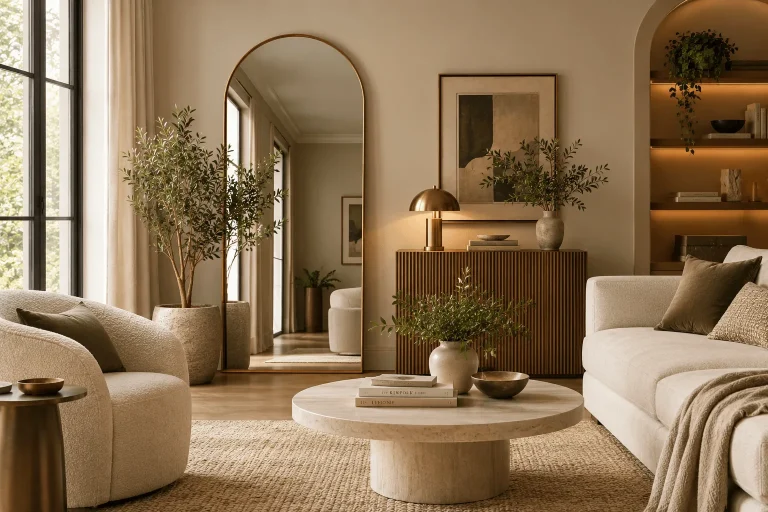

Introduction
Small bedroom layout ideas can completely change how a room feels without increasing its size. A well-planned layout improves circulation, makes everyday routines easier, and helps even compact bedrooms feel calm and comfortable.
- Better layouts create more usable space without removing furniture.
- Smart furniture placement improves movement and reduces visual clutter.
The best small bedrooms are rarely the biggest. They are the ones where every piece has a purpose and every decision supports the way people actually live.

What Are Small Bedroom Layout Ideas?
Many people assume that decorating is the solution to a cramped bedroom.
More often, the real issue is layout.
Small bedroom layout ideas focus on how furniture is positioned, how people move through the room, and how every available inch contributes to comfort. A better layout doesn’t necessarily require buying new furniture. Often, rearranging existing pieces produces a dramatic improvement.
When circulation becomes easier, the room immediately feels larger.
A clear path from the door to the bed, comfortable access to storage, and balanced furniture placement all reduce the feeling of confinement.
Good layout is less about square footage and more about thoughtful planning.
Why Flow Matters More Than Room Size
Two bedrooms with identical dimensions can feel completely different.
One may feel crowded and frustrating.
The other may feel open and relaxing.
The difference usually comes down to circulation.
When furniture blocks walking paths, daily routines become more difficult. Opening drawers, making the bed, or simply moving around the room requires unnecessary effort.
Improving flow removes these small frustrations.
Even gaining a few extra inches around the bed can make the entire room feel more comfortable.
For compact homes, circulation is one of the most valuable design tools available.
[IMAGE — Bedroom showing generous circulation around the bed]
Position the Bed First
The bed naturally becomes the largest object in the room.
Because of that, every other furniture decision should begin there.
Whenever possible, position the headboard on the room’s strongest wall while maintaining comfortable access from both sides.
Avoid pushing the bed into a corner unless the room dimensions leave no practical alternative.
Balanced access improves everyday use, makes changing bedding easier, and creates a more symmetrical appearance.
If the bedroom is exceptionally narrow, prioritize maintaining at least one comfortable circulation path rather than forcing equal spacing on both sides.
Use Furniture That Matches the Room
Oversized furniture often causes more problems than the room itself.
Large nightstands.
Bulky dressers.
Deep wardrobes.
Heavy benches.
Each piece consumes valuable floor space.
Instead, select furniture with proportions that match the room.
Slim bedside tables, floating shelves, compact dressers, and multifunctional furniture allow the room to breathe while still providing everyday functionality.
Choosing appropriately scaled furniture is often more effective than removing furniture altogether.
[IMAGE — Compact bedroom using scaled furniture and floating nightstands]
Create Clear Walking Paths
One of the simplest ways to improve a compact bedroom is by protecting the circulation space around the bed.
Even beautifully decorated rooms feel uncomfortable when furniture blocks movement.
Ideally, leave enough room to walk comfortably between the bed and surrounding furniture. If space is limited, prioritize one generous pathway instead of trying to create equal spacing everywhere.
Removing unnecessary obstacles immediately changes how the room feels.
Morning routines become easier.
Cleaning requires less effort.
The room feels lighter simply because movement becomes more natural.
Good circulation improves comfort every single day.
Take Advantage of Vertical Space
Small bedrooms often have more available wall space than floor space.
Using that vertical area helps maintain organization without making the room feel crowded.
Floating shelves.
Wall-mounted bedside tables.
Tall wardrobes.
Built-in cabinetry.
Reading sconces instead of table lamps.
Each solution frees valuable floor area while keeping everyday essentials within easy reach.
Vertical storage also draws the eye upward, creating the impression of a taller room.
This subtle visual effect makes compact bedrooms feel more spacious than their actual dimensions suggest.
[IMAGE — Small bedroom using floating shelves and wall-mounted lighting]
Keep the Center of the Room Open
Many people instinctively place additional furniture in the middle of a bedroom.
An ottoman.
A storage bench.
Extra chairs.
Decorative baskets.
While these additions may seem useful, they often interrupt circulation.
Keeping the center of the room visually open allows movement to feel effortless.
The furniture naturally frames the space instead of dividing it.
This principle works particularly well in smaller bedrooms because open floor area creates a stronger impression of spaciousness than additional decorative accessories ever could.
Sometimes removing one unnecessary piece transforms the room more than purchasing something new.
Choose Multifunctional Furniture
Every piece of furniture should earn its place in a small bedroom.
Whenever possible, select items that perform more than one function.
Beds with integrated drawers provide hidden storage.
Storage benches offer seating while organizing blankets.
Nightstands with drawers reduce surface clutter.
Desks can double as vanities.
Even headboards can include shelving for books and personal items.
These multifunctional solutions reduce the total number of furniture pieces required, improving both organization and circulation.
For everyday living, fewer but more versatile pieces almost always create a more comfortable bedroom.
Decision Guide: Which Layout Works Best for Your Bedroom?
Before rearranging furniture, consider how you actually use the room.
Choose a symmetrical layout if both sides of the bed can remain accessible and balanced.
Choose an asymmetrical layout when windows, closets, or doors limit furniture placement.
Choose floating nightstands if floor space is extremely limited.
Choose under-bed storage when closet space is insufficient.
Choose wall-mounted lighting if bedside tables need to remain compact.
The best layout is not necessarily the one that looks perfect in photographs.
It is the one that makes everyday routines easier while allowing the room to feel comfortable and uncluttered.
[IMAGE — Comparison showing two practical small bedroom furniture arrangements]
Why Visual Balance Makes Small Bedrooms Feel Larger
Visual balance influences how spacious a bedroom appears.
Heavy furniture concentrated on one side of the room creates an unbalanced feeling, even when the measurements are identical.
Distributing visual weight more evenly produces a calmer atmosphere.
This does not require matching furniture.
Instead, balance can be created through similar heights, complementary materials, or repeating colors throughout the room.
A wardrobe on one side may be visually balanced by artwork and shelving on the opposite wall.
The objective is harmony rather than perfect symmetry.
When visual balance improves, the bedroom immediately feels more organized and easier to enjoy.
[IMAGE — Balanced bedroom layout with evenly distributed furniture]
Common Mistake and How to Avoid It
One of the biggest mistakes in a small bedroom is trying to fit every piece of furniture from a larger room into a much smaller footprint.
The result is usually poor circulation, limited storage access, and a room that feels crowded before any decorative elements are added.
Instead, identify the furniture you genuinely use every day.
A comfortable bed.
Practical storage.
Adequate lighting.
A small bedside surface.
Everything else should support those essentials rather than compete with them.
Making intentional choices almost always produces a bedroom that feels larger, calmer, and easier to maintain.
Living With the Space
The best small bedroom layout ideas continue improving daily life long after the furniture has been arranged.
Making the bed becomes easier.
Cleaning requires less effort.
Closets open fully.
Drawers slide out without obstruction.
Morning routines feel smoother because movement through the room becomes natural rather than restricted.
Over time, these small improvements have a surprisingly large impact on comfort.
Instead of constantly working around the room, the room begins working for you.
That is what separates a well-designed layout from one that simply looks attractive in photographs.
Creating a Bedroom That Can Adapt Over Time
Life rarely stays the same.
A bedroom that works well today should also adapt to future changes without requiring a complete redesign.
Choosing flexible furniture makes that possible.
Floating shelves can be repositioned.
Compact nightstands can be replaced without affecting the overall layout.
Modular wardrobes allow storage needs to evolve.
Neutral furniture also makes future decorating updates much easier.
Changing bedding, artwork, rugs, or lighting refreshes the room without altering the carefully planned layout underneath.
This adaptability reduces future costs while helping the bedroom remain functional for many years.
Why Simplicity Often Creates Better Layouts
There is a common assumption that adding more furniture automatically makes a bedroom more practical.
In reality, the opposite is often true.
Every additional piece occupies floor space, interrupts circulation, and competes for visual attention.
A simpler layout usually feels more comfortable because every object has a clear purpose.
The eye moves more easily through the room.
Cleaning becomes faster.
Storage feels more organized.
The bedroom becomes a place for rest instead of constant visual stimulation.
This is one reason minimalist planning continues influencing contemporary bedroom design.
It encourages thoughtful choices rather than unnecessary additions.
[IMAGE — Calm small bedroom with an uncluttered furniture layout and open circulation]
Checklist
Before considering your bedroom layout complete, ask yourself these questions.
✔ Can you comfortably walk around the bed?
✔ Do drawers and closet doors open without obstruction?
✔ Is every furniture piece used regularly?
✔ Have you taken advantage of vertical storage?
✔ Does the room feel visually balanced?
✔ Is there enough open floor space?
✔ Can the layout adapt as your needs change?
If most answers are yes, your bedroom layout is likely supporting everyday comfort rather than limiting it.
Conclusion
Small bedroom layout ideas are about much more than fitting furniture into a compact space. They help create bedrooms that feel easier to use, more comfortable to live in, and visually calmer every day.
By prioritizing circulation, choosing appropriately scaled furniture, using vertical storage, and keeping the layout flexible, even the smallest bedroom can feel surprisingly spacious. Good design is not measured by square footage. It is measured by how naturally the room supports everyday life.
Take Away
A successful small bedroom is not defined by its size but by how efficiently every inch is used. Thoughtful furniture placement, clear circulation, and practical storage decisions create bedrooms that feel larger, require less maintenance, and remain comfortable as daily routines evolve.
Frequently Asked Questions
What are the best small bedroom layout ideas?
The best small bedroom layout ideas prioritize clear circulation, properly scaled furniture, vertical storage, and multifunctional pieces that maximize usable space.
How do I make a small bedroom feel bigger?
Keep walking paths open, reduce unnecessary furniture, use light colors, introduce vertical storage, and maintain visual balance throughout the room.
Should a bed be placed against the wall in a small bedroom?
Whenever possible, leave access to both sides of the bed. If the room is extremely compact, placing one side against the wall may be the most practical solution.
What furniture works best in a small bedroom?
Floating nightstands, beds with storage drawers, tall wardrobes, wall-mounted lighting, and compact multifunctional furniture are excellent choices.
How much space should I leave around the bed?
Leave as much circulation space as the room comfortably allows. Even a modest walking path greatly improves comfort and everyday usability.
You May Also Enjoy Reading
If you’re creating a bedroom that feels comfortable, functional, and timeless, these related guides can help you continue planning your space.
Minimalist Bedroom Ideas That Feel Warm
Discover Minimalist Bedroom Ideas That Feel Warm to learn how simple layouts, layered textures, and restrained decorating create calm and inviting bedrooms.
Small Living Room Ideas
Read Small Living Room Ideas to explore practical strategies for improving circulation, maximizing space, and making compact homes feel more open.
Bedroom Design Principles
Explore Bedroom Design Ideas to understand the fundamental design decisions that create comfortable and well-balanced bedrooms.