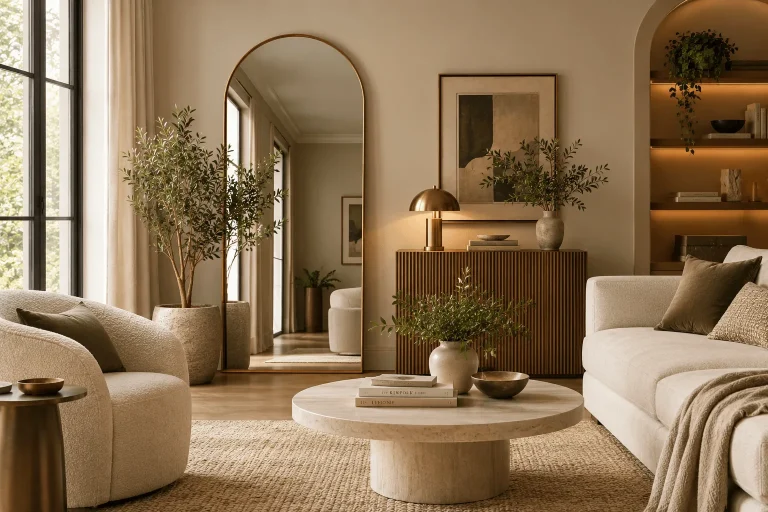
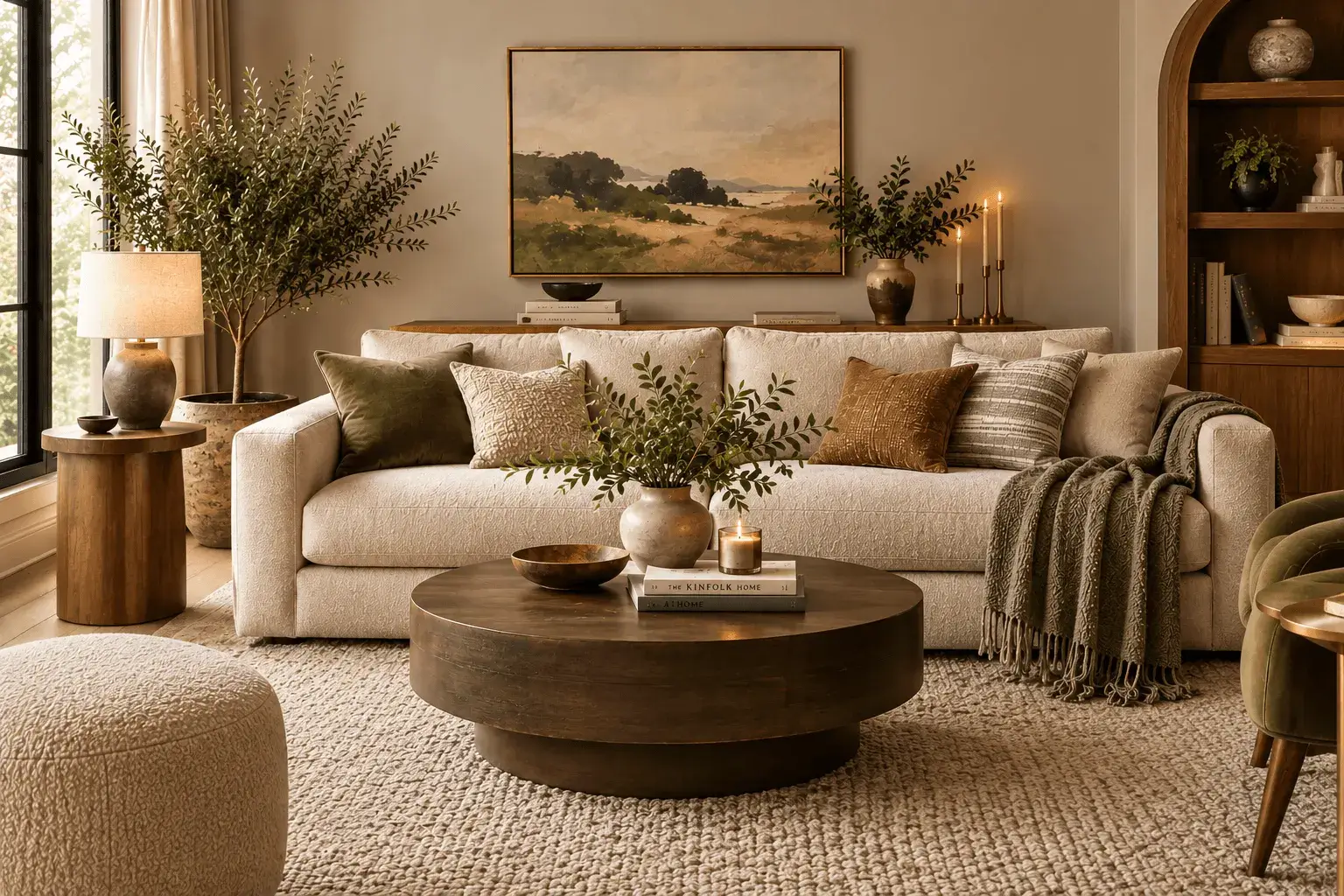
Key Takeaways
- The best sofa styling tips combine texture, proportion and carefully chosen accessories rather than excessive decoration.
- Thoughtful styling transforms a sofa into the visual centerpiece of a living room while making the entire space feel more cohesive and inviting.
Your sofa is often the largest piece of furniture in the living room, making it one of the first elements people notice when they enter the space.
Even the most beautiful sofa, however, can feel unfinished if it is surrounded by empty walls, mismatched accessories or poorly balanced proportions.
Fortunately, creating a polished look does not require buying new furniture.
A few thoughtful styling decisions can completely change the atmosphere of a room.
Layered cushions, textured throws, carefully selected artwork and balanced lighting all contribute to a living room that feels intentional rather than accidental.
The goal is not to decorate every available surface.
Instead, successful styling creates harmony between the sofa, surrounding furniture and the architecture of the room.
This guide shares practical sofa styling tips that help transform everyday living rooms into spaces that feel comfortable, elegant and professionally designed.
Why Sofa Styling Matters
A sofa naturally becomes the visual anchor of a living room.
Because of its size, every decorative decision around it influences how balanced the room feels.
Without styling, even a high-quality sofa can appear isolated.
Adding carefully chosen accessories introduces warmth, personality and visual depth while helping connect the sofa to the rest of the room.
Styling also makes a space feel lived in.
Rather than resembling a furniture showroom, the room begins reflecting the people who spend time there every day.
The best interiors balance comfort with beauty, allowing furniture to remain practical while still creating a refined overall appearance.
As explored in Living Room Color Ideas, cohesive decorating depends less on individual furniture pieces and more on how every element works together.
Begin With the Sofa Itself
Before adding decorative accessories, evaluate the sofa’s proportions, upholstery and color.
Neutral sofas provide remarkable flexibility because they adapt easily to changing seasons and decorating styles.
Bold upholstery colors, on the other hand, often benefit from more restrained accessories that prevent the room from feeling visually crowded.
The sofa should also feel appropriately sized for the room.
Generous seating works beautifully in spacious living areas, while compact sofas often maintain better balance in apartments and smaller homes.
As discussed in Sofa Buying Guide, selecting the right sofa dimensions creates the foundation for every decorating decision that follows.
Once the proportions feel right, styling becomes significantly easier.
Layer Throw Pillows Thoughtfully
Throw pillows remain one of the simplest ways to transform a sofa.
The key is creating variety without introducing unnecessary clutter.
Rather than purchasing several identical pillows, combine different sizes, textures and subtle patterns that share a consistent color palette.
A common approach begins with larger pillows placed at each end of the sofa.
Medium cushions add support toward the center, while one smaller accent pillow introduces contrast through texture or color.
Odd-number groupings often feel more natural than perfectly symmetrical arrangements, particularly in relaxed contemporary interiors.
Texture deserves just as much attention as color.
Linen, velvet, bouclé and woven fabrics create depth that keeps neutral sofas from appearing flat.
Even when every pillow belongs to the same color family, varying the materials makes the arrangement feel layered and sophisticated.
[IMAGE — Neutral sofa styled with layered throw pillows in linen, velvet and bouclé]
Alt text: modern sofa styled with layered throw pillows in different textures and neutral colors.
Add a Throw for Warmth and Texture
A throw blanket does much more than provide comfort.
It introduces movement, softness and an additional layer of texture that helps the sofa feel integrated into the room rather than standing alone.
The most natural styling approach is to drape the throw casually over one armrest or across one corner of the sofa.
Avoid perfectly folded arrangements that can make the room feel overly staged.
Instead, allow gentle folds to create a relaxed appearance while keeping the fabric neat and intentional.
Material choice also matters.
Lightweight linen works beautifully during warmer months, while wool, cashmere and chunky knit throws create a cozy atmosphere throughout autumn and winter.
Neutral tones remain the most versatile, although subtle earthy colors such as olive green, camel and terracotta can introduce seasonal warmth without overwhelming the space.
As explored in Bouclé Furniture: Why This Soft Texture Became So Popular, layering different fabrics creates richness that color alone cannot achieve.
Create Balance With Artwork
The wall behind the sofa offers an excellent opportunity to strengthen the room’s composition.
Large artwork immediately establishes a focal point while connecting the sofa to the surrounding architecture.
When hanging a single oversized piece, aim for artwork that measures approximately two-thirds to three-quarters of the sofa’s width.
This proportion creates visual balance without overpowering the seating area.
Gallery walls provide another option for homeowners who enjoy displaying photography, illustrations or collected artwork.
Keeping consistent frame finishes and spacing allows multiple pieces to feel organized rather than cluttered.
Abstract artwork, landscapes and botanical prints often pair beautifully with contemporary sofas because they introduce personality while preserving a calm atmosphere.
[IMAGE — Neutral living room featuring oversized artwork centered above a modern sofa]
Alt text: oversized artwork creating a balanced focal point above a contemporary living room sofa.
Use a Coffee Table to Anchor the Seating Area
A beautifully styled sofa feels incomplete without a properly proportioned coffee table.
The table helps define the conversation area while providing practical space for everyday living.
Decorating the surface should remain simple.
A stack of books, a ceramic vase with greenery, a candle and one sculptural object usually provide enough variation without creating visual clutter.
Mixing different heights also creates a more dynamic composition.
Tall flowers, medium-height decorative objects and lower accessories naturally guide the eye across the arrangement.
Leaving portions of the tabletop empty is equally important.
Negative space allows each decorative element to stand out while maintaining a relaxed, sophisticated appearance.
Introduce Side Tables That Feel Intentional
Side tables support both function and style.
Rather than choosing identical pieces automatically, consider the room’s overall composition.
Matching tables create symmetry that suits traditional interiors, while different but complementary tables often feel more relaxed in contemporary homes.
Each table should support practical daily use while contributing to the room’s layered appearance.
A table lamp, small plant or decorative tray usually provides enough styling without overcrowding the surface.
Natural materials such as wood, stone and metal pair especially well with upholstered sofas because they introduce subtle contrast in texture.
Layer Lighting Around the Sofa
Lighting plays a significant role in how the sofa and its surrounding décor are perceived.
Relying solely on one overhead fixture often creates flat illumination that diminishes the room’s depth.
Instead, combine multiple light sources to create a layered atmosphere.
A floor lamp beside one end of the sofa introduces height while providing practical reading light.
Table lamps placed on side tables produce warm pools of light that make the seating area feel more intimate during the evening.
Wall sconces positioned above or beside the sofa create an elegant architectural effect while drawing attention to artwork or decorative mirrors.
Warm bulbs between 2700K and 3000K generally produce the most comfortable atmosphere, enhancing upholstery textures and creating a welcoming environment throughout the living room.
As discussed in Layered Lighting Ideas for Living Rooms, combining ambient, task and accent lighting transforms a seating area from functional to truly inviting.
Add Greenery for a Natural Touch
Plants are one of the simplest ways to make a sofa arrangement feel complete.
Their organic shapes soften furniture lines while introducing movement, freshness and subtle color variation.
Large floor plants such as olive trees, fiddle leaf figs or rubber plants work beautifully beside sofas because they naturally frame the seating area.
Smaller plants displayed on side tables or shelves reinforce this connection without overwhelming the room.
Fresh branches placed in ceramic vases also create seasonal styling that feels effortless.
Unlike highly decorative accessories, greenery adds life while remaining timeless.
As explored in Olive Green Living Room Ideas That Feel Sophisticated, natural elements strengthen the connection between furniture and the surrounding space, creating interiors that feel calmer and more welcoming.
[IMAGE — Contemporary sofa styled with a floor plant, textured throw and layered lighting]
Alt text: modern sofa styled with indoor plants, a soft throw blanket and layered lighting in a contemporary living room.
Balance Color Without Overdecorating
One of the most common styling mistakes is introducing too many colors at once.
Instead of using every decorative accessory as an opportunity to add contrast, establish one consistent palette and repeat it throughout the room.
A neutral sofa can support accents in olive green, camel, terracotta or muted blue without appearing busy.
Repeating these colors through pillows, artwork and decorative objects creates continuity that feels intentional.
Likewise, if the sofa itself features bold upholstery, accessories should become quieter.
Allow the furniture to remain the focal point while supporting it with subtle textures and complementary tones.
Successful styling is rarely about adding more.
It is about editing carefully until every element contributes to the overall composition.
Styling Different Sofa Colors
Different upholstery colors benefit from slightly different styling approaches.
Beige and Cream Sofas
These versatile sofas pair beautifully with layered textures, warm wood finishes and earthy accents.
Olive green, rust, soft charcoal and muted black create elegant contrast without overwhelming the room.
Gray Sofas
Gray sofas benefit from warmer accessories.
Camel, taupe, linen and walnut help soften the cooler undertones while creating a welcoming atmosphere.
Dark Sofas
Navy, charcoal and black sofas look best when balanced with lighter pillows, textured throws and reflective materials such as brass or glass.
This contrast prevents the seating area from feeling visually heavy.
Colorful Sofas
Mustard, olive, blue or green sofas already make a statement.
Styling should emphasize texture and proportion rather than introducing additional bold colors.
As explored in Best Yellow Sofas for Bright and Inviting Living Rooms, restraint often creates a far more sophisticated result than excessive decoration.
Common Sofa Styling Mistakes
Even beautiful furniture can appear unfinished when styling lacks balance.
One common mistake is placing too many pillows on the sofa.
While cushions certainly improve comfort, covering every seat with decorative pillows reduces functionality and creates unnecessary clutter.
Another mistake is choosing accessories that are too small.
Tiny artwork above a large sofa or undersized coffee tables often make the room feel disconnected.
Proper proportions create harmony far more effectively than additional decorative objects.
Ignoring texture is another missed opportunity.
A room filled with smooth materials may appear flat even if the color palette is attractive.
Mixing linen, bouclé, wool, wood and stone introduces depth that immediately elevates the overall design.
Finally, remember that empty space has value.
Leaving portions of the sofa visible allows its shape and upholstery to remain part of the design instead of disappearing beneath decorative accessories.
Styling Your Sofa Through the Seasons
One advantage of thoughtful sofa styling is how easily it can evolve throughout the year.
Instead of replacing furniture, homeowners can refresh the room simply by changing a few carefully selected accessories.
During spring and summer, lightweight linen pillows, soft cotton throws and fresh greenery create a bright, airy atmosphere.
Neutral ceramics and woven baskets reinforce this relaxed seasonal feeling without requiring dramatic changes.
Autumn introduces an opportunity to layer warmer textures.
Bouclé cushions, wool throws and earthy tones such as olive green, rust and camel immediately make the seating area feel cozier.
Winter styling often emphasizes comfort even further.
Chunky knit blankets, velvet pillows and warm lighting create an inviting environment that encourages relaxation during longer evenings.
Because the sofa remains the constant foundation, these seasonal updates feel effortless while keeping the living room fresh throughout the year.
Personalize Without Creating Clutter
The most memorable living rooms always reflect the people who live in them.
Rather than decorating according to trends alone, introduce accessories that have personal meaning.
A favorite travel book, a handcrafted ceramic vase, family photographs displayed in simple frames or artwork collected over time all contribute personality without overwhelming the space.
The key is editing carefully.
Instead of displaying dozens of decorative objects, choose a few meaningful pieces that naturally complement one another.
Negative space allows those objects to receive the attention they deserve.
This restraint often creates a far more sophisticated result than filling every available surface.
As explored in Living Room Color Ideas, successful interiors feel collected over time rather than decorated all at once.
Why Small Details Make the Biggest Difference
Many homeowners assume achieving a professionally styled living room requires expensive furniture or complete renovations.
In reality, the smallest adjustments often produce the greatest visual improvement.
Straightening artwork, fluffing cushions, adjusting the throw blanket or replacing worn decorative pillows can completely refresh a seating area.
Even changing lamp bulbs to a warmer color temperature creates a softer atmosphere that highlights upholstery textures and makes the room feel more welcoming.
Professional designers frequently spend time refining these subtle details because they understand that balance comes from careful observation rather than dramatic decoration.
When every element supports the overall composition, the room naturally feels finished.
Conclusion
The best sofa styling tips are not about adding more decorative accessories.
They are about creating balance through thoughtful layers of texture, color, lighting and proportion.
A carefully styled sofa becomes much more than a comfortable place to sit.
It anchors the entire living room while reflecting your personal style and making the space feel warm, welcoming and complete.
Whether you prefer a minimalist interior, an Organic Modern aesthetic or a more traditional home, the same principles apply.
Choose accessories intentionally, layer natural textures, maintain balanced proportions and allow the sofa to remain the visual centerpiece of the room.
Over time, these simple styling decisions transform everyday living spaces into interiors that feel timeless, comfortable and beautifully lived in.
Practical Checklist Before Styling Your Sofa
✓ Begin with a balanced color palette.
✓ Layer pillows using different sizes and textures.
✓ Add one carefully draped throw blanket.
✓ Hang artwork in proportion to the sofa.
✓ Use a properly sized coffee table.
✓ Layer lighting with floor and table lamps.
✓ Introduce natural greenery for freshness.
✓ Mix materials such as wood, linen, bouclé and stone.
✓ Avoid overcrowding the sofa with accessories.
✓ Refresh styling seasonally instead of replacing furniture.
You May Also Like
Living Room Color Ideas
Explore timeless color palettes that create welcoming and balanced interiors.
Sofa Buying Guide
Learn how to choose the perfect sofa for your room, lifestyle and decorating style.
Bouclé Furniture: Why This Soft Texture Became So Popular
Discover how textured upholstery adds warmth and sophistication to contemporary living rooms.
Take Away
- Layering textures creates more impact than adding excessive color.
- Pillows and throws should enhance comfort as well as style.
- Proper lighting dramatically improves the appearance of upholstered furniture.
- Greenery introduces freshness and balances decorative accessories.
- Thoughtful styling makes even simple sofas feel elegant and complete.
Frequently Asked Questions
How many pillows should I place on a sofa?
Most sofas look balanced with three to five pillows, depending on their size. Focus on varying texture and scale rather than quantity.
What is the best way to style a neutral sofa?
Layer different fabrics, introduce one or two accent colors and use natural materials such as wood, linen and ceramics to create depth.
Should a throw blanket match the pillows?
Not exactly. Coordinating colors while varying textures creates a more natural and sophisticated appearance than matching every accessory.
How do I make my sofa look more expensive?
Choose high-quality pillows, add layered textures, use balanced lighting and avoid overcrowding the seating area with decorative items.
What accessories should every sofa have?
A combination of well-chosen pillows, a textured throw, nearby lighting, a coffee table and one or two natural elements such as plants usually creates a complete and timeless arrangement.