Mirrors are often chosen because they look attractive on a wall.
While appearance certainly matters, their real value goes far beyond decoration.
A well-placed mirror can make a room feel brighter, more spacious and visually balanced. A poorly positioned mirror can have the opposite effect, drawing attention to clutter, creating distracting reflections or making a room feel uncomfortable.
This mirror placement guide explains how to use mirrors in ways that improve both aesthetics and everyday living.
In this article you will learn:
• Why mirror placement matters more than mirror size
• How mirrors influence light and visual space
• Where mirrors work best in living rooms
• Common placement mistakes to avoid
• Practical ways to choose the right mirror for your home
The goal is not simply adding another decorative element.
The goal is helping the room function and feel better every day.
Why Mirrors Matter More Than Most People Realize
Many people think of mirrors as decorative accessories.
In reality, they influence how a room is perceived.
Unlike artwork, mirrors actively interact with the space around them.
They reflect light.
They duplicate views.
They affect visual proportions.
They can make rooms appear larger or smaller depending on how they are used.
This makes mirror placement one of the most influential decorating decisions in a living room.
A properly positioned mirror can improve brightness without changing lighting fixtures.
It can strengthen visual balance without adding more furniture.
It can even help a room feel more open without requiring structural changes.
These benefits explain why mirrors remain one of the most effective tools in interior design.
Mirror Placement Guide: Start With What the Mirror Reflects
One of the most common mistakes is focusing entirely on the mirror itself.
The reflection is often more important than the mirror.
Before hanging a mirror, ask a simple question:
What will it reflect?
If the mirror reflects a window, it may increase brightness and create a stronger connection with natural light.
If it reflects attractive furniture or architectural features, it can reinforce visual balance.
If it reflects clutter, exposed cables or awkward corners, it may unintentionally highlight the least attractive parts of the room.
The reflection becomes part of the design.
Choosing what the mirror reflects is often the most important decision in the entire process.
How Mirrors Influence Natural Light
Light plays a major role in how comfortable a room feels.
Mirrors help distribute available light throughout a space.
This is particularly valuable in living rooms where daylight enters from only one direction.
When positioned opposite or adjacent to a window, a mirror can help bounce light deeper into the room.
The result is often a brighter and more welcoming environment.
This does not replace proper lighting design.
However, it can significantly improve how natural light performs throughout the day.
As discussed in Home Lamps Guide (#93), successful lighting often comes from combining multiple sources rather than relying on a single solution.
Mirrors can become part of that strategy.
Best Locations for Living Room Mirrors
Certain placements consistently perform better than others.
Opposite a Window
This remains one of the most popular options.
The mirror reflects natural light and often makes the room feel larger.
It can also enhance outdoor views by bringing elements of the landscape into additional areas of the room.

Above a Console Table
A mirror above a console table creates a balanced focal point.
This arrangement often works well in transitional spaces or living rooms with open layouts.
Above a Fireplace
Fireplaces naturally attract attention.
A mirror placed above the mantel can reinforce that focal point while increasing brightness.
Beside Windows
Positioning mirrors beside windows often feels more subtle than placing them directly opposite.
This approach still improves light distribution while creating a softer visual effect.
Empty Walls
Some walls simply feel unfinished.
A carefully selected mirror can add interest without introducing visual clutter.
Choosing the Right Mirror Size
Size affects impact significantly.
A mirror that is too small may feel disconnected from the surrounding furniture.
A mirror that is too large may dominate the room.
The best size depends on what role the mirror will play.
Large mirrors often work best when:
• Expanding visual space is a priority
• Natural light is limited
• The room contains large furniture pieces
• A stronger focal point is desired
Smaller mirrors often work better when:
• Decorative layering is important
• The wall already contains visual elements
• Subtle balance is preferred
As with furniture selection, proportion tends to matter more than absolute size.
A mirror should feel connected to the room rather than isolated within it.
Round vs Rectangular Mirrors
Shape influences atmosphere just as much as size.
Round Mirrors
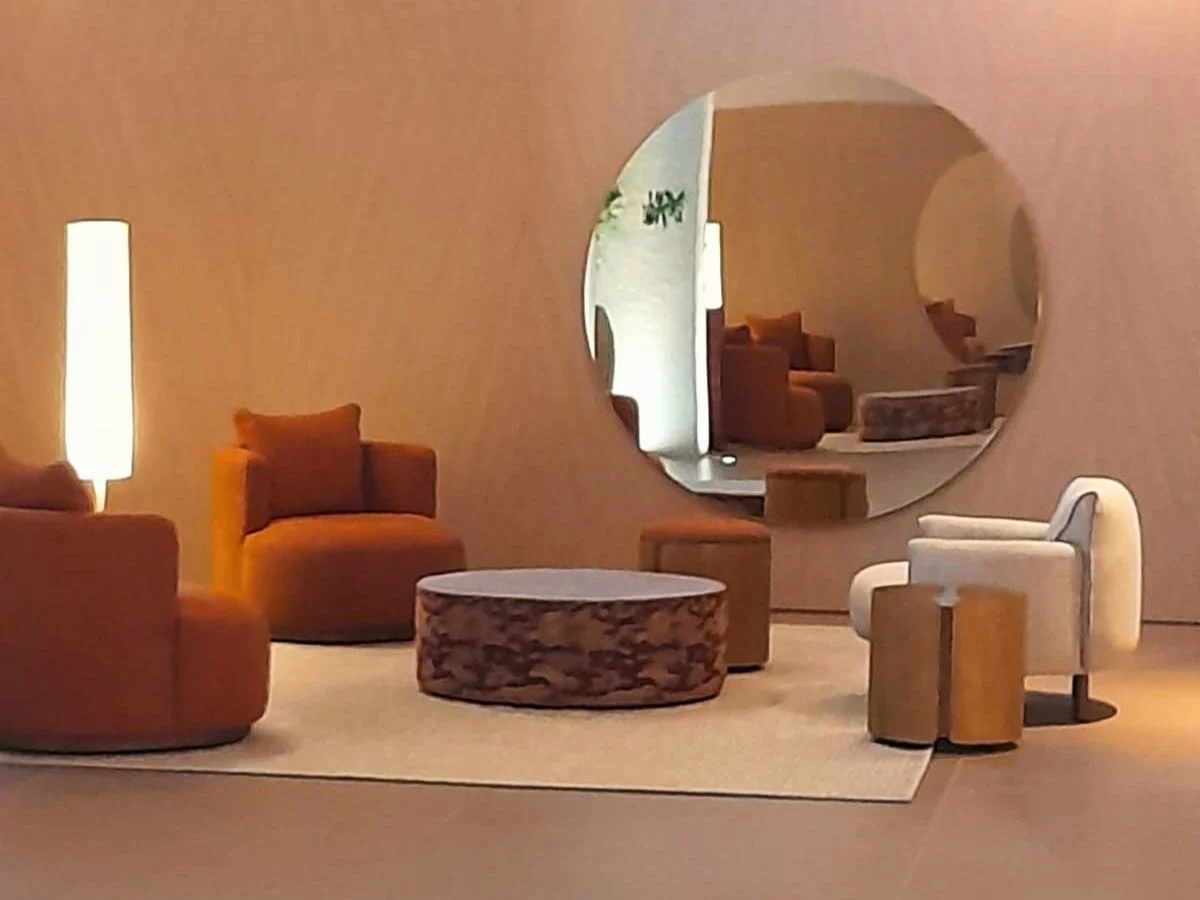
Round mirrors introduce softness.
They help offset rooms dominated by straight lines and rectangular furniture.
Many homeowners use them to create a more relaxed and approachable atmosphere.
Rectangular Mirrors
Rectangular mirrors provide stronger visual structure.
They often feel more formal and architectural.
Their shape aligns naturally with windows, fireplaces and furniture arrangements.
Organic Shapes
Irregular and organic mirror designs have become increasingly popular.
These shapes introduce movement and personality.
However, they typically work best when the rest of the room remains visually balanced.
The choice should support the overall character of the space.

How Mirrors Affect the Perception of Space
One reason mirrors remain so popular is their ability to influence perceived room size.
Small living rooms often benefit from carefully positioned mirrors because reflections extend visual depth.
However, simply adding a large mirror does not automatically improve the room.
Placement still matters.
A mirror that reflects openness tends to make a room feel larger.
A mirror that reflects crowded furniture arrangements may reinforce the opposite effect.
This principle is similar to ideas discussed in Living Room Layout Guide (#99), where perception often matters as much as physical dimensions.
The goal is not creating an illusion.
The goal is enhancing the qualities the room already possesses.
Mirrors and Visual Balance
Good design often depends on balance.
Mirrors can help distribute visual weight throughout a room.
For example, a large sofa on one side of the room may create visual heaviness.
A mirror placed strategically elsewhere can help balance the composition.
This effect becomes especially valuable in asymmetrical layouts.
Mirrors can also reinforce relationships between different design elements.
Colors.
Textures.
Lighting.
Plants.
Artwork.
By reflecting these elements, mirrors help connect separate parts of the room into a more cohesive whole.
Decision Guide: Which Mirror Is Right for Your Living Room?
Choosing a mirror becomes easier when practical needs guide the decision.
Who uses the room most frequently?
What is the primary purpose of the mirror?
When does natural light enter the space?
Where will the mirror be positioned?
Why does the room feel incomplete?
How much wall space is available?
How much visual impact is desired?
These questions naturally support better decisions.
For example:
If the room feels dark, prioritize light reflection.
If the room feels visually crowded, focus on creating openness.
If the room lacks a focal point, consider a larger statement mirror.
If balance is the primary goal, a more subtle design may work better.
The best mirror is not necessarily the most decorative one.
It is the one that solves a practical design challenge.
Mirrors and Other Decorative Elements
Mirrors rarely exist in isolation.
They interact with surrounding furniture and accessories.
Plants often pair particularly well with mirrors because reflections enhance greenery and create additional visual depth.
This concept connects naturally with Living Room Plants Guide (#102), where organic elements help soften interiors.
Mirrors also work effectively with carefully chosen color palettes.
As discussed in Living Room Color Guide (#100), reflected colors can influence how bright or calm a room feels.
Because mirrors amplify existing elements, they should complement the overall design rather than compete with it.
Large Mirrors vs Multiple Smaller Mirrors
One decision many homeowners face is whether to use a single large mirror or several smaller mirrors.
Both approaches can work well, but they create different effects within a living room.
A large mirror typically creates a stronger sense of openness.
Because the reflective surface is continuous, the room often feels larger and brighter. Large mirrors are particularly useful in compact living rooms where increasing the perception of space is a priority.
They also tend to create a cleaner and less cluttered appearance.
Multiple smaller mirrors create a different experience.
Rather than emphasizing spaciousness, they often introduce rhythm and visual interest. A carefully arranged collection of mirrors can function almost like artwork while still providing some reflective benefits.
This approach works especially well in larger rooms where the goal is adding character rather than maximizing perceived size.
The decision often depends on what problem the room needs to solve.
If the room feels dark, confined or visually heavy, a larger mirror is usually the stronger choice.
If the room already feels balanced but needs additional personality, a grouping of smaller mirrors may provide better results.
How Mirrors Support Long-Term Decorating Flexibility
One reason mirrors remain popular year after year is their adaptability.
Furniture styles change.
Color palettes evolve.
Decorative trends come and go.
Mirrors generally continue working regardless of these changes.
A well-positioned mirror can adapt to new furniture arrangements, updated wall colors and different decorative accessories without requiring replacement.
This flexibility often makes mirrors one of the most practical decorative investments in a living room.
Instead of committing to highly specific design trends, homeowners can use mirrors to create a foundation that remains useful as the room evolves.
Over time, this approach often leads to spaces that feel more timeless, balanced and easier to update when needed.
Common Mistake and How to Avoid It
A common mistake is hanging mirrors without considering what they reflect.
Another frequent issue is selecting mirrors that are too small for the wall.
Tiny mirrors on large walls often feel disconnected and ineffective.
Placement height can also create problems.
Mirrors hung too high frequently lose their functional value and appear visually awkward.
The solution is simple.
Evaluate the reflection.
Consider proportion.
Test placement before making permanent decisions.
A little planning usually produces significantly better results.
Living With the Space
Mirrors influence daily experience in subtle ways.
Rooms feel brighter during the morning.
Natural light reaches deeper into the space.
Corners feel less confined.
Decorative elements appear more integrated.
These effects often become more noticeable over time.
The best mirrors do not constantly draw attention to themselves.
Instead, they quietly improve the way a room feels and functions.
This is often what separates successful decorating decisions from purely decorative purchases.
A mirror should contribute to everyday comfort rather than simply occupy wall space.
Practical Checklist Before Buying a Mirror
✓ Evaluate what the mirror will reflect
✓ Measure available wall space
✓ Consider natural light sources
✓ Match mirror size to furniture scale
✓ Decide between decorative and functional priorities
✓ Evaluate room proportions
✓ Consider visual balance
✓ Coordinate with existing decor
✓ Test placement height
✓ Focus on long-term usability
You May Also Like
Home Lamps Guide: Creating Warmth Through Better Lighting
Discover how mirrors and lighting work together to improve atmosphere and comfort.
Living Room Color Guide: Choosing Colors That Feel Right Every Day
Learn how color and reflection influence the overall mood of a room.
Living Room Plants Guide: How to Use Plants Without Creating Extra Maintenance
Explore ways to combine greenery and reflective surfaces for greater visual balance.
Conclusion
This mirror placement guide demonstrates that mirrors are far more than decorative accessories.
They influence light, visual balance, spatial perception and the overall experience of living in a room. By focusing on reflections, proportions and everyday functionality, homeowners can make choices that improve both aesthetics and comfort.
The most successful mirrors do not simply fill empty walls.
They help rooms feel brighter, more balanced and easier to enjoy every day.
Take Away
• Mirror placement matters more than mirror size
• Reflections influence room perception
• Mirrors can improve natural light distribution
• Proper proportion creates better visual balance
• The best mirrors solve practical design challenges
Frequently Asked Questions
What is a mirror placement guide?
A mirror placement guide helps homeowners position mirrors to improve light, balance and visual space.
Where should a mirror be placed in a living room?
Mirrors often work best opposite windows, above fireplaces, above console tables or on walls that benefit from additional visual interest.
Do mirrors make a room look bigger?
Yes. When positioned correctly, mirrors can increase perceived depth and make rooms feel more spacious.
Should a mirror face a window?
In many cases, yes. Reflecting natural light can brighten the room and enhance the feeling of openness.
What size mirror is best for a living room?
The ideal size depends on the wall and furniture proportions, but mirrors generally work best when they feel appropriately scaled to the surrounding space.