Introduction
A well-designed beige sofa living room offers something many homeowners are looking for: flexibility. A beige sofa creates a calm foundation that works with changing decorating styles, seasonal accessories, and evolving family needs without requiring a complete redesign.
- Beige sofas adapt easily to different color palettes and decorating styles.
- Layering texture, lighting, and accessories prevents neutral spaces from feeling flat.
Some people hesitate to choose a beige sofa because they worry it may look too plain or difficult to maintain.
In reality, a beige sofa is one of the most versatile furniture investments you can make.
Its neutral tone allows the room to evolve over time while continuing to feel balanced, comfortable, and welcoming.
Instead of becoming the focal point, it supports every other design decision, creating a living room that remains relevant long after trends have changed.
Why Beige Sofas Remain Popular Year After Year
Furniture is often one of the largest investments in a living room.
Unlike cushions or decorative accessories, sofas are expected to last for many years.
Choosing a neutral color reduces the pressure to redesign the room whenever decorating trends change.
Beige has remained popular because it complements nearly every material and finish.
Natural wood.
Black metal.
Marble.
Brass.
Stone.
Glass.
Whether your home leans toward Scandinavian, contemporary, transitional, farmhouse, or organic modern design, a beige sofa adapts naturally.
Rather than limiting future decorating choices, it expands them.
This flexibility makes beige one of the safest long-term investments for everyday living.
Understanding the Different Shades of Beige
Not every beige sofa creates the same atmosphere.
Warm beige introduces softness and pairs beautifully with oak furniture, woven textures, and warm lighting.
Greige combines beige with subtle gray undertones, making it ideal for more contemporary interiors.
Sand-colored upholstery creates a relaxed coastal feeling.
Oatmeal fabrics introduce texture while remaining understated.
Cream sits between white and beige, producing a brighter appearance without feeling stark.
Choosing the right undertone is often more important than choosing beige itself.
The sofa should complement the room’s flooring, wall color, and natural light instead of competing with them.
Building a Layered Neutral Living Room
A beige sofa should never carry the entire design by itself.
Instead, use it as the starting point for layering complementary materials.
Linen cushions.
Knitted throws.
Natural wood coffee tables.
Stone accessories.
Ceramic vases.
Woven baskets.
Textured rugs.
Each additional material introduces visual interest while preserving the calm atmosphere that makes neutral interiors so appealing.
Rather than relying on bold colors, the room develops richness through contrast in texture, shape, and natural materials.
This layered approach keeps the space feeling warm instead of empty.
Choosing the Right Rug
The rug plays an important role in defining the seating area around a beige sofa.
Light neutral rugs create an open and airy feeling.
Textured wool rugs introduce warmth without overwhelming the palette.
Soft geometric patterns add movement while remaining understated.
If the room already contains many neutral surfaces, a slightly darker rug helps anchor the furniture arrangement.
Whatever the choice, the rug should be large enough for at least the front legs of the seating to rest comfortably on it.
Proper proportions make the entire living room feel more intentional and visually balanced.
Adding Color Without Losing the Neutral Foundation
One of the greatest strengths of a beige sofa is how easily it works with changing accent colors.
Soft sage introduces an organic feeling.
Terracotta adds warmth.
Olive green creates depth.
Dusty blue produces a calm atmosphere.
Charcoal adds contemporary contrast.
Even black decorative accents can create striking definition while allowing the beige sofa to remain visually soft.
Because the base is neutral, changing cushions, artwork, or decorative objects becomes an inexpensive way to refresh the room throughout the seasons.
Choosing the Right Coffee Table for a Beige Sofa
A coffee table does more than fill the space in front of the sofa.
It connects the seating area, supports daily routines, and helps define the overall style of the room.
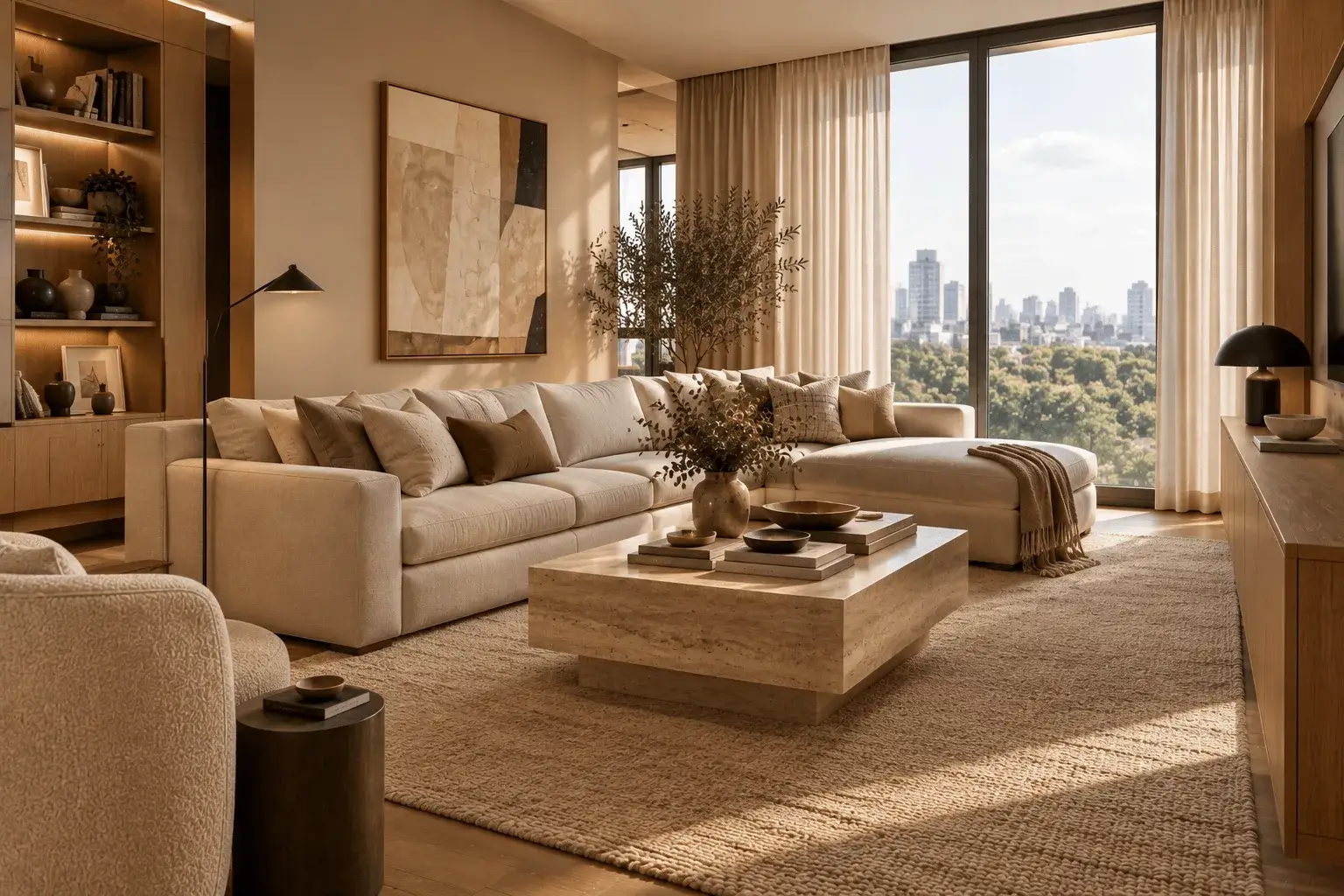
Because a beige sofa is visually neutral, the coffee table has an opportunity to introduce character without overwhelming the space.
Natural oak creates a warm and relaxed atmosphere.
Walnut adds richness and contrast.
Travertine and marble bring subtle elegance while keeping the palette soft.
Glass tables help maintain an open feeling in smaller living rooms because they occupy less visual space.
The shape also matters.
Round tables soften rooms filled with straight lines.
Rectangular tables work well in larger seating arrangements.
Organic shapes add movement and create a more relaxed appearance.
Rather than choosing the most decorative option, select a table that supports both the layout and the way your household uses the room every day.
Lighting That Complements a Beige Sofa
Lighting has a remarkable influence on how beige upholstery appears.
During the day, natural sunlight reveals the warmth and texture of woven fabrics.
At night, warm artificial lighting enhances those same textures, making the room feel more comfortable and inviting.
Table lamps placed beside the sofa create intimate pools of light for reading or conversation.
Floor lamps help balance larger seating
Choosing the Best Fabric for a Beige Sofa
Color is only part of what makes a beige sofa successful.
The upholstery fabric has an equally important role in comfort, durability, and the overall appearance of the living room.
Linen blends create a relaxed and natural look that works beautifully in Scandinavian, coastal, and organic modern interiors.
Cotton fabrics feel soft and casual while remaining versatile enough for everyday family living.
Performance fabrics have become increasingly popular because they resist stains and wear without sacrificing comfort.
These materials are especially valuable in homes with children or pets, where the sofa is used constantly.
Leather in a warm beige tone offers another timeless option.
It develops character over time while remaining relatively easy to maintain.
Rather than choosing a fabric based only on appearance, consider how your household actually uses the living room.
A beautiful sofa becomes even more valuable when it continues looking good after years of everyday use.
Adding Texture Around a Beige Sofa
Because beige is visually quiet, texture becomes the element that creates interest.
Without texture, even a well-designed room can feel flat.
Start by layering different materials instead of introducing stronger colors.
A chunky knit throw instantly makes the seating area feel warmer.
Linen cushions add softness and subtle variation.
Bouclé accent chairs create visual contrast without competing with the sofa.
Natural fiber rugs such as wool, jute, or sisal provide another layer that grounds the furniture arrangement.
Ceramic accessories, woven baskets, and wooden side tables continue this theme throughout the room.
Each texture catches light differently.
Together, these subtle variations create depth while preserving the calm atmosphere that makes neutral interiors so inviting.
Styling Shelves and Walls Around the Sofa
The wall behind a beige sofa plays an important role in balancing the entire room.
Rather than filling every available surface, choose a few carefully selected decorative elements.
Large artwork creates a clear focal point without adding visual clutter.
Floating shelves allow books, ceramics, and plants to introduce personality while maintaining an open appearance.
A large mirror reflects natural light and helps the room feel more spacious.
If you prefer a gallery wall, keep the color palette restrained so the arrangement complements the sofa instead of competing with it.
Repeating natural materials across shelving, frames, and decorative objects reinforces the relaxed atmosphere created by the neutral seating.
The objective is to frame the sofa rather than overwhelm it.
Making a Beige Sofa Feel Cozy in Every Season
One of the biggest advantages of a beige sofa is how easily it adapts throughout the year.
During spring and summer, lightweight linen cushions and soft cotton throws keep the room feeling bright and airy.
Natural greenery reinforces this fresh atmosphere without requiring dramatic decorating changes.
In autumn, introduce richer textures through knitted blankets, boucle cushions, and warm-toned ceramics.
Winter welcomes heavier wool throws, textured rugs, and deeper accent colors such as olive, terracotta, or chocolate brown.
Because the sofa itself remains neutral, these seasonal updates require very little effort or expense.
Changing only a few accessories refreshes the room while preserving its timeless foundation.
This adaptability makes beige sofas particularly attractive for homeowners who enjoy decorating without replacing major furniture pieces.
Decision Guide: Is a Beige Sofa Right for Your Living Room?
Before choosing a beige sofa, consider how you want your living room to function over the coming years.
Choose warm beige if your home features natural wood and warm lighting.
Choose greige if you prefer a contemporary palette with cooler finishes.
Choose performance fabric if your sofa will receive heavy daily use.
Choose linen blends if texture and relaxed elegance are priorities.
Choose leather if durability and long-term character matter most.
If you enjoy changing decorative accessories seasonally, a beige sofa provides one of the most flexible foundations available.
Instead of limiting future decorating choices, it gives you complete freedom to evolve the room over time.
Common Mistake and How to Avoid It
One of the most common mistakes is assuming that a beige sofa should be surrounded only by beige furniture and accessories.
Although this creates a coordinated palette, it can also leave the room feeling flat if there is too little variation in texture, shape, and tone.
Instead of matching every element perfectly, build gentle contrast.
Mix smooth upholstery with woven materials.
Pair soft fabrics with natural wood.
Combine matte ceramics with glass or metal accents.
These subtle differences create depth while preserving the calm character of the room.
Another frequent mistake is choosing cushions that are almost identical to the sofa fabric.
Introducing slightly darker neutrals or natural textures makes the seating area feel layered and intentional without losing its timeless appeal.
The goal is harmony, not uniformity.
Living With the Space
A beige sofa is one of those rare furniture choices that becomes more valuable over time.
As family routines change, children grow, or decorating preferences evolve, the sofa continues adapting effortlessly.
Replacing cushions, adding a different rug, or introducing new artwork completely refreshes the room without requiring a new centerpiece.
Morning coffee feels inviting against soft natural light.
Evening conversations become more comfortable under warm layered lighting.
Seasonal decorating becomes simple because nearly every accent color works beautifully with a neutral foundation.
Perhaps the greatest advantage is flexibility.
A beige sofa never forces future decorating decisions.
Instead, it quietly supports them.
This allows the living room to evolve naturally over many years while remaining cohesive, comfortable, and welcoming.
Rather than chasing trends, the room develops character through everyday living.
Checklist
Before choosing a beige sofa, ask yourself these questions.
✔ Does the shade of beige complement your flooring and wall color?
✔ Have you selected a fabric that fits your daily lifestyle?
✔ Will the sofa receive enough layered texture through cushions and throws?
✔ Is the coffee table balanced in both size and material?
✔ Have you planned warm, comfortable lighting around the seating area?
✔ Does the room include enough natural materials to create visual depth?
✔ Will the design remain attractive as your decorating style evolves?
If most of your answers are yes, your beige sofa will likely become a timeless foundation rather than a temporary decorating choice.
You May Also Enjoy Reading
If you’re designing a living room that feels warm, practical, and timeless, these related guides can help you continue planning your space.
Neutral Living Room Ideas That Stay Interesting
Explore Neutral Living Room Ideas That Stay Interesting to discover how layering texture, lighting, and natural materials creates depth without relying on bold colors.
How to Use Texture in a Living Room
Read How to Use Texture in a Living Room to learn how fabrics, wood, stone, and woven materials make neutral interiors feel richer and more inviting.
Curtains for Living Room Spaces That Feel Balanced
Discover Curtains for Living Room Spaces That Feel Balanced to see how window treatments influence light, comfort, and the overall atmosphere.
Small Living Room Lighting Ideas That Work Better
Explore Small Living Room Lighting Ideas That Work Better to understand how layered lighting improves comfort and highlights furniture beautifully.
Conclusion
A thoughtfully designed beige sofa living room proves that timeless interiors are built on flexibility rather than constant change. By combining the right shade of beige with layered textures, balanced lighting, natural materials, and carefully chosen accessories, the sofa becomes more than a neutral piece of furniture. It becomes the foundation for a living room that feels comfortable today and remains relevant as your home evolves. Instead of limiting creativity, a beige sofa gives you the freedom to refresh the room again and again while preserving a calm and welcoming atmosphere.
Take Away
A beige sofa succeeds because it adapts. It works with changing seasons, evolving decorating styles, and everyday family life without losing its appeal. When supported by texture, thoughtful lighting, and balanced proportions, it creates a living room that feels warm, functional, and timeless for years to come.
Frequently Asked Questions
Is a beige sofa a good long-term investment?
Yes. Beige sofas remain timeless because they coordinate easily with changing décor, allowing the living room to evolve without replacing its largest piece of furniture.
How do I keep a beige sofa from looking boring?
Layer different textures through cushions, throws, rugs, wood furniture, ceramics, and natural materials rather than relying on bold colors alone.
What wall colors work best with a beige sofa?
Warm white, ivory, greige, soft taupe, sage green, and light earth tones all pair beautifully with beige upholstery.
Is a beige sofa practical for families?
Absolutely. Choosing performance fabrics or durable upholstery makes beige sofas suitable for homes with children and pets while maintaining their timeless appearance.
What accent colors go well with a beige sofa?
Sage green, olive, terracotta, navy, charcoal, rust, muted blue, and soft black accents all complement beige while preserving a balanced and inviting atmosphere.