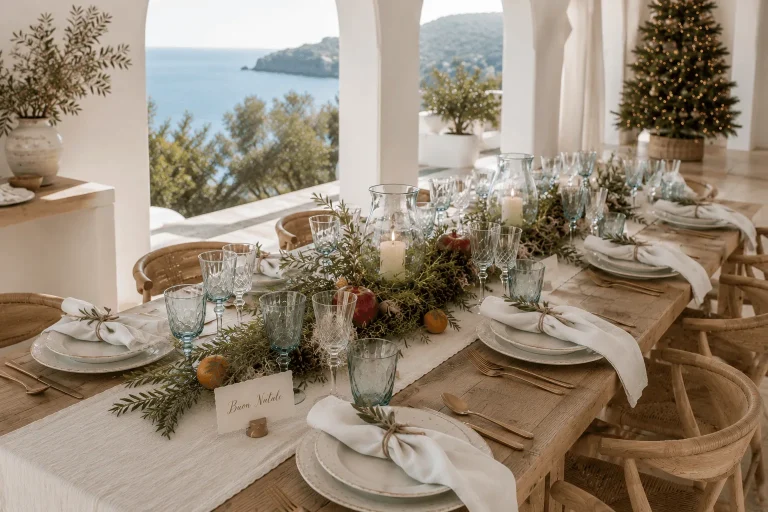

• A practical table setting works when daily use remains easy without losing visual order.
• The strongest everyday tables support movement, comfort, and repetition more than decorative complexity.
A practical table setting rarely begins with decoration.
It begins with use.

Start-with-a-Functional-Base
Before choosing plates, textiles, or center elements, the table needs to function naturally for the people who use it every day.
This changes how visual decisions are made.
Instead of asking what looks impressive, the more useful question becomes what continues to work repeatedly without creating friction.
That shift often improves the table immediately.
Objects stop competing for attention and begin supporting daily rhythm.
A practical dining table does not need to feel incomplete.
It simply prioritizes comfort, access, and clarity before adding visual detail.
This often creates stronger results than highly decorative arrangements because the table becomes sustainable.
The most successful everyday dining setups usually share one quality.
Nothing feels difficult to maintain.
The arrangement can return easily day after day because each element has clear purpose.
That consistency creates calm.
Over time, practical table styling becomes less about formal arrangement and more about understanding how objects behave together in real life.
A practical place setting therefore depends less on perfection and more on repeatable balance.
Why Daily Tables Need Clear Structure First
A table used every day benefits from predictable structure.
When plates, glasses, and utensils return to familiar positions, the visual rhythm becomes easier to maintain.
This creates natural order even before decorative elements appear.
The plate usually establishes the first anchor.

Its placement defines how surrounding objects behave.
A centered plate immediately gives the eye orientation.
Flatware positioned with regular spacing reinforces that stability.
Glasses placed consistently prevent the table from feeling fragmented.
This type of structure matters because daily use depends on speed.
A practical table should never require long preparation to feel complete.
The stronger the underlying structure, the easier it becomes to recreate.
That is why everyday table layout often looks better when simplified.
The arrangement becomes intuitive.
The table starts to support routine instead of interrupting it.
Why Practical Tables Usually Use Fewer Decorative Layers
Many daily tables improve when decorative layers are reduced.
Too many textiles, stacked accessories, or decorative pieces often complicate ordinary meals unnecessarily.
A practical dining routine benefits from restraint.
One placemat or one napkin may already provide enough visual softness.

Additional layers often create maintenance without adding meaningful visual value.
This does not mean the table must feel empty.
It means each object should justify itself through usefulness or visual clarity.
A simple table arrangement usually survives daily repetition better because fewer pieces need adjustment.
That stability matters over time.
When decoration remains manageable, consistency becomes possible.
And consistency often creates stronger atmosphere than occasional elaborate styling.
Choosing Materials That Work Every Day
Practical table settings depend heavily on materials.
Beautiful objects only remain useful when they tolerate repetition.
Ceramic plates often perform well because they combine durability with visual softness.

practical-table-setting-botanical-plate
Clear glass works because it integrates easily with different meals and table moods.
Natural textiles also help.
Linen or cotton maintain comfort while adding quiet texture.
Highly delicate materials can work occasionally, but practical tables usually benefit from pieces that tolerate frequent use without visual stress.
This changes how the table feels psychologically.
People use the table more naturally when objects feel accessible.
A practical table should never create hesitation.
That confidence improves the atmosphere of the meal itself.
Useful table decor often follows this principle.

Decorative pieces remain strongest when they coexist naturally with ordinary movement.
Why Practical Tables Depend on Visual Calm
Daily dining often happens quickly.
Breakfast, lunch, informal dinners, and routine meals all benefit from visual calm because the table should not demand unnecessary attention.
Balanced table arrangement helps here.
Visual calm usually appears when color variation remains controlled.
Neutral plates, simple glasses, and quiet textiles reduce visual interruption.
The table begins to feel stable.
This calm also helps food remain visually central.
Meals appear clearer when the surface around them stays balanced.
Practical table styling therefore often resembles minimalist decisions even when the table is not intentionally minimalist.
Visual calm supports use because nothing distracts movement or reading of the table.
This is why many practical tables feel elegant almost accidentally.
Their restraint creates natural clarity.
Why Centerpieces Must Stay Secondary in Daily Use
A practical table can include a centerpiece, but it must remain secondary.
Large decorative objects often interrupt daily function.
A centerpiece that blocks conversation or competes with serving quickly becomes inconvenient.
Low center elements work better.
A small ceramic vase, one branch, or a contained bowl usually offers enough visual center without occupying excessive space.
The goal is presence without obstruction.
A practical centerpiece should never force objects around it unnaturally.
This is why useful table decor often appears smaller than expected.
Its role is to organize the center visually, not dominate the table.
Even a completely empty center can work if the surrounding place settings already establish rhythm.
Practical tables understand that function always leads.
Why Repetition Makes Practical Tables Easier to Maintain
Repetition reduces effort.
When plates, glasses, and napkins repeat in predictable forms, the table becomes easier to assemble without decision fatigue.
This matters daily.
A practical dining setup should not require reinvention every time.
Repeated objects also strengthen visual identity.
Even simple plates become more elegant when repeated consistently.
The same applies to glasses and cutlery.
Practical place settings often feel stronger precisely because repetition creates quiet rhythm.
That rhythm allows small variations without losing order.
A different bowl or seasonal napkin can enter naturally because the base remains stable.
This makes the table flexible without becoming visually unstable.
Why Practical Tables Often Look Better Than Overdesigned Ones
Many tables become visually heavy because too many decisions happen at once.
Different colors, multiple textures, decorative accents, and centerpieces all compete simultaneously.
A practical table avoids this.
It limits simultaneous visual signals.
The result often looks stronger.
A practical dining table tends to appear more natural because it follows what daily use actually requires.
That honesty often reads as elegance.
Objects remain where they make sense.
Spacing stays functional.
Materials feel coherent.
This explains why many practical tables photograph well even without decorative ambition.
They contain visual logic.
Why Empty Space Helps Practical Dining
Empty space is functional.
A crowded table quickly loses comfort.
Plates need movement around them.
Serving dishes require temporary space.
Glasses need clear access.
A practical table therefore uses empty space intentionally.
That open area prevents visual compression.
It also improves flexibility during meals.
Practical everyday dining setup depends on this adaptability because real meals rarely stay visually static.
Objects move.
Plates change.
Serving pieces appear and disappear.
A table that begins with breathing room absorbs those changes more naturally.
Empty space is therefore not absence.
It is active planning.
Why Practical Table Settings Adapt to Different Meals Easily
One of the strengths of practical styling is adaptability.
A breakfast table, lunch setting, and dinner table do not need completely different visual systems.
The same structure can support all three.
The plate remains central.
Glass remains stable.
Textile use adjusts slightly if needed.
This continuity simplifies home rhythm.
It also strengthens the dining identity of the house.
The table begins to feel coherent across different moments.
That is often more powerful than occasional dramatic styling.
A practical table gains strength because it belongs naturally to everyday life.
Why Practical Tables Often Feel More Welcoming
People tend to relax more around tables that feel usable.
A highly formal arrangement can sometimes create hesitation.
A practical table invites immediate use.
Objects appear accessible.
Nothing feels overly delicate.
This affects atmosphere directly.
The meal begins more naturally.
Conversation usually follows the same ease.
Practical styling therefore influences more than appearance.
It shapes behavior.
That is why many of the most memorable tables are not necessarily elaborate.
They simply feel comfortable enough to support real moments.
Why Consistency Creates Long-Term Table Identity
When a table follows practical principles regularly, the dining area develops identity.
The same plate language, similar materials, and stable proportions begin to define the home quietly.
This long term consistency often matters more than occasional decorative variation.
The table becomes recognizable.
Even small changes continue inside that visual logic.
That continuity creates maturity.
Practical styling therefore often ages better than trend-based decoration because it depends on repeatable decisions.
A Practical Table Usually Becomes Stronger When It Supports Real Life First
The best practical table settings rarely begin by asking how the table should look.
They begin by asking how the meal will happen.
That practical question often leads naturally to better visual decisions.
Objects become fewer, spacing improves, and decorative choices become clearer.
Over time, the table stops feeling staged and starts feeling stable.
That stability is what makes everyday dining visually satisfying in the long run.
Why Practical Tables Improve When Small Adjustments Become Habit
A practical table often becomes stronger not through major changes, but through repeated small adjustments.
Over time, people naturally notice what slows down a meal, what feels unnecessary, and what improves comfort without effort.
These observations gradually refine the table more effectively than any fixed decorative plan.
A glass placed too close to the plate may seem insignificant at first, yet during daily use that small distance begins to matter.
The same happens when napkins are too bulky, center elements occupy useful space, or serving dishes arrive without enough room prepared in advance.
Practical table styling improves when these details are corrected naturally.
That is why many of the most functional everyday tables evolve slowly.
They respond to real use.
A practical dining table rarely reaches balance in one decision.
It becomes balanced because daily repetition reveals where visual order and physical comfort need adjustment.
This process also explains why practical place settings often differ slightly from house to house.
Each dining routine creates different priorities.
Some homes need faster breakfast transitions.
Others depend on shared serving dishes during dinner.
Some prefer open space because the table supports work between meals.
The strongest practical table setting accepts those realities instead of forcing a fixed visual formula.
Small habits also help preserve visual consistency.
Returning plates to similar positions, folding napkins in one simple way, and keeping glasses aligned creates quiet order without conscious effort.
These habits eventually make the table easier to assemble because fewer decisions remain open each day.
That reduction in effort matters.
A useful table should support routine rather than require creative energy every time.
Another important adjustment appears through seasonal changes.
A practical table in warmer months often benefits from lighter textiles and more open surfaces.
During colder periods, slightly denser materials may feel more natural without changing the underlying structure.
This adaptability keeps the table visually alive while preserving function.
In practice, practical dining setups become stronger when they allow small corrections to accumulate over time.
The table does not need dramatic reinvention.
It only needs attention to what repeatedly works better.
That quiet refinement is often what transforms an ordinary table into one that feels consistently natural, usable, and visually resolved.
Practical tables usually become more convincing when nothing feels forced.
The easier the arrangement fits daily life, the more naturally the table gains permanence, comfort, and visual confidence over time.

Explore More Table Setting Guides
If you want to strengthen everyday rhythm further, Everyday Table Setting Ideas for Real Life expands how consistency improves daily dining.
For readers interested in visual restraint, Minimalist Table Setting Ideas shows how fewer elements often create stronger balance.
If elegance is the next step, How to Set an Elegant Table Without Overdoing It explains how refinement can remain practical.
You may also continue with Elegant Bedroom Ideas That Feel Timeless (#60), where similar ideas of proportion and visual calm appear in another part of the home.
You may also like reading the next article in this series as the table setting cluster continues to grow through practical and visually lasting decisions.