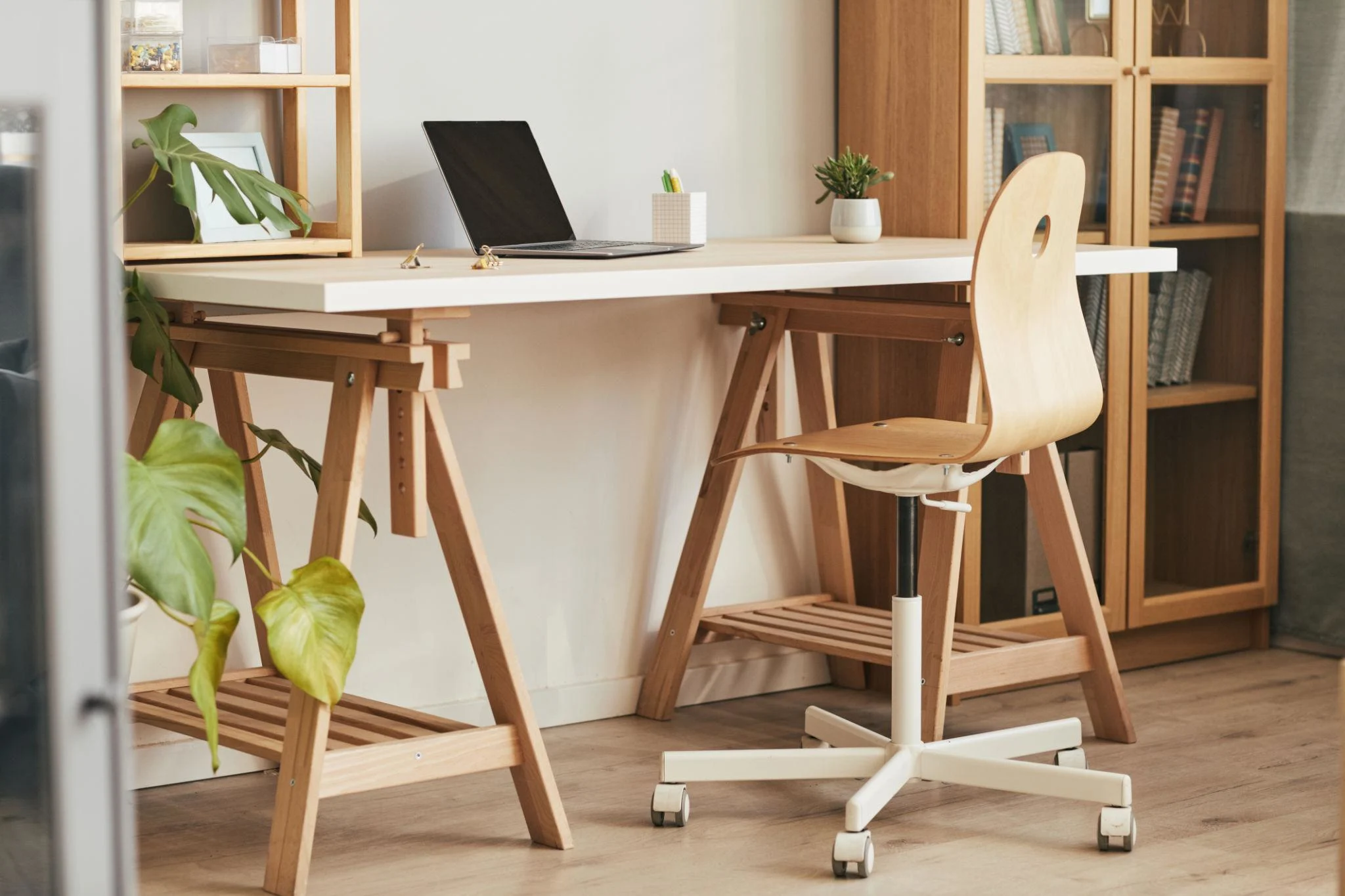
A home office often starts organized, but after a few days, cables spread, papers accumulate, and surfaces lose clarity. Good organization is rarely about buying more containers or adding decorative storage. It usually begins with understanding how work happens in that room and which objects are used most often.
When organization follows daily habits, the workspace becomes easier to maintain without constant correction. This creates a room that supports concentration instead of generating visual interruptions.
A well organized home office does not need to feel minimal or empty. It simply needs clear decisions about where materials belong and how movement happens throughout the day.
In many homes, clutter appears because storage is added after the room is already functioning poorly. A better approach is to define use zones first and then allow storage to support those zones naturally.
This principle also appears in How to Create a Functional Home Office, where functionality begins before decorative choices.
Start by Identifying Daily Work Patterns
Organization improves when the desk reflects actual routines rather than idealized setups seen in reference images.
A person who writes frequently needs immediate access to notebooks, chargers, and pens. Someone who works mostly on a laptop may need fewer visible items but better cable control.
The easiest way to organize is to separate objects into three groups:
• used daily
• used weekly
• rarely needed
Only daily items should remain immediately accessible.
Everything else should move slightly away from the main surface so the desk remains visually calm without losing practicality.
This also helps prevent the common mistake of turning every shelf into overflow storage.
Keep the Desk Surface Intentionally Limited
A desk does not become efficient because it is empty. It becomes efficient when only the right elements remain visible.
The ideal desk surface usually includes:
• computer or laptop
• one light source
• one writing area
• one essential accessory tray
Too many visible objects create micro interruptions even when they appear organized.
A controlled desk surface also improves visual breathing space, especially in smaller rooms.
This becomes even more important in compact setups such as Small Home Office Ideas for Limited Space.
Use Vertical Storage Before Expanding Sideways
Many home offices lose efficiency because storage spreads horizontally and occupies circulation space.
Vertical solutions often perform better because walls absorb storage without interfering with movement.
Useful vertical options include:
• open shelves above desk height
• narrow side shelving
• wall mounted organizers
• vertical document holders
The purpose is not to fill the wall completely but to move selected categories upward.
This leaves the lower area visually lighter and easier to clean.
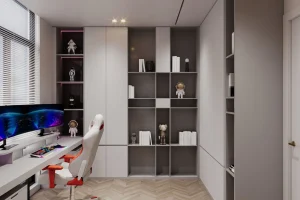
Organize by Frequency, Not by Category Alone
Many people group items only by type:
all notebooks together
all cables together
all papers together
This seems logical but often slows daily use.
A stronger method is to group by frequency:
items used constantly remain closest
weekly materials move one level away
archived material leaves immediate reach
This system reduces unnecessary hand movement during work hours.
It also makes the room easier to reset at the end of each day.
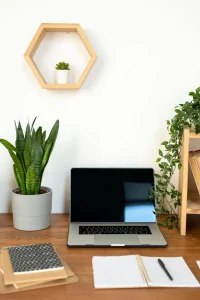
Cable Management Changes More Than Appearance
Cables are one of the fastest ways for a workspace to feel disorganized.
Even when furniture is beautiful, exposed cables often create visual noise.
Practical control can include:
• clips under desk edges
• simple cable sleeves
• one hidden charging zone
• grouped adapters
These changes are small but immediately improve clarity.
The room begins to feel intentional rather than improvised.
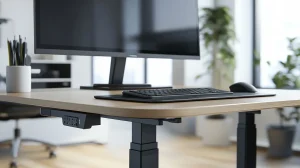
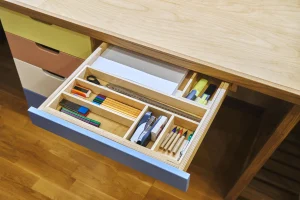
Drawers Should Be Divided by Function
A drawer without division quickly becomes delayed clutter.
Simple internal separation works better than deep storage boxes.
Useful divisions include:
• writing tools
• chargers
• paper accessories
• personal essentials
Each section should support quick retrieval without searching.
A drawer should never become invisible storage for unresolved objects.
Open Storage Should Remain Selective
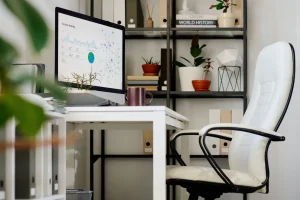
Open shelves often begin organized and slowly become overloaded.
To avoid this, each shelf should have a clear role.
For example:
top shelf for books
middle shelf for active materials
lower shelf for practical containers
When every shelf tries to store everything, visual fatigue appears quickly.
This is why layout decisions matter before adding storage volume, a principle also explored in Home Office Layout Ideas That Support Productivity.
Paper Management Needs a Simple System
Paper clutter still appears even in mostly digital routines.
Without a fixed method, paper accumulates horizontally across the desk.
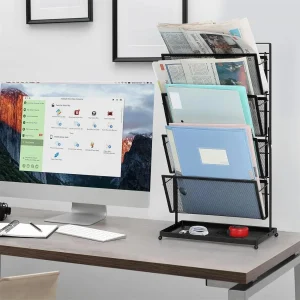
A simple three part system often works:
• active
• pending
• archive
Nothing else is needed.
Complex filing systems usually fail because they demand too much effort.
A small vertical file holder often solves more than large cabinets.
Why Invisible Clutter Often Returns Even After Organizing
One reason many home offices return to disorder is that organization often focuses only on visible surfaces while hidden areas remain unresolved. Drawers, shelves, and side cabinets may temporarily hide excess items, but without a clear logic those spaces quickly become secondary clutter zones.
When hidden storage lacks structure, daily routines slowly reintroduce confusion because objects lose defined destinations.
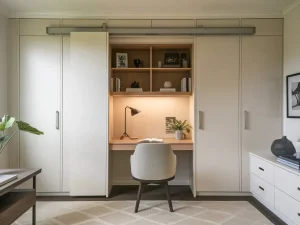
This is why every closed storage area should still follow simple categories. A drawer should not become a place for mixed tools, paper, cables, and unrelated accessories. Even when items are hidden, retrieval must remain immediate and predictable.
Small labels can help, but often internal consistency matters more than labeling itself. If each section always serves one purpose, memory naturally replaces the need for visible reminders.
Many effective home offices use hidden storage only for reducing visual pressure while keeping access simple.
A shelf cabinet, for example, works best when upper levels store items used occasionally and lower levels support weekly routines. Frequently used materials should never require unnecessary movement.
Invisible clutter also tends to grow when decorative objects and practical objects compete for the same storage area.
For that reason, decorative storage should still preserve function.
A box placed on a shelf may look clean visually, but if it contains unrelated items, the system slowly fails.
Good organization usually depends less on containers and more on decisions repeated consistently.
Small Habits That Prevent Future Disorganization
A highly organized workspace is usually maintained through small repeated habits rather than occasional large corrections.
Simple actions help preserve order:
• returning one object immediately after use
• clearing paper before ending work
• keeping one incoming area for temporary items
• avoiding new objects without assigned placement
These habits seem minor, but over time they protect the room from slow accumulation.
Many disorganized desks do not become chaotic in one day. They change through many small delays.
When a home office includes a return habit, visual order remains stable with less effort.
Even five minutes at the end of the day often protects the next morning from unnecessary visual noise.
This also improves mental readiness because the workspace already feels prepared before work begins.

Why Good Organization Improves Focus Indirectly
An organized room does not create productivity automatically, but it removes subtle interruptions that often reduce concentration.
Every object visible inside the work zone competes for small portions of attention.
Even when ignored consciously, visual excess creates background fatigue.
This is why organized desks often feel calmer even before work begins.
The goal is not strict minimalism.
The goal is reducing unnecessary signals.
When only relevant objects remain nearby, focus usually becomes easier to sustain for longer periods.
This explains why many highly functional workspaces appear simple even when they contain many practical systems nearby.
The systems exist, but they do not dominate visual attention.
Small Storage Choices Affect Long Term Maintenance
Large organizing systems often fail because they are difficult to sustain.
Small repeated solutions usually last longer:
• one tray
• one drawer divider
• one return basket
• one document zone
When maintenance takes seconds, the room stays organized naturally.
Efficient workspaces are rarely the most complex — they are the most intentional.
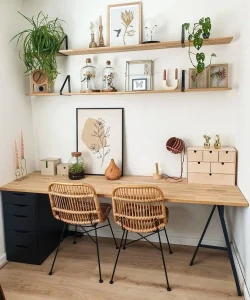
Lighting and Organization Work Together
A poorly lit workspace often hides disorder until it accumulates.
Light helps define work zones clearly.
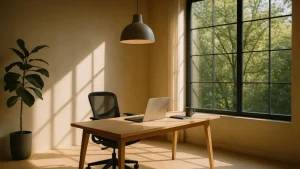
A focused lamp near the desk creates visual hierarchy and reinforces where work happens.
This prevents objects from spreading into unrelated surfaces nearby.
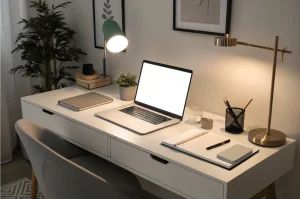
Daily Reset Is More Powerful Than Deep Reorganization
The strongest organizing habit is not weekly cleaning.
It is a short reset at the end of each day.
A daily reset includes:
• returning objects
• clearing paper
• reconnecting chargers
• emptying unnecessary items
This usually takes less than five minutes.
But over weeks, it preserves the entire system.
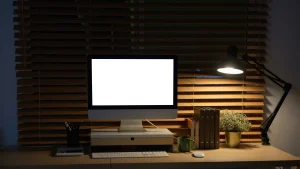
Organization Should Still Feel Comfortable
A workspace that feels too controlled often becomes uncomfortable.
The goal is not visual perfection.
The goal is friction reduction.
That means leaving room for:
• one personal object
• one visual comfort element
• one material that softens the room
A workspace still needs personality to remain pleasant over long hours.
Organization Should Adapt as Work Changes
A home office rarely stays exactly the same over time. New tools appear, routines change, and the type of work often evolves gradually. Because of this, organization should never be treated as a fixed system that remains untouched for years.
The most durable workspaces are usually the ones that allow small adjustments without requiring complete reorganization.
A drawer that works today may need a different internal division after a few months. A shelf that originally stored books may later function better for documents or equipment. These changes are normal and often indicate that the room is adapting correctly to real use.
Instead of trying to build a perfect permanent system, it is often more useful to review the workspace occasionally and remove what no longer supports daily tasks.
This keeps the room efficient without adding unnecessary complexity.
A flexible organization system also prevents decorative choices from becoming obstacles. When each object has a reason to remain, the office stays lighter, easier to maintain, and more consistent with daily needs.
Over time, this creates a workspace that feels stable because it continues to respond well to changing routines rather than resisting them.

Small Adjustments Often Make the Biggest Difference
Many home office improvements do not require major furniture changes or new storage systems. In many cases, small adjustments create the most noticeable results because they directly affect daily comfort.
Moving a tray closer to the dominant hand, reducing the number of visible objects on the desk, or relocating frequently used materials to a more accessible shelf often improves workflow immediately.
These decisions may appear minor, but they reduce repeated interruptions throughout the day.
A workspace usually becomes easier to maintain when each movement feels simple and expected.
This is why organization often succeeds through observation rather than large purchases.
After a few days of work, it becomes clear which objects are always reaching the desk and which items remain unused.
The best organization choices usually follow that evidence.
When small adjustments are made gradually, the office develops naturally into a space that supports routine without demanding constant correction.
Over time, these subtle improvements often create a stronger long term result than complete reorganizations made all at once.
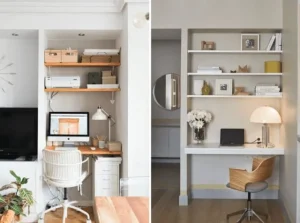
FAQ
What is the easiest way to organize a home office?
Start by removing everything that is not used daily and define clear zones for work essentials.
How do I keep a home office organized long term?
Small daily resets usually work better than occasional large reorganizations.
Should everything be hidden in storage?
No. Frequently used objects should remain visible if they are intentionally placed.
What matters most in small home office organization?
Vertical storage and surface control usually make the biggest difference.
Conclusion
A well organized home office is not built through rigid systems or excessive storage. It becomes effective when each object supports the way work actually happens every day.
Simple decisions repeated consistently often create better long term results than complex organizing methods. When the workspace remains easy to maintain, concentration improves naturally and the room continues to function well even as routines change.
Over time, organization becomes less about keeping everything perfect and more about preserving a space that remains practical, calm, and ready for daily use.
A well-organized workspace is not something you manage, it is something that supports you.
Explore More Home Office Guides
If you want to improve your workspace further, these guides expand practical decisions for layout, comfort, and everyday efficiency:
• How to Create a Functional Home Office explains how a workspace becomes easier to use when structure comes first.
• Small Home Office Ideas for Limited Space shows how compact rooms can remain efficient without losing comfort.
• Home Office Layout Ideas That Support Productivity explores how movement and furniture placement affect focus.
These articles help transform organization into part of a complete workspace strategy.