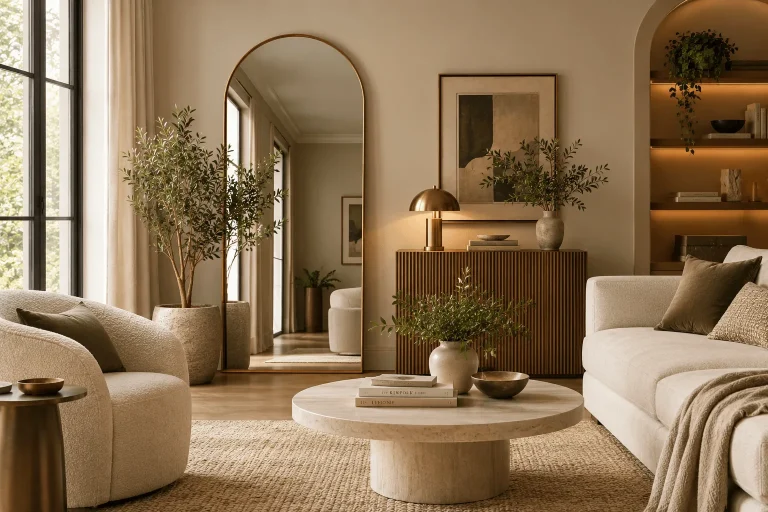
Neutral bedroom decor often feels more comfortable not because it is simple, but because it reduces visual noise and allows the space to breathe. A bedroom rarely feels calm when too many elements compete for attention. What creates comfort is how quietly everything works together.
Neutral spaces are often misunderstood as empty or lacking personality. In reality, they depend on subtle variation, texture, and balance to feel complete.
Over time, neutral bedrooms tend to age better because they support everyday life without overwhelming the senses.
Why Neutral Bedrooms Feel More Comfortable Over Time
A neutral bedroom does not rely on contrast to create impact.
Instead, it builds comfort through continuity. Colors transition smoothly, materials relate naturally, and the space becomes easier to process visually.
This reduces fatigue.
Rooms that demand less visual effort often feel more relaxing, especially at the end of the day when the mind begins to slow down.
As the space evolves, this visual stability becomes one of its strongest qualities.
The Difference Between Neutral and Plain
Neutral does not mean empty.
A room can use soft tones and still feel layered, warm, and visually interesting. The difference lies in variation rather than contrast.
Subtle shifts in tone, such as warm beige against off-white or soft gray paired with natural textures, create depth without disrupting calm.
When variation is present, the room feels intentional.
When everything is identical, the space may feel flat.
How Warm Neutrals Change the Atmosphere
Temperature matters more than color intensity.
Cool neutrals can feel clean but slightly distant. Warm neutrals tend to feel more inviting because they soften the environment.
This includes tones like:
• warm whites
• soft beige
• sand tones
• muted taupe
These colors reflect light gently and create a more contained, comfortable atmosphere.
In many bedrooms, warmth is what transforms neutrality into comfort.
Texture Is What Brings Neutral Spaces to Life
Without texture, neutral rooms can feel incomplete.
Texture introduces variation without adding visual noise. It allows the eye to move across the space without interruption.
This can include:
• layered bedding
• woven materials
• soft fabrics
• natural finishes
Even small changes in texture can significantly affect how the room feels.
A neutral palette becomes richer when surfaces respond differently to light and touch.
How Lighting Enhances Neutral Decor
Lighting plays a central role in how neutral colors are perceived.
Soft lighting tends to enhance warmth, while harsh light can flatten subtle tones and reduce depth.
Layered lighting works best in neutral bedrooms because it allows the space to shift throughout the day.
In the evening, warmer light reinforces the softness of the palette and creates a more relaxed atmosphere.
This interaction between light and color often defines whether a neutral room feels inviting or cold.
How Neutral Colors Change Throughout the Day
Neutral colors are not static. They shift depending on light, time, and surrounding materials.
A soft beige may feel warmer in the morning and more muted in the evening. Off-white surfaces can appear brighter under natural light and softer under artificial lighting.
This constant variation is one of the reasons neutral bedrooms feel more dynamic than expected.
Instead of relying on strong contrast, they respond to changing conditions.
Over time, this subtle transformation keeps the room visually interesting without disrupting its calm atmosphere.
Why Fewer Colors Often Create Stronger Results
Neutral bedrooms benefit from restraint.
Using fewer tones allows the room to feel more cohesive and easier to understand. When too many variations are introduced, the space may lose its calm quality.
This does not mean limiting creativity. It means working within a controlled palette where each element supports the overall atmosphere.
Consistency creates clarity.
Over time, this clarity becomes one of the defining characteristics of a comfortable bedroom.
How to Avoid a Flat or Lifeless Neutral Room
One of the most common concerns with neutral decor is the risk of the room feeling dull.
This usually happens when variation is missing.
To prevent this:
• mix textures instead of adding color
• vary materials rather than tones
• introduce subtle contrast through light and shadow
• layer elements instead of spreading them
When these adjustments are applied, the room gains depth without losing its calm identity.
The Role of Natural Materials in Neutral Bedrooms
Natural materials often enhance neutral spaces more effectively than synthetic finishes.
Wood, linen, cotton, and stone introduce organic variation that feels subtle yet rich.
These materials respond to light differently, creating gentle shifts throughout the day.
This dynamic quality prevents the room from feeling static.
Over time, natural materials also tend to age gracefully, reinforcing the timeless nature of neutral decor.
Why Layering Matters More Than Color Variation
In neutral bedrooms, layering often creates more depth than adding new colors.
When multiple elements overlap visually, such as bedding, textiles, and soft furnishings, the room gains richness without losing clarity.
Layering allows similar tones to interact.
A slightly darker fabric placed over a lighter base, or a textured element introduced against a smoother surface, creates contrast without intensity.
This approach keeps the palette controlled while still making the space feel complete.
Over time, layering becomes one of the most effective ways to prevent neutrality from feeling flat.
Why Neutral Bedrooms Feel More Adaptable
One of the advantages of neutral decor is flexibility.
Because the base palette remains stable, small changes can be introduced without disrupting the entire room.
This might include:
• switching textiles seasonally
• adding a new accent piece
• adjusting lighting
• refining furniture placement
These updates feel natural because the foundation remains consistent.
Adaptability allows the room to evolve without losing its identity.
How Negative Space Supports Neutral Design
Neutral bedrooms often rely on spacing as much as color.
When too many elements are placed close together, even soft tones can feel overwhelming.
Allowing space between objects helps maintain clarity.
This breathing room gives each element presence and prevents visual clutter.
Over time, spacing becomes just as important as the palette itself.
Small Adjustments That Improve Neutral Spaces
Neutral bedrooms respond strongly to small refinements.
Some effective adjustments include:
• softening lighting in the evening
• improving alignment between furniture pieces
• reducing surface clutter
• introducing one additional texture
These changes often create immediate improvement without altering the overall design.
Gradually, these refinements shape how the room is experienced.
How Neutral Decor Supports Rest and Routine
Bedrooms are used repeatedly in predictable ways.
Neutral environments tend to support this repetition because they remain visually stable and easy to engage with.
There is less distraction.
This allows routines to feel smoother and more natural, especially during transitions between activity and rest.
Over time, this consistency contributes to a stronger sense of comfort.
Why Neutral Bedrooms Often Feel Timeless
Timeless spaces depend on balance rather than trend.
Neutral bedrooms avoid strong visual statements that may feel outdated over time. Instead, they rely on proportion, texture, and subtle variation.
Because of this, they remain relevant even as styles evolve.
This long-term stability is one of the main reasons neutral decor continues to be widely used.
How Everyday Use Refines Neutral Spaces
A neutral bedroom is not defined in a single moment.
It becomes more refined through daily use.
A chair that receives morning light, a bed that remains visually calm at night, or a surface that stays uncluttered begins to shape how the room feels over time.
These repeated interactions build familiarity.
Gradually, the room feels more comfortable not because it changes, but because it remains consistent.
How Neutral Decor Supports Long-Term Flexibility
Neutral bedrooms often adapt more easily to change.
Because the base palette remains stable, small updates can be introduced without disrupting the overall atmosphere.
A different textile, a new lamp, or a subtle rearrangement of furniture can refresh the space without requiring redesign.
This flexibility reduces the need for constant changes.
Over time, the room evolves naturally instead of being replaced.
This is one of the main reasons neutral decor remains a practical long-term choice.
Common Mistakes That Make Neutral Bedrooms Feel Cold
Neutral spaces can feel uncomfortable when balance is lost.
One common issue is using tones that are too cool without adding warmth through texture or lighting.
Another mistake is relying on uniform materials, which can make the room feel flat.
Lack of contrast can also be a problem. Without subtle variation, the space may feel visually inactive.
In most cases, the solution is not adding more, but adjusting how existing elements interact.
You May Also Enjoy Reading
Neutral spaces often feel more refined when proportion and balance are carefully considered, as explored in Elegant Bedroom Ideas That Feel Timeless
Lighting plays a key role in how softness is perceived, especially in the evening, as explained in Bedroom Lighting Ideas That Feel Cozy
Reducing visual noise can significantly improve comfort, a principle explored in Practical Minimalism for Real Homes
What Makes Neutral Spaces Feel Effortless
The space often feel effortless when nothing appears forced.
Colors transition naturally, materials relate clearly, and the room does not depend on strong visual statements to feel complete.
This sense of ease is not accidental.
It comes from careful restraint and repeated small decisions that prioritize comfort over impact.
When everything works together quietly, the space begins to feel stable, calm, and naturally refined.
Neutral bedroom decor works best when color, texture, and light are balanced to support everyday comfort. A neutral bedroom often feels warmer and more inviting when subtle variations replace strong contrast. Many neutral bedroom ideas focus on simplicity, but the most effective spaces combine softness, material variation, and natural light to create depth. A well-designed neutral bedroom remains calm, adaptable, and easy to live with over time.
Takeaway
Neutral bedroom decor feels warm and comfortable when texture, light, and proportion work together. A space becomes more inviting not by adding more elements, but by refining how each one contributes to the overall balance.
FAQ
What is neutral bedroom decor?
It is a design approach that uses soft, balanced colors and minimal contrast to create a calm and comfortable environment.
Do neutral bedrooms feel boring?
Not when texture, variation, and lighting are used effectively to create depth.
What colors work best in a neutral bedroom?
Warm whites, beige, taupe, and soft grays tend to feel more comfortable over time.
How can I make a neutral bedroom feel warmer?
Adding texture, using warm lighting, and incorporating natural materials often improves warmth.
Is neutral decor timeless?
Yes. Neutral spaces tend to remain relevant because they rely on balance rather than trends.