
Choosing furniture for a small apartment can feel challenging. Limited space requires careful decisions, and the wrong furniture choices can quickly make a room feel crowded or uncomfortable.
However, when selected thoughtfully, furniture can transform a compact apartment into a comfortable, stylish, and highly functional home.
The key is to prioritize pieces that combine smart proportions, practical functionality, and visual lightness.
Rather than filling the apartment with many items, successful small apartment design focuses on choosing fewer pieces that serve multiple purposes and fit naturally within the layout.
With the right furniture strategy, even small homes can feel spacious, balanced, and welcoming.
Start by Measuring the Space Carefully
Before purchasing any furniture, the most important step is measuring the apartment.
Many people make the mistake of buying furniture based on how it looks in a store or online without considering how it will fit in their home.
Small apartments require precision.
Measuring helps determine:
• available wall space
• walking pathways
• clearance for doors and windows
• the best position for large furniture pieces
It can also be helpful to mark furniture dimensions on the floor using tape. This simple technique allows you to visualize how much space each item will occupy.
Planning in advance prevents costly mistakes and ensures the apartment remains comfortable and functional.
Choose Furniture That Matches the Scale of the Apartment
Scale is one of the most important design principles for small homes.
Furniture that works beautifully in large houses can easily overwhelm compact apartments.
Instead of oversized sofas or bulky cabinets, it is better to select furniture designed with smaller spaces in mind.
Some good examples include:
• apartment-sized sofas
• slim armchairs
• narrow dining tables
• compact desks
• lightweight coffee tables
Furniture with exposed legs often works especially well because it creates the illusion of more open space underneath.
Visually lighter pieces help maintain balance and prevent the apartment from feeling crowded.
Prioritize Multi-Functional Furniture
In small apartments, furniture that serves more than one purpose becomes extremely valuable.
Multi-functional pieces maximize efficiency while minimizing the number of items needed in the space.
Some of the most useful options include:
• sofa beds for guests
• storage ottomans
• lift-top coffee tables
• expandable dining tables
• beds with built-in drawers
For example, a lift-top coffee table can function as both a table and a temporary workspace.
Storage ottomans can provide seating, footrests, and hidden storage at the same time.
These types of solutions help small apartments remain flexible and adaptable.

Focus on Storage-Friendly Furniture
Storage is often one of the biggest challenges in small apartments.
Furniture that includes built-in storage can make a significant difference in keeping the home organized.
Examples of storage-friendly furniture include:
• beds with drawers underneath
• benches with hidden compartments
• shelving units with baskets
• media consoles with cabinets
• side tables with shelves
These solutions allow everyday items to remain accessible while maintaining a clean and uncluttered environment.
The goal is to integrate storage into furniture instead of relying only on separate cabinets or closets.

small-apartment-entryway-with-custom-cabinetry-and-vertical-storage-solutions.
Keep Furniture Visually Light
Heavy furniture can make small apartments feel cramped even when the layout is efficient.
Choosing visually lighter furniture helps maintain a more open atmosphere.
Several design features contribute to this effect:
• furniture with thin frames
• open shelving instead of solid cabinets
• glass or acrylic tables
• lighter color palettes
• furniture with elevated legs
These details allow light to pass through the space and prevent visual blockages.
The result is a room that feels larger and more comfortable.

small-apartment-closet-with-built-in-wardrobe-and-compact-vanity-area
Use Modular Furniture for Flexible Layouts
Modular furniture is becoming increasingly popular in urban apartments.
These pieces can be rearranged or expanded depending on the needs of the moment.
For example:
• modular sofas allow different seating arrangements
• stackable chairs can be stored when not in use
• modular shelving can grow with the space
• foldable dining tables adapt to different situations
Flexibility is especially important in apartments where rooms often serve multiple purposes.
A living room may also function as a workspace, a dining area, or even a guest room.
Modular furniture helps support this dynamic lifestyle.
Avoid Overcrowding the Apartment
One of the most common mistakes in small apartment design is using too much furniture.
Even well-designed furniture can create problems if too many pieces are added to the space.
Instead of filling every corner, it is often better to leave some areas open.
Negative space improves circulation and allows the apartment to feel calmer and more balanced.
When selecting furniture, ask yourself whether each piece truly serves a purpose.
If it does not contribute to comfort, storage, or daily function, it may not be necessary.
A curated environment often feels more elegant and spacious.
Consider Furniture That Defines Zones
Many small apartments have open layouts where living, dining, and working areas share the same room.
Furniture can help define these zones without requiring walls.
For example:
• a sofa can separate the living room from the dining area
• a bookshelf can act as a light divider
• a console table can create a transition space
• a rug can visually anchor a seating area
Using furniture strategically helps organize the apartment while maintaining an open atmosphere.
These subtle divisions make the home feel more structured and comfortable.

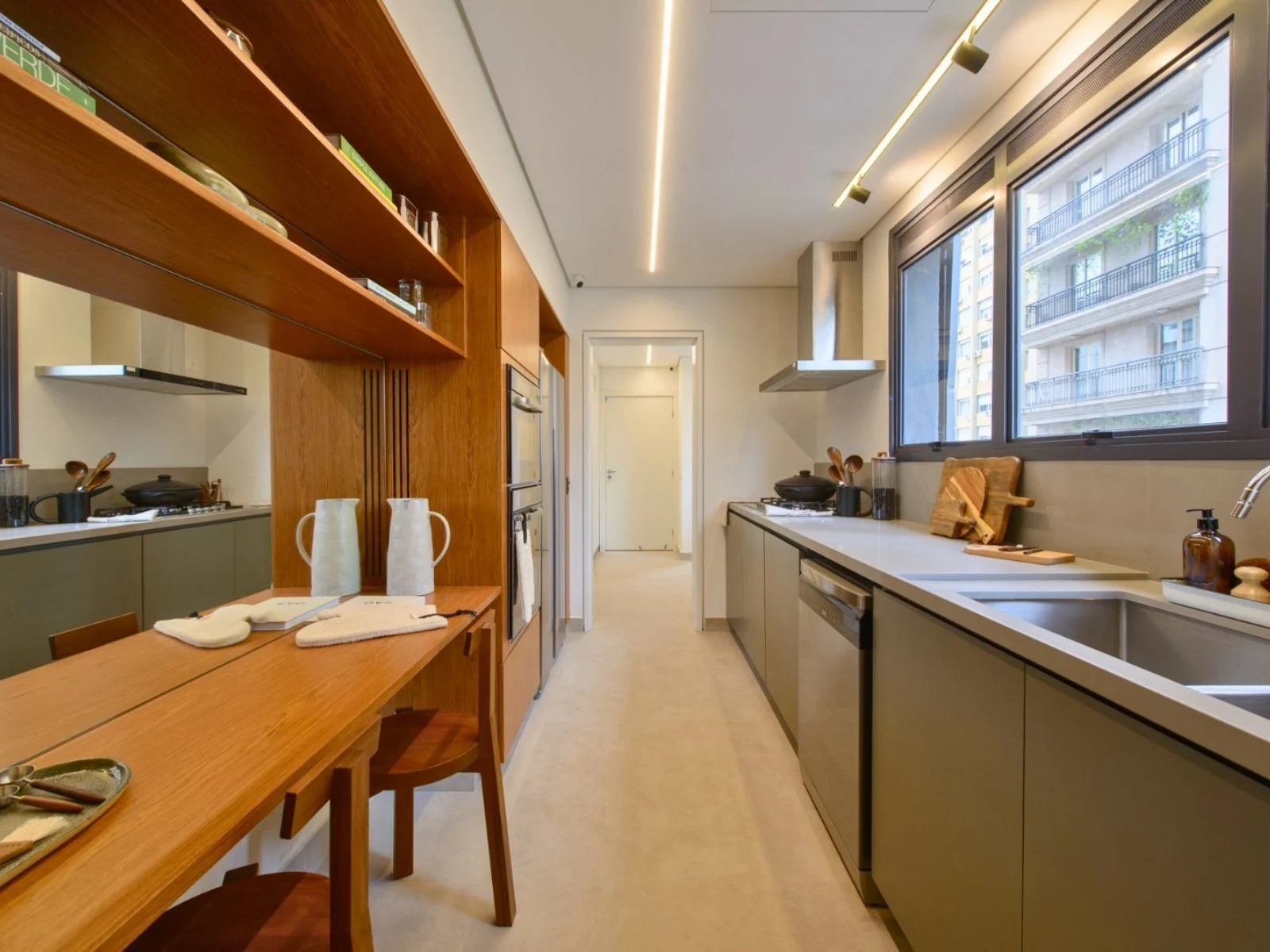
small-apartment-kitchen-with-island-and-integrated-layout-optimized-for-limited-space.
Choose Durable and Timeless Pieces
Because small apartments rely heavily on fewer furniture pieces, durability becomes especially important.
Each item will likely be used frequently and may serve multiple purposes.
Investing in well-made furniture ensures the pieces will remain comfortable and functional over time.
Timeless designs also work better in small apartments because they remain adaptable as the decor evolves.
Neutral colors, clean lines, and natural materials tend to remain relevant for many years.
Choosing quality pieces from the beginning can prevent frequent replacements and create a more cohesive interior.
Think About Everyday Comfort
While aesthetics are important, comfort should always remain a priority when selecting furniture.
Small apartments often require furniture that supports several daily activities, including relaxing, working, eating, and socializing.
Testing seating depth, cushion firmness, and table height can help ensure furniture truly supports daily life.
A compact sofa that feels uncomfortable will not improve the living experience, even if it fits perfectly within the room.
The best furniture choices combine functionality, proportion, and comfort.
Choose Sofas That Work for Small Spaces
The sofa is often the largest piece of furniture in a small apartment, which means choosing the right one is essential.
Instead of selecting oversized sectionals or bulky reclining sofas, it is usually better to look for compact models designed specifically for smaller spaces.
Apartment-sized sofas are typically shorter in length and have slimmer arms, which helps reduce the visual weight of the piece.
Another useful option is the loveseat, which provides comfortable seating for two people while occupying much less space than a traditional sofa.
In very small apartments or studio layouts, modular sofas can be particularly useful. They allow you to rearrange seating depending on your needs and adapt the layout of the room when necessary.
Some practical features to look for include:
• slim armrests
• raised legs
• neutral upholstery
• compact depth
• removable cushions
These details help create seating that feels comfortable without overwhelming the room.
When the sofa fits the scale of the apartment, the entire living area immediately feels more balanced.

Select Smart Tables That Save Space
Tables play an important role in everyday life, but in small apartments they must be chosen carefully.
Large coffee tables or heavy dining tables can quickly dominate the room and restrict movement.
Instead, smaller and more adaptable tables often work much better.
Some of the best options include:
• nesting tables
• round coffee tables
• foldable dining tables
• wall-mounted drop-leaf tables
• lift-top coffee tables
Nesting tables are particularly useful because they can be separated when extra surface space is needed and stacked together when the room needs to feel more open.
Round tables also tend to work well in small apartments because they improve circulation and eliminate sharp corners.
Flexible table solutions help apartments remain practical without sacrificing comfort or design.
Consider Vertical Storage Furniture
In small apartments, vertical space is just as valuable as floor space.
Furniture that uses height efficiently can dramatically increase storage capacity without overcrowding the room.
Tall shelving units are one of the best solutions because they provide multiple storage levels while occupying a relatively small footprint.
Bookcases, ladder shelves, and vertical cabinets can hold books, decor items, baskets, and everyday objects.
Another useful solution is wall-mounted shelving, which keeps the floor area clear while adding additional storage.
Some effective vertical furniture options include:
• tall bookcases
• ladder shelving units
• wall-mounted cabinets
• narrow storage towers
• vertical modular shelving
By thinking vertically, small apartments can remain organized while maintaining a more open layout.

small-apartment-laundry-area-with-built-in-cabinets-and-hidden-washing-machine
Choose Beds Designed for Small Bedrooms
Bedrooms in small apartments often have limited floor space, which makes selecting the right bed especially important.
Beds with built-in storage are among the most practical options because they help maximize space that would otherwise remain unused.
Drawers beneath the bed can store:
• seasonal clothing
• bedding
• shoes
• storage boxes
Platform beds with storage compartments are also popular because they combine modern design with functionality.
In studio apartments or multifunctional rooms, daybeds or Murphy beds can provide even greater flexibility.
Murphy beds fold vertically into the wall when not in use, allowing the room to function as a living area during the day.
Loft beds are another creative option, particularly in apartments with higher ceilings.
By elevating the bed, the space underneath can be used for desks, seating areas, or additional storage.
Choosing the right bed can dramatically improve the comfort and organization of a small apartment bedroom.
Build a Balanced Furniture Layout

Choosing the right furniture is only part of the process. The way furniture is arranged inside a small apartment has a major impact on how comfortable and functional the space becomes.
Even well-designed furniture can create problems if the layout blocks movement or overcrowds the room.
A balanced layout begins with identifying the main function of the space. In most apartments, the living area serves as the central hub where people relax, entertain guests, and sometimes even work.
Once the primary function is clear, furniture can be positioned to support that activity while maintaining open circulation.
For example, placing the sofa against the longest wall often helps maximize the available floor area. Coffee tables or side tables should be positioned so that they remain accessible but do not interrupt walking paths.
Maintaining clear walkways is essential in compact homes. Ideally, pathways between furniture pieces should allow people to move comfortably without needing to squeeze between objects.
Another helpful strategy is to create visual balance by distributing furniture evenly throughout the room. Instead of concentrating all large pieces in one area, spreading elements across the layout helps the apartment feel more harmonious.
Rugs can also help anchor furniture arrangements. A well-sized rug visually connects seating pieces and defines the living zone without requiring additional walls or partitions.
Thoughtful furniture placement ensures that small apartments remain practical, comfortable, and visually balanced.
FAQ – Small Apartment Furniture
What furniture is best for a small apartment?
Compact, multifunctional furniture such as sofa beds, storage ottomans, and expandable tables works best in small apartments.
How do you fit furniture in a small apartment?
Measure carefully, choose appropriately scaled pieces, and maintain clear pathways for movement.
Should furniture be small in a small apartment?
Furniture should match the scale of the space. Oversized furniture often makes compact rooms feel crowded.
What colors work best for small apartment furniture?
Light or neutral tones help create a more open feeling and allow natural light to reflect through the space.