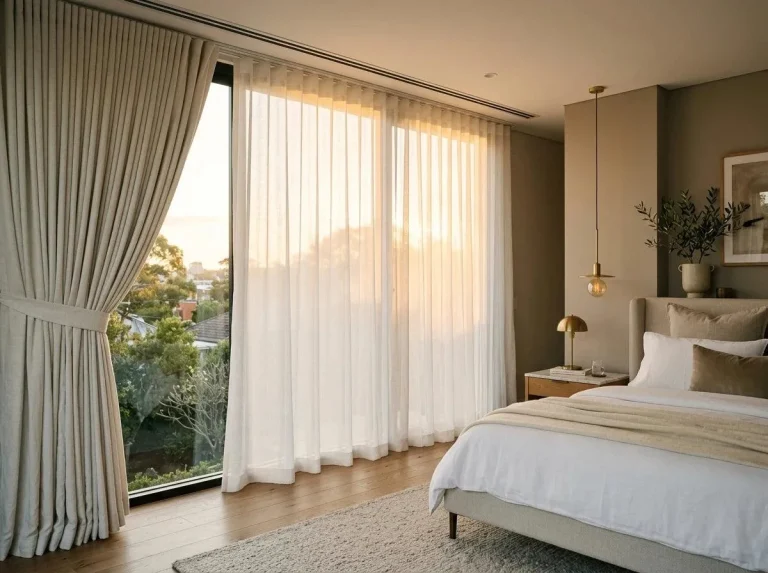
Introduction
A thoughtfully designed layered curtains bedroom combines beauty with everyday functionality. Pairing sheer curtains with blackout panels gives you greater control over light, privacy, and comfort while creating a softer and more refined look.
- Layered curtains allow you to adjust natural light throughout the day without sacrificing privacy.
- Combining sheers and blackout panels creates a bedroom that feels both elegant and highly practical.
Many bedrooms rely on a single type of curtain.
While this can work, it rarely offers the flexibility needed for modern living.
Morning sunlight, afternoon brightness, nighttime privacy, and restful sleep all require different levels of light control.
Layered curtains solve this challenge by allowing each fabric to perform a specific function.
The result is a bedroom that adapts naturally from sunrise to bedtime while adding texture and visual depth to the room.
What Are Layered Curtains?
Layered curtains combine two separate window treatments installed on the same window.
Most often, a lightweight sheer curtain sits closest to the glass while a heavier blackout curtain hangs on the outer track or rod.
Each layer serves a different purpose.
The sheer softly filters daylight.
The blackout curtain blocks outside light when needed.
Together they provide far more flexibility than either option alone.
This system allows the room to remain bright and private during the day while creating complete darkness for sleeping at night.
It also adds depth to the window, making the entire bedroom feel more finished and carefully designed.
Why Layering Works So Well in Bedrooms
Bedrooms serve many purposes throughout the day.
They are places to sleep.
To read.
To relax.
Sometimes even to work.
Lighting needs change with each activity.
Layered curtains allow these transitions to happen naturally.
Open the blackout panels and leave only the sheers closed to enjoy soft daylight without exposing the room completely.
Close both layers in the evening to create a darker and quieter environment for sleeping.
Because the curtains work together, the bedroom feels comfortable in every situation without requiring additional window treatments.
[IMAGE — Bedroom with white sheer curtains behind soft linen blackout panels]
The Role of Sheer Curtains
Sheer curtains often become the foundation of layered window treatments.
Their lightweight fabric diffuses sunlight, reducing glare while maintaining a bright and airy atmosphere.
They also provide daytime privacy by limiting outside views without blocking natural light completely.
Soft white remains the most versatile option because it complements nearly every color palette.
Warm ivory, light beige, and pale gray also work beautifully in bedrooms with warmer or more contemporary interiors.
Rather than becoming the focal point, sheer curtains create a calm background that allows furniture, bedding, and architectural details to stand out.
Why Blackout Curtains Add More Than Darkness
Blackout curtains are frequently associated only with better sleep, but their benefits extend much further.
They help regulate indoor temperature by reducing heat gain during sunny afternoons and limiting heat loss on cooler nights.
Their heavier fabric also softens sound, making bedrooms feel quieter and more relaxing.
Visually, blackout curtains frame the window and add weight to the overall design.
Natural linen-look fabrics, textured weaves, and soft neutral colors often feel more timeless than overly formal drapery.
When paired with sheer curtains, they create a balanced composition that feels elegant without appearing heavy.
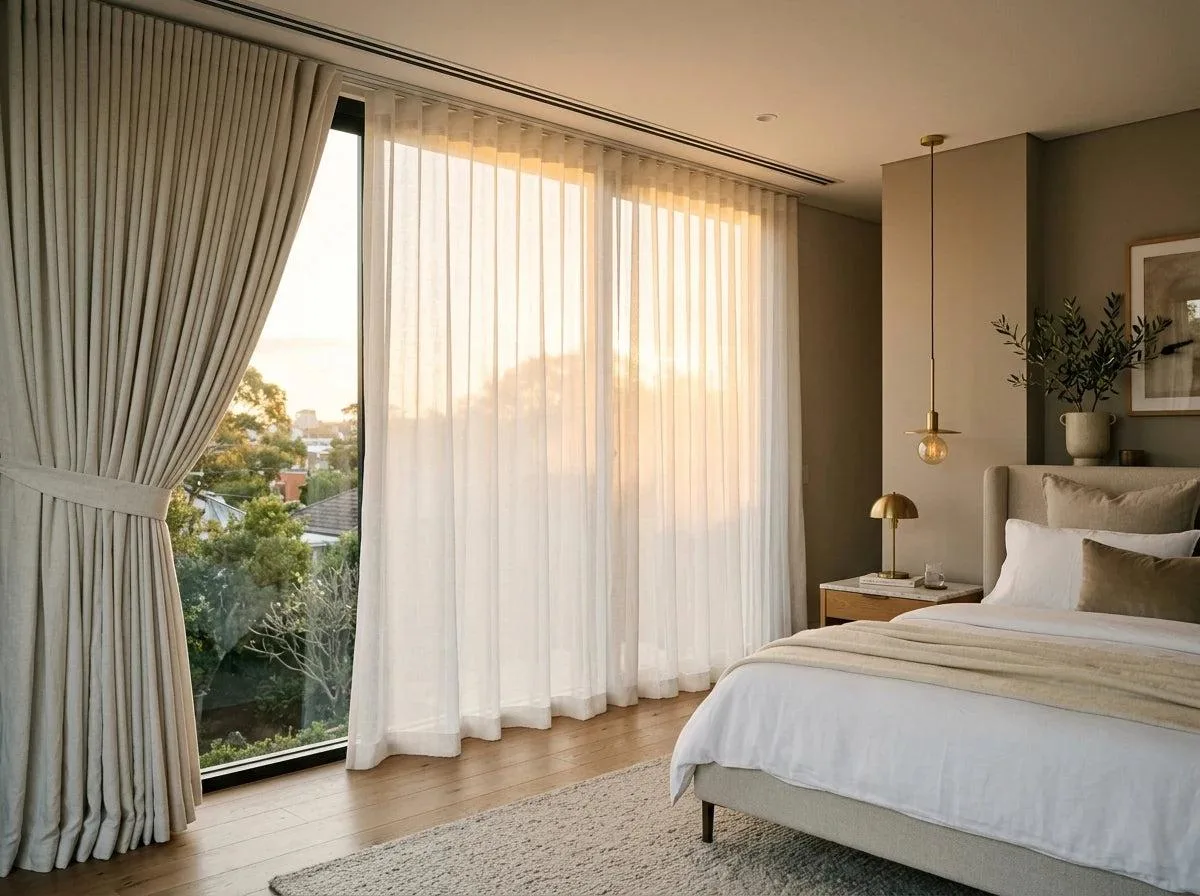
[IMAGE — Layered curtain system showing sheer curtains with textured blackout drapes]
Choosing the Right Curtain Length
Length plays an important role in achieving a polished appearance.
Floor-length curtains remain the most timeless choice for bedrooms.
They visually increase ceiling height and create uninterrupted vertical lines.
For a tailored appearance, allow the fabric to stop just above the floor.
For a softer and more luxurious look, let the curtains lightly puddle on the floor.
Avoid curtains that end halfway between the window and the floor, as they often interrupt the room’s proportions.
Even in smaller bedrooms, full-length curtains usually make the space feel taller and more refined.
Choosing Fabrics That Complement Each Other
A successful layered curtain design depends not only on combining two curtains but also on selecting fabrics that work together visually.
The sheer curtain should feel light and airy.
The blackout curtain should introduce texture, warmth, and structure.
This contrast creates depth without making the window appear heavy.
Natural-looking fabrics often produce the most timeless result.
Linen blends.
Soft woven polyester.
Cotton textures.
Subtle matte finishes.
These materials add visual richness while remaining versatile enough to coordinate with changing bedding and seasonal décor.
Avoid combining highly reflective fabrics with very casual sheers, as the different textures may compete instead of complementing one another.
The goal is harmony rather than contrast.
Layered Curtains for Small Bedrooms
Many homeowners assume layered curtains only work in large bedrooms.
In reality, they can make compact rooms feel even more refined when planned correctly.
Choose light-colored sheers to maximize natural daylight.
Install the curtain rod higher than the window frame to emphasize ceiling height.
Extend the rod beyond both sides of the window so the blackout panels stack neatly without blocking glass.
This allows more daylight to enter while making the window appear wider.
In smaller bedrooms, selecting fabrics with soft texture instead of bold patterns also helps maintain an open and uncluttered atmosphere.
The layered treatment adds sophistication without overwhelming the room.
[IMAGE — Small bedroom with full-height layered curtains making the window appear larger]
Curtain Rods and Tracks That Support Layered Window Treatments
The hardware is just as important as the fabric itself.
Layered curtains require two independent tracks or a double curtain rod so that each layer can move freely.
This allows the sheer curtain to remain closed while the blackout panels stay open during the day.
At night, both layers can close smoothly without interfering with one another.
Choose hardware that complements the rest of the bedroom.
Slim black rods suit contemporary interiors.
Brushed brass adds warmth.
Matte white blends quietly into lighter spaces.
Wooden rods work beautifully with natural and Scandinavian-inspired bedrooms.
Quality hardware not only improves daily operation but also reinforces the finished appearance of the entire window.
Coordinating Curtain Colors With the Bedroom
Layered curtains work best when they support the overall color palette instead of becoming the dominant feature.
White sheers provide a neutral base that pairs easily with almost every decorating style.
For the blackout panels, consider tones already present elsewhere in the room.
Warm beige complements oak furniture.
Soft greige works beautifully with contemporary interiors.
Light taupe creates subtle warmth.
Muted sage introduces gentle color without overwhelming the space.
Repeating existing colors through the curtains helps create visual continuity between the windows, bedding, rugs, and upholstered furniture.
This coordination makes the bedroom feel calmer and more intentionally designed.
Decision Guide: Which Layered Curtain Combination Is Right for You?
Think about how you use your bedroom each day before selecting fabrics.
Choose white sheer curtains if maximizing daylight is your priority.
Choose full blackout panels if complete darkness improves your sleep.
Choose textured linen-look fabrics when you want warmth without excessive visual weight.
Choose neutral colors if you plan to update bedding and accessories regularly.
Choose ceiling-mounted tracks if you want the window to appear taller and more architectural.
The best layered curtains bedroom design is the one that supports your daily routine while complementing the rest of the room.
Comfort, flexibility, and timeless style should guide every decision.
[IMAGE — Double curtain rod with layered sheer and blackout curtains in a neutral bedroom]
How Layered Curtains Improve Everyday Living
One of the greatest advantages of layered curtains is how naturally they adapt to different moments throughout the day.
In the morning, sheer curtains allow soft daylight to enter while maintaining a sense of privacy.
During the afternoon, they reduce glare without making the room feel dark.
In the evening, blackout panels create a quieter, more restful atmosphere that encourages better sleep.
This flexibility eliminates the need to choose between brightness and privacy.
Instead, the bedroom responds to changing light conditions with a simple adjustment.
Over time, this adaptability becomes one of the features homeowners appreciate most because it improves comfort every day without requiring additional effort.
Balancing Softness and Structure
Windows often become the tallest visual element in a bedroom.
Because of this, curtains influence the entire atmosphere of the space.
Sheer fabric introduces movement and softness.
The blackout layer provides structure and visual balance.
Together they create a composition that feels complete rather than overly decorated.
This balance also helps connect different materials throughout the room.
Soft bedding.
An upholstered headboard.
Natural wood furniture.
A textured area rug.
Layered curtains reinforce these elements instead of competing with them, making the bedroom feel calm and cohesive.
[IMAGE — Neutral bedroom where layered curtains complement wood furniture and soft bedding]
Layered Curtains Through the Seasons
Another benefit of combining sheer and blackout curtains is their year-round versatility.
During warmer months, sheer curtains allow fresh daylight while reducing harsh sunlight.
When temperatures rise, blackout panels can also help reduce solar heat entering the room during the brightest part of the day.
In colder seasons, the heavier outer curtains create an additional insulating layer that helps the bedroom feel warmer and more comfortable.
This seasonal flexibility improves both comfort and energy efficiency without changing the room’s overall appearance.
Rather than replacing window treatments throughout the year, layered curtains continue performing well regardless of the season.
Creating a Timeless Bedroom Instead of Following Trends
Bedroom design changes over time, but window treatments are often expected to remain for many years.
For this reason, timeless choices usually outperform highly fashionable ones.
Neutral colors.
Natural textures.
Simple pleats.
Quality hardware.
Classic proportions.
These elements allow the curtains to adapt as bedding, furniture, and decorative accessories evolve.
A bedroom may receive new paint, different bedside tables, or updated lighting over the years, yet well-chosen layered curtains continue complementing the space without feeling outdated.
This long-term flexibility makes them one of the most worthwhile investments in bedroom design.
Common Mistake and How to Avoid It
One of the most common mistakes is installing the curtain rod only as wide as the window.
This causes the blackout panels to cover part of the glass even when fully open, reducing natural light and making the window appear smaller.
Another frequent error is choosing curtains that are too short.
Panels ending at the window sill or midway to the floor interrupt the room’s vertical lines and often make the ceiling appear lower.
Instead, mount the hardware higher than the window frame and extend it beyond both sides whenever possible.
Allow the curtains to reach the floor for a more balanced and elegant appearance.
Small installation details like these often have a greater visual impact than the fabric itself.
Living With the Space
One of the reasons layered curtains remain popular for so many years is their ability to adapt to everyday life without requiring constant adjustments.
On bright mornings, the sheer layer softens sunlight while maintaining privacy.
During the afternoon, both fabrics help control glare and create a more comfortable atmosphere for reading, relaxing, or working.
At night, closing the blackout panels transforms the bedroom into a quieter and darker retreat that encourages restful sleep.
As furniture, bedding, or decorative accessories change over the years, well-chosen layered curtains continue supporting the room without needing to be replaced.
Their flexibility makes them one of the few design decisions that improve both appearance and daily comfort over the long term.
Checklist
Before installing layered curtains in your bedroom, make sure you’ve considered the following:
✔ Installed a double rod or double-track system for independent movement.
✔ Chosen sheer curtains that filter daylight without blocking it completely.
✔ Selected blackout panels that provide the level of darkness you need.
✔ Mounted the hardware higher and wider than the window frame.
✔ Allowed the curtains to reach the floor for balanced proportions.
✔ Coordinated fabric textures and colors with the rest of the bedroom.
✔ Created a window treatment that supports both comfort and everyday functionality.
You May Also Enjoy Reading
If you’re designing a bedroom that feels calm, comfortable, and timeless, these guides can help you continue planning your space.
Bedroom Curtain Ideas for Every Style
Discover Bedroom Curtain Ideas for Every Style to explore fabrics, colors, and styles that complement different bedroom interiors.
Bedroom Lighting Ideas That Create a Relaxing Atmosphere
Read Bedroom Lighting Ideas to learn how layered lighting works together with window treatments to create a more comfortable bedroom.
How Long Should Bedroom Curtains Be?
Explore How Long Should Bedroom Curtains Be? to understand how curtain length influences proportions, elegance, and the overall feeling of the room.
Conclusion
A thoughtfully planned layered curtains bedroom combines elegance with everyday practicality. By pairing sheer curtains with blackout panels, you gain complete control over natural light, privacy, and comfort while adding softness, texture, and visual depth to the room. Rather than choosing between beauty and functionality, layered window treatments allow you to enjoy both for years to come.
Take Away
Layered curtains are one of the most versatile bedroom upgrades you can make. When fabrics, proportions, and installation are carefully planned, they improve sleep, soften natural light, increase privacy, and create a timeless window treatment that continues supporting everyday living long after installation.
Frequently Asked Questions
Are layered curtains suitable for small bedrooms?
Yes. Light-colored sheers, full-length panels, and properly positioned curtain rods can actually make compact bedrooms feel larger and brighter.
Should sheer curtains always go behind blackout curtains?
Yes. The sheer layer is typically installed closest to the window, with blackout curtains on the outer track or rod for maximum flexibility.
Do layered curtains help with insulation?
Yes. Blackout panels provide an additional barrier that can help reduce heat gain in summer and improve insulation during colder months.
Can layered curtains work with modern interiors?
Absolutely. Neutral fabrics, simple pleats, and discreet hardware make layered curtains an excellent choice for contemporary as well as traditional bedrooms.