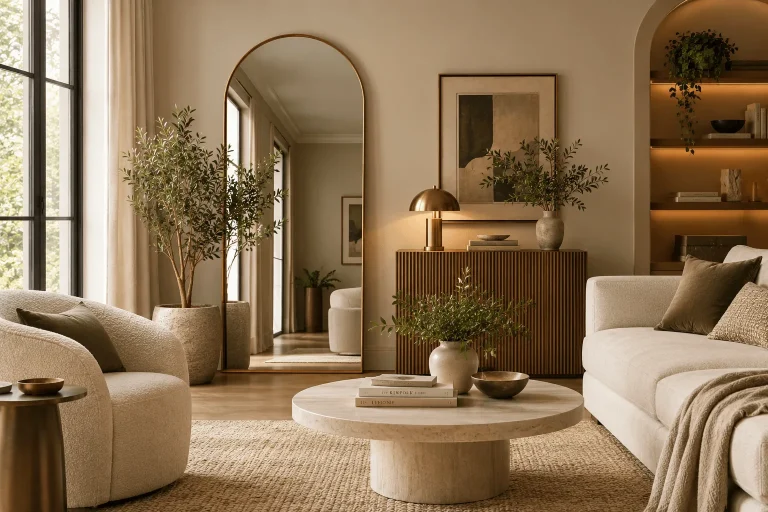
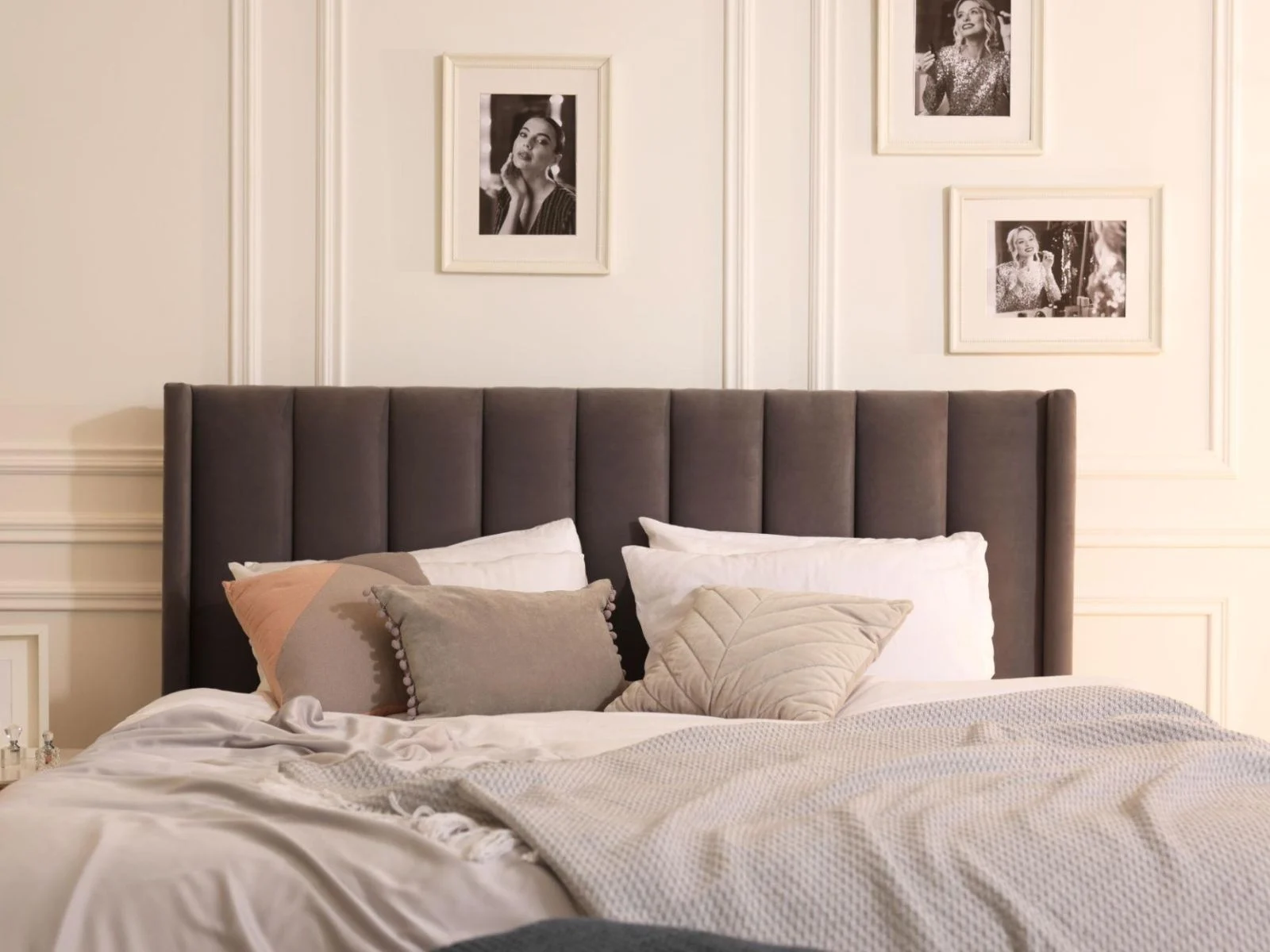
Elegant bedroom ideas often feel timeless because they balance comfort, proportion, and visual calm. A bedroom rarely feels refined because of individual pieces alone, but because everything relates naturally within the space as a whole.
Many bedrooms feel visually appealing at first but lose their impact as trends begin to shift. Timeless spaces behave differently. They remain comfortable, readable, and emotionally balanced even as habits and routines evolve.
In daily use, elegance becomes less about appearance and more about how naturally the space supports rest.
Why Timeless Bedrooms Feel Different Over Time
A timeless bedroom does not depend on novelty.
Instead of relying on strong visual statements, it builds its atmosphere through consistency. Colors feel stable, furniture feels proportionate, and the room remains easy to understand at a glance.
This stability allows the space to age well.
In many bedrooms, what creates long-term comfort is not what stands out immediately, but what continues to feel right after repeated use.
The Role of Proportion in Elegant Spaces
Proportion often defines whether a bedroom feels balanced or visually heavy.
A large bed in a small room can feel overwhelming, just as furniture that is too small can make the space feel incomplete. Elegance emerges when objects relate naturally to the size of the room.
Spacing also plays a role.
When furniture has enough room around it, the space feels more intentional. When everything is too close together, the room may feel visually compressed.
Good proportion rarely calls attention to itself, yet it shapes the entire experience of the space.
What makes a bedroom feel elegant over time is not visual intensity, but how easily the space continues to support everyday use.
How Soft Color Palettes Create Lasting Comfort
neutral-bedroom-color-palette-creating-a-calm-and-timeless-atmosphere
Color strongly influences how long a bedroom remains visually comfortable.
Soft, neutral palettes tend to feel more stable over time because they reduce contrast and visual fatigue. This does not mean the room must feel plain. It means colors should support rest rather than compete for attention.
Warm neutrals, muted tones, and subtle variations within the same palette often create depth without overwhelming the eye.
With repeated use, these choices help the room remain calm and adaptable.
As the space evolves, restrained color palettes also make it easier to update small elements without disrupting the overall balance of the room.
Why Texture Matters More Than Decoration
Texture often creates more depth than decorative variety.
A bedroom filled with many small decorative objects may feel visually busy, while a space with fewer elements but richer textures often feels more refined.
Soft fabrics, layered bedding, natural materials, and subtle surface variation introduce depth without noise.
This allows the room to feel complete without requiring constant visual stimulation.
Lighting as a Foundation of Elegance
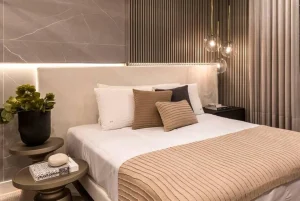
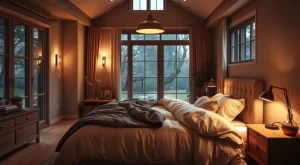
Lighting is one of the strongest elements behind elegant bedroom ideas, shaping how the space is experienced throughout the day.
During the day, natural light defines openness. At night, artificial lighting determines whether the space feels restful or overstimulating.
A single overhead light rarely creates a balanced atmosphere. Layered lighting, including softer lamps and indirect light sources, allows the room to adapt to different moments.
When light becomes softer in the evening, the room naturally signals rest.
How Lighting Interacts With Materials and Surfaces
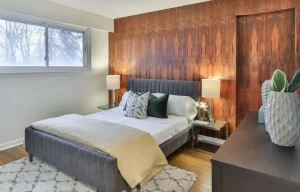
Light does not act alone inside a bedroom. It interacts continuously with materials, textures, and finishes, changing how each element is perceived throughout the day.
Soft fabrics tend to absorb light, creating a more muted and relaxed atmosphere. In contrast, reflective surfaces such as glass or polished finishes can amplify brightness and introduce visual tension if not balanced carefully.
This relationship explains why the same lighting setup may feel comfortable in one bedroom and overwhelming in another.
When materials and lighting work together, the room feels cohesive. When they compete, the space may feel slightly unsettled without an obvious reason.
Over time, adjusting how light interacts with surfaces often improves comfort more than changing the light source itself.
Furniture That Feels Balanced, Not Heavy
Elegant bedrooms rarely feel crowded.
Furniture choices tend to favor clarity over quantity. Each piece has a clear role, and unnecessary elements are reduced.
This does not mean the room lacks personality. It means that every element contributes to comfort, function, or visual balance.
When furniture feels evenly distributed, the room becomes easier to move through and easier to experience.
When each piece feels necessary and well positioned, the room naturally becomes easier to use and more visually stable.
Why Negative Space Enhances Elegance
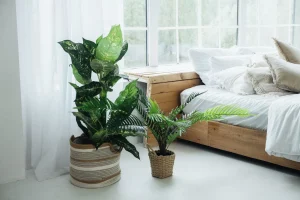
Negative space plays a quiet but essential role in elegant bedrooms.
It refers to the areas intentionally left unoccupied, allowing the eye to rest between objects. Without this breathing space, even well-chosen furniture can feel overwhelming.
In many cases, elegance comes not from what is added, but from what is deliberately left out.
A clear space beside the bed, an uncluttered surface, or a wall without excessive decoration can create a stronger sense of balance than additional styling.
This restraint allows each element to be perceived more clearly.
Over time, negative space helps maintain visual calm and prevents the room from feeling crowded as new elements are introduced.
Why Restraint Often Feels More Sophisticated
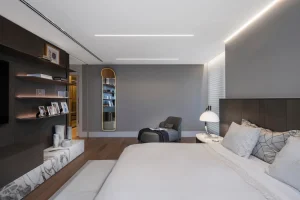
Restraint is one of the most consistent characteristics of elegant spaces.
Adding more rarely improves a bedroom once the essential elements are in place. In many cases, removing excess creates stronger results.
A surface with fewer objects feels calmer. A wall with less visual interruption feels more intentional.
This approach allows the room to breathe.
Over time, restraint creates a sense of quiet confidence that does not depend on decoration.
How to Create Visual Calm Without Emptiness
Visual calm does not require empty space. It requires clarity.
Objects can remain present as long as they relate to one another and support the overall atmosphere. The goal is not to remove everything, but to reduce visual competition.
Grouping elements, aligning furniture, and limiting unrelated objects often create a more cohesive environment.
When the room becomes easier to read, it also becomes easier to relax in.
Why Elegant Bedrooms Often Feel Emotionally Stable
The emotional effect of a bedroom often comes from consistency rather than intensity.
Spaces that remain visually calm, softly lit, and proportionally balanced tend to feel more stable over time. This stability reduces subtle tension and allows the mind to settle more easily.
In many homes, the bedroom becomes the most reliable environment because it changes less and supports repeated routines.
This continuity creates comfort that grows gradually.
Small Adjustments That Elevate the Entire Room
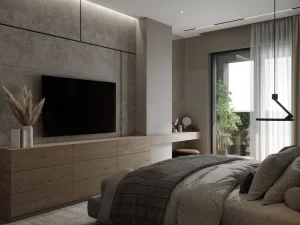
Small adjustments often elevate an entire bedroom more effectively than major changes.
Small adjustments often create noticeable improvement:
• refining furniture spacing
• softening lighting in the evening
• reducing surface clutter
• improving alignment between elements
These changes do not alter the identity of the room. They refine how it behaves in daily use.
Over time, these small corrections shape the overall experience.
How Elegant Spaces Stay Relevant Over Time
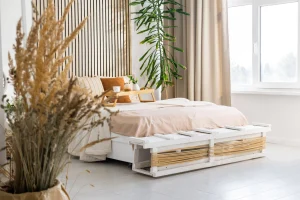
Trends often depend on contrast and novelty.
Timeless bedrooms depend on balance.
When a room feels easy to use, visually calm, and emotionally stable, it does not require constant updates. The space remains relevant because it supports everyday life rather than reacting to changing styles.
This is why many elegant bedrooms evolve slowly instead of changing completely.
Practical Notes for Creating a Timeless Bedroom
Creating an elegant bedroom usually begins with simplifying decisions.
Instead of adding more, it helps to refine what is already present. Choosing fewer elements, improving spacing, and allowing light and texture to work together often produces stronger results.
A bedroom that feels comfortable every day will always feel more refined than one that depends on appearance alone.
You May Also Enjoy Reading
Elegant balance often becomes easier when layout decisions support everyday comfort, as explored in How to Create a Comfortable Bedroom That’s Easy to Maintain
The way lighting shapes atmosphere becomes more noticeable when softness is introduced gradually, as explained in Bedroom Lighting Ideas That Feel Cozy
Visual simplicity often improves long-term comfort when fewer elements compete for attention, a principle explored in Practical Minimalism for Real Homes
How Everyday Use Refines the Perception of Elegance
A bedroom is not experienced in a single moment. It is experienced repeatedly, often in quiet and routine-based ways.
Because of this, elegance is gradually refined through daily use rather than immediate visual impact.
A chair that becomes a consistent reading spot, lighting that softens at the same hour each evening, or a bed that always feels visually calm at the end of the day begins to shape how the room is perceived.
These repeated experiences build familiarity.
Over time, the bedroom starts to feel elegant not because of how it looks at first glance, but because of how naturally it supports rest and routine.
Common Mistakes That Disrupt Bedroom Elegance
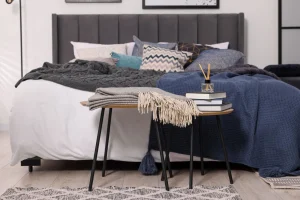
Even well-designed bedrooms can lose their sense of elegance when small decisions begin to conflict with the overall balance of the space.
One common issue is adding too many decorative elements. When several objects compete for attention, the room may feel visually fragmented rather than calm.
Another frequent mistake is relying on lighting that is too strong or too uniform. Without softer layers, the bedroom can feel overly active, especially in the evening.
Furniture scale can also disrupt elegance. Pieces that are too large may overwhelm the room, while smaller items that lack presence can make the space feel incomplete.
In many cases, elegance is not lost because of one major decision, but because of several small inconsistencies that accumulate over time.
Recognizing these patterns often makes it easier to restore balance without needing to redesign the entire room.
Takeaway
Elegant bedroom ideas last when comfort, proportion, and visual calm work together effortlessly. A space becomes timeless when it continues to feel balanced, functional, and easy to live in over time.
FAQ
What makes a bedroom feel elegant?
Elegance usually comes from balance, proportion, and visual calm rather than decoration alone.
Do elegant bedrooms require expensive furniture?
No. Simplicity, spacing, and thoughtful choices often matter more than cost.
Are neutral colors necessary for an elegant bedroom?
Not always, but softer palettes tend to feel more timeless and easier to live with.
How important is lighting in an elegant bedroom?
Lighting is essential because it defines how the space feels, especially in the evening.
Can a small bedroom feel elegant?
Yes. Good proportion, clear layout, and reduced visual clutter often create elegance even in compact spaces.