Introduction
Some Christmas tables immediately transport you somewhere else.
Before the first course is served, before candles have burned low into the evening, the atmosphere already feels unmistakably special. The room becomes quieter, conversations soften naturally, and every detail seems designed to encourage guests to linger a little longer.
A European winter Christmas table captures exactly that feeling.
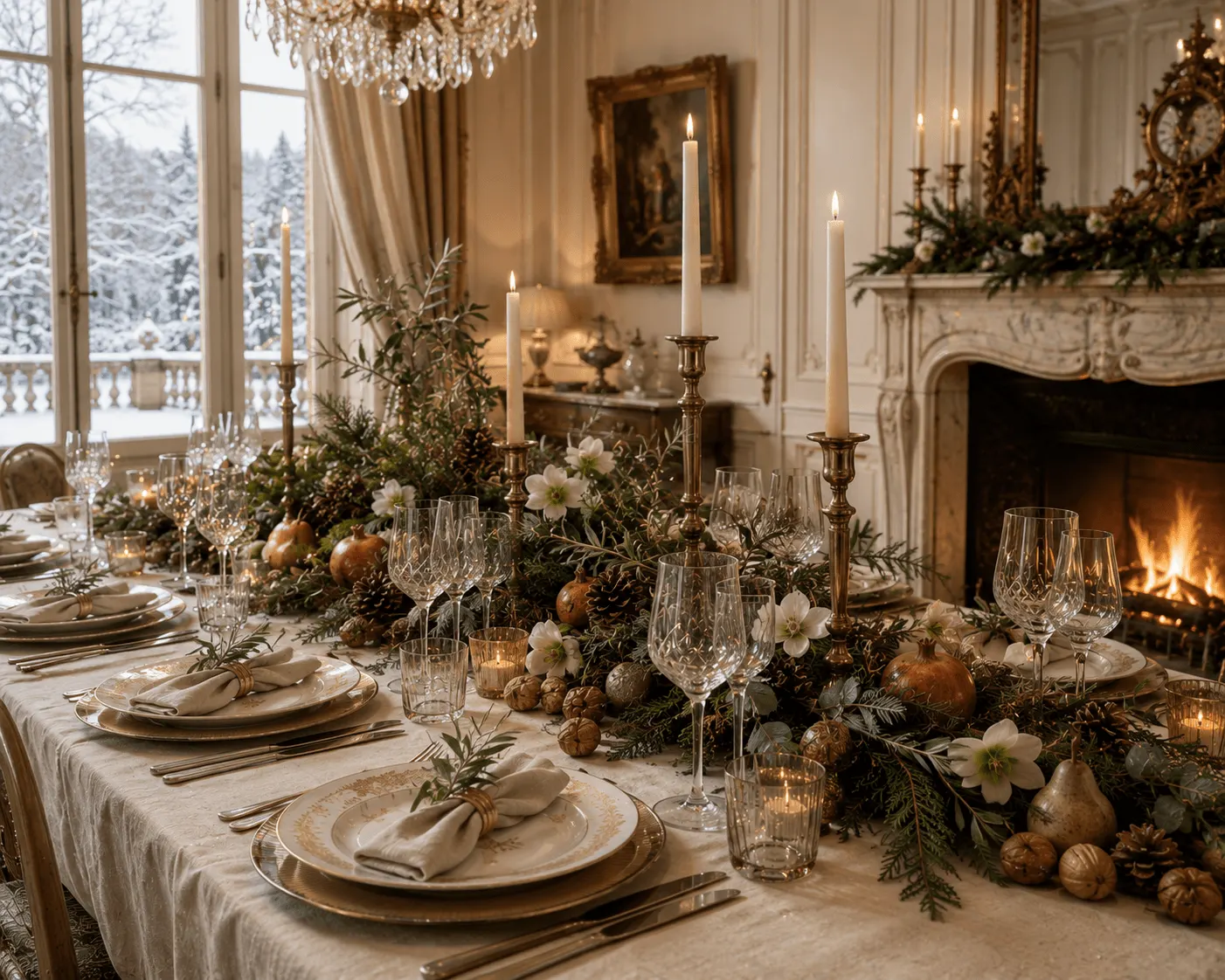
Inspired by historic homes, countryside estates, and elegant manor houses, this decorating style celebrates natural greenery, glowing candlelight, fine crystal, timeless dinnerware, and seasonal elements gathered from the landscape rather than brightly colored holiday ornaments.
Instead of following temporary decorating trends, it creates an atmosphere built around warmth, hospitality, and understated sophistication.
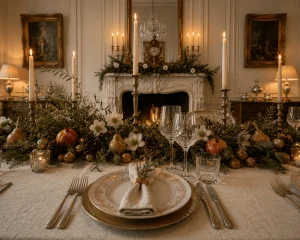
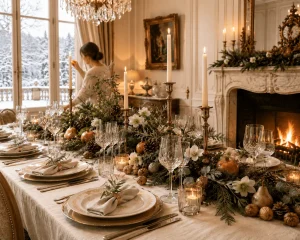
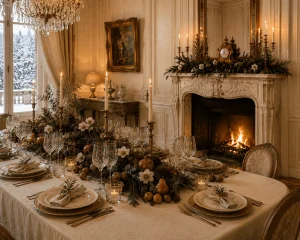
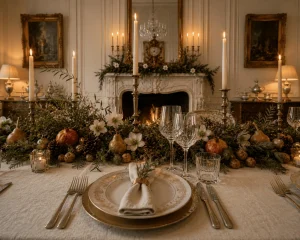
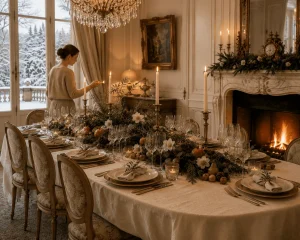
Fresh evergreen branches weave across the center of the table alongside pinecones, walnuts, pears, pomegranates, delicate winter flowers, and softly flickering candles. Antique brass candlesticks add height without overwhelming the arrangement, while layered porcelain and crystal glassware quietly reflect the warm light throughout the room.
Outside, winter settles across the landscape.
Inside, the dining room becomes a place where every detail encourages guests to slow down and enjoy the season together.
Whether you’re hosting Christmas Eve dinner, welcoming family for a festive lunch, or simply looking for timeless holiday inspiration, these European winter Christmas table setting ideas show how thoughtful layering, natural materials, and elegant styling can transform an ordinary dining room into an unforgettable holiday experience.
In this guide you’ll discover:
- The defining characteristics of a European winter Christmas tablescape.
- How to create a natural centerpiece using seasonal greenery, fruit, and woodland textures.
- Why layered candlelight creates a warmer holiday atmosphere than decorative lighting alone.
- Ways to combine classic dinnerware, crystal, and brass accents without making the table feel overly formal.
- Simple styling ideas that bring timeless European elegance into your own Christmas celebration.
Some of the most beautiful Christmas tables aren’t designed to impress at first glance—they’re designed to make everyone feel immediately at home.
Choose Timeless Dinnerware That Enhances the Holiday Table
One of the defining characteristics of a European winter Christmas table is its quiet confidence.
Rather than relying on dramatic colors or highly decorative dinnerware, the table achieves elegance through quality materials, restrained patterns, and careful layering.
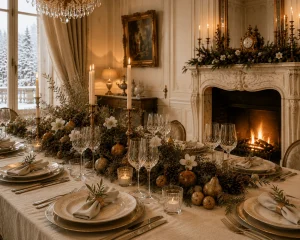
In this setting, classic porcelain with delicate gold detailing immediately establishes a refined foundation.
The subtle decorative border feels traditional without becoming ornate, allowing the natural centerpiece to remain the visual focus.
Crystal stemware introduces another layer of sophistication.
Its intricate cut pattern catches both daylight and candlelight throughout the evening, creating small reflections that add movement without overwhelming the table.
Together, porcelain, crystal, brass, and linen create a composition that feels timeless instead of seasonal.
These are pieces that could just as easily appear during an elegant winter dinner in January as they would on Christmas Eve.
Layer every place setting thoughtfully
European entertaining is rarely about excess.
Instead, every layer serves a purpose.
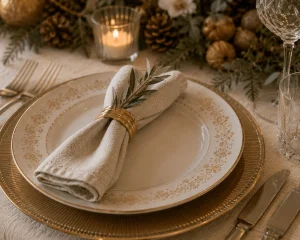
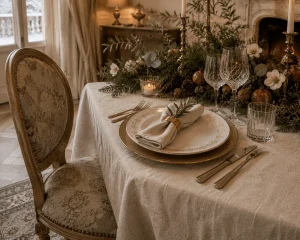
Dinner plates rest upon elegant chargers that visually anchor each seat.
Soft linen napkins introduce texture while gently balancing the shine of crystal and polished metals.
Simple brass napkin rings reinforce the warm metallic accents already present in the candlesticks.
Brushed gold flatware complements the delicate gold edging of the porcelain without creating unnecessary contrast.
One simple trick designers use is repeating finishes throughout a room.
Notice how the brass candlesticks, gold charger plates, flatware, and napkin rings quietly echo one another.
Because these metallic accents appear consistently across the table, the entire composition feels intentional rather than decorative.
Use Candlelight as the Heart of the Design
Perhaps no single element defines a European winter Christmas table more than candlelight.
Long before electric lighting became common, European holiday celebrations depended almost entirely on candles to create warmth throughout large dining rooms.
That tradition continues today because candlelight produces an atmosphere that modern lighting simply cannot replicate.
Tall taper candles introduce graceful vertical lines above the centerpiece.
Their height draws the eye upward while creating rhythm across the entire table.
Lower pillar candles fill the arrangement with softer pools of light that illuminate the greenery, fruit, and crystal from below.
As daylight slowly fades outside, these different light levels begin transforming the dining room.
The centerpiece becomes richer.
Crystal starts sparkling more intensely.
The polished brass develops a warm golden glow.
Instead of feeling brighter, the room feels softer.
More intimate.
More welcoming.
Mix candle heights for a balanced composition
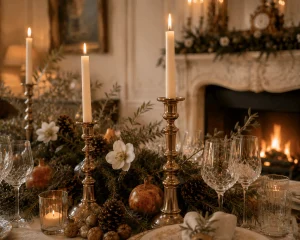
Using candles of different heights prevents the table from feeling rigid or overly symmetrical.
Tall tapers establish structure.
Medium pillar candles introduce visual weight.
Small glass votives create delicate highlights close to the tabletop.
Together, these layers allow light to travel naturally across every section of the arrangement.
Imagine sitting down just after sunset.
Snow blankets the landscape beyond the windows.
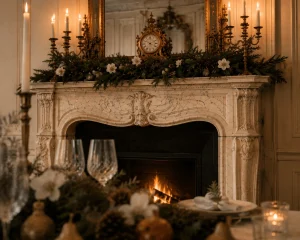
The fireplace crackles quietly.
Every crystal glass catches tiny reflections from the surrounding candles.
The centerpiece appears almost alive as light moves gently across the evergreen branches and winter fruit.
This subtle movement is one of the reasons candlelit tables always feel warmer than brightly illuminated ones.
Rather than simply lighting the room, the candles become part of the experience itself.
Create a European Winter Table That Feels Collected Over Time
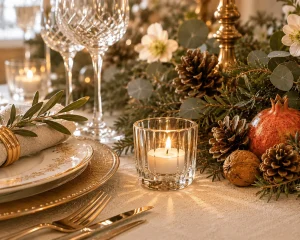
One of the reasons European holiday interiors feel so authentic is that they never look as though everything was purchased for a single season.
Instead, each piece appears to have its own history.
The crystal may have been used for decades during family celebrations.
The brass candlesticks may have developed a gentle patina over years of holiday dinners.
The porcelain feels timeless rather than trendy.
Even the natural centerpiece changes slightly every Christmas, depending on what winter has to offer.
That sense of gradual collecting creates warmth that cannot be achieved by buying an entire matching holiday collection at once.
The room feels lived in.
Loved.
Returned to every December.
Interior designers often describe this as layering with permanence.
Instead of decorating from scratch each year, homeowners build traditions by adding meaningful pieces over time.
The result is a Christmas table that feels deeply personal rather than professionally staged.
Invest in materials that become more beautiful with age
European decorating has always valued craftsmanship over quantity.
Solid wood develops richer character.
Natural linen becomes softer after every wash.
Brass acquires warmth through gentle aging.
Crystal continues catching light just as beautifully decades later.
Even handmade ceramics gain personality through tiny variations that make every piece unique.
These materials don’t simply survive years of holiday entertaining.
They improve because of it.
That philosophy encourages slower decorating.
Rather than replacing seasonal décor every year, each Christmas becomes an opportunity to build upon an existing collection that already carries memories of previous celebrations.
The holiday table evolves naturally alongside the family that gathers around it.
Hospitality Is the Most Beautiful Decoration
Beautiful decorating is never only about appearance.
Its true purpose is to make people feel welcome.
A European winter Christmas table succeeds because every decorative decision supports the experience of gathering together.
The centerpiece remains low enough for conversation.
Candles create warmth without overwhelming the room.
Natural materials soften the formal dinnerware.
Comfortable seating encourages guests to remain at the table long after the meal has finished.
Every element quietly contributes to hospitality.
Imagine guests arriving after spending time outside on a cold winter evening.
Coats are hung near the entrance.
The fireplace is already glowing.
Soft candlelight fills the dining room.
The scent of evergreen drifts gently through the air.
Before anyone notices the crystal or the porcelain, they notice something much more important.
They feel comfortable.
That emotional response is what transforms a beautifully decorated dining room into an unforgettable Christmas memory.
One thing experienced hosts quickly learn is that guests rarely remember every decorative object.
They remember how the evening felt.
The laughter.
The conversations.
The warmth.
The atmosphere.
A thoughtfully designed table simply provides the setting where those memories naturally unfold.
How to Recreate This European Winter Christmas Look at Home
Creating a European-inspired Christmas table doesn’t require filling every surface with holiday decorations. Instead, focus on a few timeless materials and allow them to work together naturally.
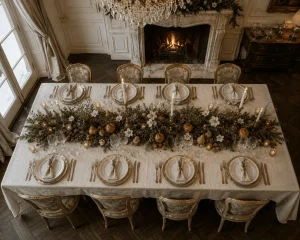
Start with a neutral foundation such as a linen tablecloth or runner in ivory, oatmeal, or soft beige. Layer classic white or cream porcelain with crystal stemware and warm metallic accents in brass or brushed gold.
Build the centerpiece gradually rather than arranging everything at once. Begin with fresh evergreen branches, then weave in pinecones, walnuts, pears, pomegranates, and a few delicate white winter flowers. Keeping the arrangement low allows guests to enjoy both the decoration and the conversation.
Finally, let candlelight become the main source of atmosphere. Combine tall taper candles with smaller votives to create layers of warm light that transform the room as evening falls.
A Simple Styling Checklist
- Choose a restrained color palette with natural winter tones.
- Layer porcelain, crystal, linen, and warm metallic finishes.
- Use fresh greenery as the foundation of the centerpiece.
- Add seasonal fruit and woodland textures for natural variation.
- Repeat brass or gold accents throughout the table.
- Mix candles at different heights for a warm, balanced glow.
- Leave breathing room between decorative elements instead of overcrowding the table.
- Prioritize comfort and conversation over elaborate decoration.
Frequently Asked Questions
What colors work best for a European winter Christmas table?
Soft neutrals such as ivory, cream, warm white, evergreen, walnut wood, champagne gold, and muted brass create a timeless palette. These colors feel elegant throughout the entire winter season rather than only on Christmas Day.
Can I create this look on a budget?
Absolutely. Invest in timeless basics like white dinnerware, linen napkins, and simple glassware, then decorate with natural greenery, pinecones, walnuts, and seasonal fruit. These inexpensive elements often create a richer atmosphere than buying many themed decorations.
Should I use fresh or faux greenery?
Fresh greenery offers natural fragrance, movement, and texture that are difficult to replicate. However, high-quality faux greenery can also work beautifully, especially when combined with natural elements such as pinecones, branches, and seasonal fruit.
How can I make the table feel elegant without looking too formal?
Balance refined materials like porcelain, crystal, and brass with organic textures such as evergreen branches, linen, and natural fruit. This contrast is one of the defining characteristics of European holiday decorating and helps the table feel welcoming instead of overly formal.
What makes European Christmas decorating feel timeless?
Rather than following seasonal trends, European decorating emphasizes craftsmanship, natural materials, soft candlelight, and thoughtful layering. The focus is on creating a warm atmosphere where guests feel comfortable gathering, making the table feel beautiful year after year instead of tied to a single holiday season.
European Winter Christmas Style Is About Atmosphere Above Everything
The elegance of a European winter Christmas table doesn’t depend on elaborate decorations or expensive accessories.
It grows from thoughtful restraint.
Natural greenery provides movement.
Seasonal fruit introduces quiet color.
Crystal reflects changing light.
Porcelain adds timeless refinement.
Brass brings gentle warmth.
Candles transform the room as daylight fades into evening.
Outside the windows, winter quietly settles across the landscape.
Inside, the dining room becomes a place of comfort, celebration, and connection.
Nothing feels hurried.
Nothing feels excessive.
Every detail has been chosen to create an atmosphere where guests feel invited to slow down, enjoy the meal, and spend meaningful time together.
That is perhaps the greatest lesson European holiday decorating offers.
Luxury isn’t created by adding more.
It’s created by choosing materials with care, allowing natural beauty to lead the design, and giving every element enough space to be appreciated.
The result is a Christmas table that feels timeless because it celebrates traditions that never go out of style.
Warm hospitality.
Beautiful craftsmanship.
Natural seasonal materials.
Soft candlelight.
And the simple joy of gathering around a table prepared with genuine care.