A beautiful table rarely depends on expensive pieces alone. More often, it succeeds because every element feels balanced.
Key Takeaways
- Balance often matters more than decoration.
- Natural elements soften formal table settings.
- Repeating colors creates visual harmony.
- Contrast helps a table feel collected rather than staged.
The most inviting tables are usually the ones that combine refinement with ease. They feel intentional but never intimidating. This balance allows guests to relax while still appreciating the beauty of the setting.
What Makes a Balanced Table Composition?
Many people assume balance means symmetry.
In reality, balance is about visual weight.
A table can contain different materials, colors, and styles while still feeling harmonious. The goal is not to make every element identical. The goal is to ensure that no single element overwhelms the others.
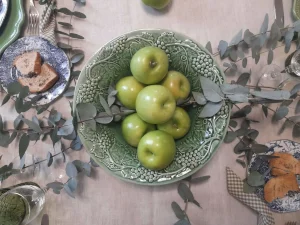
This table demonstrates that principle particularly well.
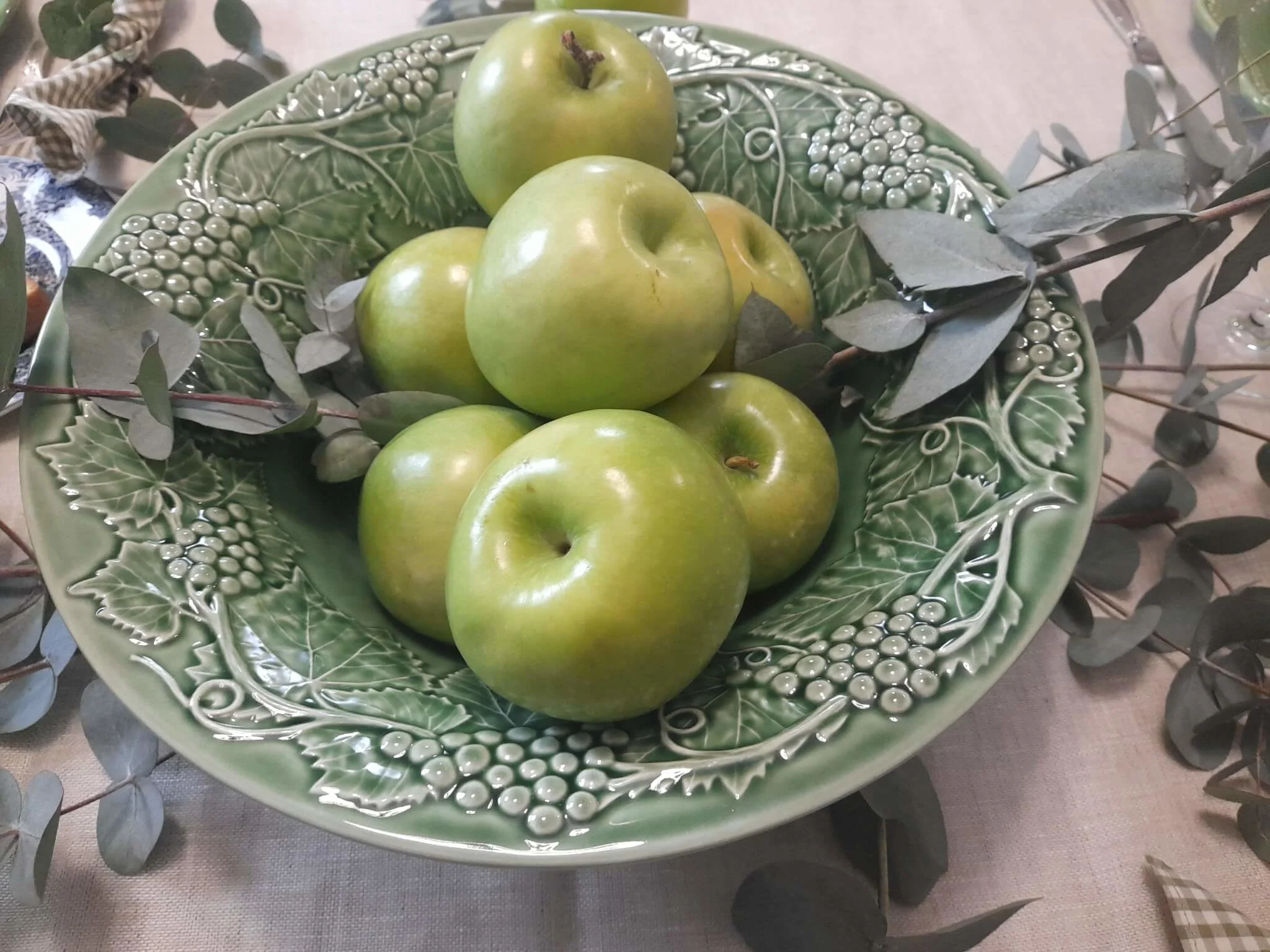
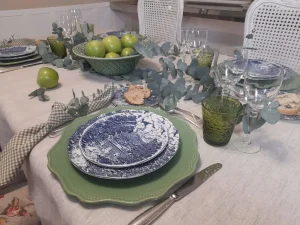
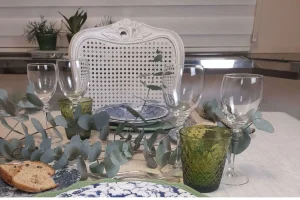
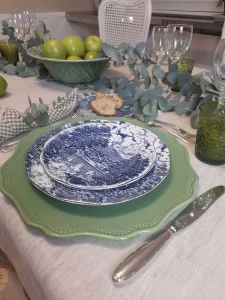
Silver flatware introduces formality. English dinnerware adds tradition. Green apples and eucalyptus introduce freshness. Textured green glassware prevents the composition from feeling overly serious.
Each piece contributes something different, but none dominates the scene.
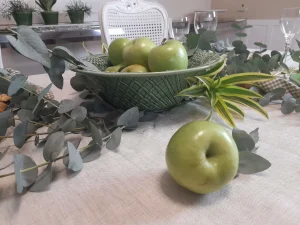
A balanced table composition combines colors, materials, and decorative elements in a way that feels visually harmonious without appearing overly styled.
Why Contrast Creates Better Table Settings
One of the reasons this table feels successful is the contrast between formal and informal elements.
The silver flatware immediately communicates elegance.
The English dinnerware reinforces that sense of tradition.
At the same time, the centerpiece introduces a completely different energy. Green apples feel relaxed and organic. Eucalyptus adds movement and softness.
Without these natural elements, the table could easily feel too formal.
Without the silver and porcelain, it could feel too casual.
Together, they create a composition that feels approachable and refined at the same time.
The Role of Silver Flatware in Table Styling
Silver flatware has a unique ability to elevate a table instantly.
Unlike highly decorative accessories, silver contributes elegance in a quieter way.
Its reflective surface interacts with light throughout the meal, adding depth and subtle movement to the composition.
Silver also pairs surprisingly well with natural materials.
Wood, linen, fruit, greenery, and textured ceramics all tend to soften its formal appearance.
This flexibility explains why silver remains relevant across both traditional and contemporary table settings.
How Natural Elements Prevent Formality
One of the most effective styling techniques is introducing something living into the composition.
Flowers often serve this purpose, but fruit and greenery can be equally powerful.
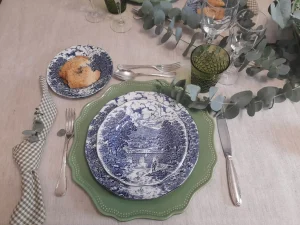
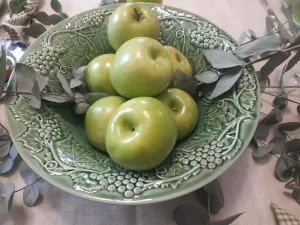
The green apples in this arrangement provide color, texture, and visual rhythm.
The eucalyptus contributes movement through its organic shape.
Together they create a centerpiece that feels relaxed rather than ceremonial.
This is particularly important for tables intended for real meals rather than formal events.
The setting remains beautiful while still feeling comfortable to use.
Why Green Glassware Changes the Mood of the Table
At first glance, the green textured glassware may seem like a small detail.
In reality, it plays a critical role.
The table already contains porcelain, silver, and crystal. Without a contrasting element, the overall mood could become overly traditional.
The green glassware introduces a more contemporary note.
It also repeats the color of the apples and eucalyptus, helping create visual continuity across the table.
Small details like this often have a greater impact than larger decorative pieces.
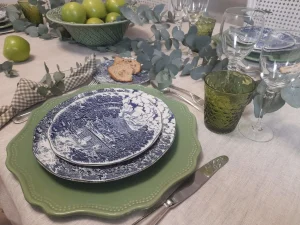
Textured-green-Balloton-glassware-adding-color-and-depth-to-an-elegant-table-setting-
Mixing Different Design Traditions Successfully
Many homeowners worry about mixing styles.
Yet some of the most interesting tables are built from pieces that originate from different traditions.
This table combines:
- English dinnerware
- Portuguese craftsmanship
- Italian glassware
- Natural botanical elements
The combination works because the materials share a similar visual language.
Nothing feels disconnected.
Instead of looking curated from a single collection, the table feels assembled gradually over time.
That sense of evolution often creates a more authentic atmosphere.
The Importance of Repeating Colors
Color repetition is one of the simplest ways to create balance.
Notice how green appears throughout the table:
- Green apples
- Eucalyptus
- Green glassware
This repetition guides the eye naturally across the composition.
The same principle can be applied to virtually any table setting.
Repeating a color three or four times often creates more harmony than introducing multiple unrelated colors.
The result feels calmer and easier to understand visually.
Why Empty Space Is Part of the Design
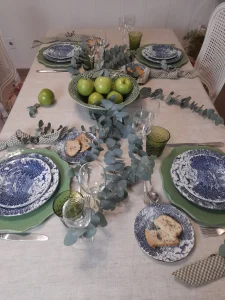
One of the most common styling mistakes is adding too much.
When every available surface is filled, individual objects lose their impact.
This table benefits from restraint.
The centerpiece is substantial enough to create interest, but it leaves room for the place settings to breathe.
The open areas allow guests to focus on the materials, textures, and details that make the composition special.
In many cases, elegance comes not from what is added but from what is intentionally left out.
What This Table Teaches About Everyday Entertaining
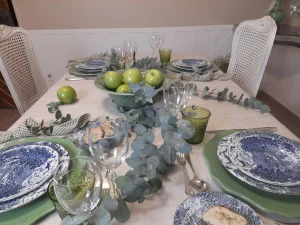
Perhaps the most useful lesson from this composition is that elegance does not require perfection.
The table feels sophisticated because of thoughtful relationships between elements.
The silver interacts with the crystal.
The apples interact with the glassware.
The eucalyptus softens the structure created by the porcelain.
Nothing feels forced.
This approach is often easier to recreate than highly styled tables built around expensive decorative accessories.
The emphasis shifts from purchasing more items to arranging existing pieces more intentionally.
Frequently Asked Questions
What is a balanced table composition?
A balanced table composition is a table setting where colors, materials, textures, and decorative elements work together harmoniously without any single feature dominating the design.
How do you make a formal table feel less intimidating?
Natural elements such as fruit, greenery, herbs, and textured materials help soften the formality of silver, porcelain, and crystal.
Does everything need to match in a table setting?
No. Many of the most successful table settings combine different materials and styles. The key is creating visual connections through color, texture, or proportion.
Can silver flatware work in casual dining?
Yes. Silver flatware pairs beautifully with natural elements and relaxed styling, making it suitable for both formal and everyday dining.
What colors create balance in a table setting?
Colors inspired by nature, including green, blue, cream, and soft neutrals, often create a calm and balanced appearance.
Conclusion
A balanced table composition is not about strict symmetry or perfectly matched collections. It is about creating relationships between materials, colors, and textures that feel natural together.
In this setting, silver flatware, English dinnerware, crystal, green apples, eucalyptus, and textured glassware each contribute something unique. The result is a table that feels elegant without becoming formal and refined without losing warmth.
That balance is often what transforms a beautiful table into one people genuinely enjoy gathering around.
You May Also Like
- Table Details That Change the Whole Atmosphere (#182)
- Secret to Elegant Dining: Why Simplicity Often Works Best (#180)
- Casual Elegant Table Styling Ideas for Everyday Living (#189)