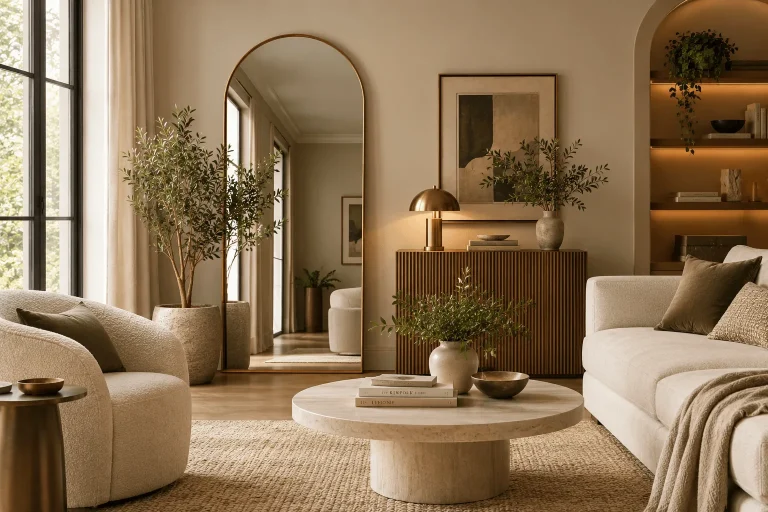
• A bedroom layout works best when movement feels natural before decoration is added.
• Comfort usually improves when furniture placement supports rest, circulation, and visual calm.
A bedroom rarely feels comfortable because of furniture alone.
The way each piece relates to space often matters more than the furniture itself.
A beautiful bed, elegant nightstands, or carefully chosen textiles can still feel wrong if circulation becomes restricted or visual balance remains unresolved.
That is why bedroom layout ideas often determine comfort more deeply than decoration.
The first impression of a bedroom usually happens through movement.
When entering the room, the eye immediately reads where the bed sits, how open the floor remains, and whether furniture feels naturally positioned.
This reading happens before any decorative detail is consciously noticed.
A practical bedroom layout therefore begins with space behavior.
The room should allow movement without interruption.
That movement influences how the room feels emotionally.
A room with easy circulation tends to feel calmer because nothing visually resists daily routine.
This matters especially because bedrooms are used during transitions: waking up, dressing, reading, resting, and preparing to sleep.
Each of those moments depends on comfort that comes from layout decisions.
A comfortable bedroom arrangement does not necessarily require a large room.
Even smaller bedrooms improve significantly when furniture follows clear proportions.
The strongest layouts usually remove unnecessary tension rather than add more elements.
Often, moving one piece changes the entire perception of comfort.
That is why functional bedroom design starts by understanding what the room already offers before introducing new visual ambitions.
Why Bed Placement Defines the Entire Room
The bed naturally becomes the visual anchor.
Everything else responds to its position.
When the bed sits well, the room immediately gains orientation.
When bed placement feels uncertain, even good furniture struggles to create comfort.
Most bedroom layout ideas begin by identifying the strongest wall.
Usually this is the wall that allows visual stability without blocking windows, doors, or circulation.
A centered bed often creates immediate symmetry, but symmetry is only useful when circulation remains practical.
A centered bed that leaves one side compressed can create discomfort despite visual order.
That is why bed placement ideas must always be tested against movement.
The room should allow easy access from both sides whenever possible.
This improves daily routine naturally.
The bed also affects psychological comfort.
A stable headboard wall often helps the room feel secure because the bed appears anchored.
Beds placed awkwardly near circulation paths may feel visually unstable even when technically functional.
Comfort improves when the bed feels clearly positioned rather than accidentally placed.

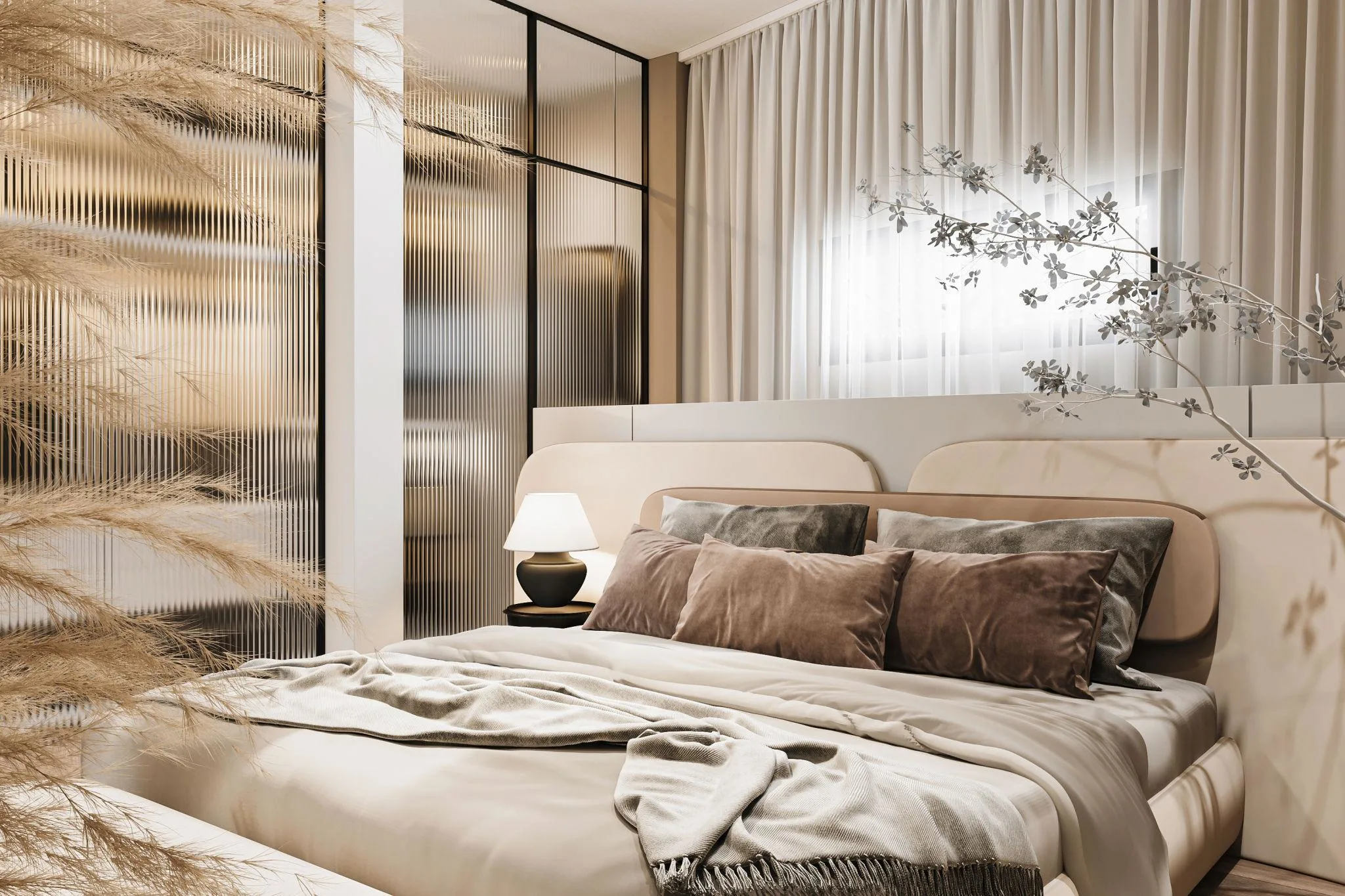
Bedroom-with-bed-positioned-on-the-main-wall-creating-visual-balance-and-a-strong-focal-point.
Why Clear Circulation Changes Bedroom Comfort
Circulation is often underestimated.
Yet bedroom comfort depends heavily on how easily people move around furniture.
A room may contain beautiful elements and still feel tiring if circulation becomes narrow.
The path from door to bed should remain natural.
The same applies to wardrobe access, windows, and side tables.
A practical bedroom layout avoids forcing diagonal movement when straight movement is possible.
This helps the room feel larger even without changing dimensions.
Clear circulation also improves visual calm.
When furniture does not interrupt movement, the room feels lighter.
That is why many comfortable bedrooms appear simpler than expected.
They are not empty.
They simply avoid unnecessary interruption.
Bedroom circulation becomes especially important in smaller spaces.
Even a few centimeters recovered between furniture pieces can change comfort considerably.
Small bedroom layout ideas often succeed precisely because circulation receives priority before decorative layering.
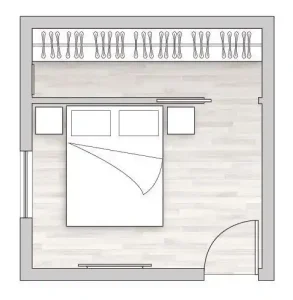
Bedroom-layout-with-clear-walking-paths-around-the-bed-and-unobstructed-circulation
Why Furniture Scale Matters More Than Quantity
Comfort often suffers when furniture exceeds room proportion.
A large bed combined with oversized nightstands and deep storage pieces can visually compress the room.
This creates weight even when each object is attractive individually.
Bedroom furniture layout improves when scale remains coherent.
The bed should dominate naturally, but surrounding pieces should support rather than compete.
Slim nightstands often improve movement more than wide ones.
Lower dressers frequently preserve visual openness better than tall bulky units.
Functional bedroom design depends on choosing pieces that allow breathing space around the bed.
This space matters visually and physically.
When furniture scale fits correctly, the room immediately feels more balanced.
That balance often creates comfort faster than decorative changes.
Why Windows Should Influence Furniture Position
Natural light changes how a bedroom feels throughout the day.
That is why layout decisions should respect window behavior.
Blocking windows partially with heavy furniture often weakens both light and visual rhythm.
A bed directly under a window can work in some rooms, but only when proportions remain balanced and light does not create discomfort.
Often, placing secondary furniture near windows works better than placing the bed there.
Dressers, benches, or reading chairs frequently integrate more naturally beside natural light.
Bedroom positioning ideas improve when windows remain visually active.
The room feels more breathable.
Comfort also improves because daylight distribution remains even.
A room with balanced light often feels larger and calmer without any decorative intervention.

Why Nightstand Balance Improves Everyday Use
Nightstands seem secondary, yet they strongly influence practical comfort.
They define how the bed relates to surrounding space.
When one side feels heavier than the other, the room may subtly lose balance.
This does not mean both sides must match perfectly.
But visual weight should remain coherent.
Two similar heights often help even when materials differ.
Bedroom layout ideas frequently improve when nightstands stay proportional to bed width.
Too small, and they appear visually lost.
Too large, and they compress side circulation.
Comfort also depends on reach.
Nightstands should support daily habits naturally: books, lighting, personal objects, water, charging points.
A practical layout considers those uses before visual styling.
Why Empty Space Around the Bed Is Part of Comfort
Many people focus only on furniture placement and forget that empty space is active.
The area around the bed determines how restful the room feels.
A crowded bed perimeter creates visual pressure.
Even beautiful rooms lose calm when the bed appears trapped.
Comfortable bedroom arrangement depends on preserving enough space for movement and visual pause.
This empty area helps the bed remain visually central.
It also improves morning and evening routine.
The room becomes easier to inhabit naturally.
That is why practical layouts often remove one unnecessary piece rather than adding more decoration.
The absence improves function.

Minimal-bedroom-with-generous-open-floor-space-surrounding-the-bed-for-a-calm-and-comfortable-atmosphere
Why Small Bedrooms Need Stronger Priorities
Small rooms require more selective decisions.
Every piece must justify its presence.
Small bedroom layout ideas work best when one priority leads the room clearly.
Usually that priority is the bed.
Secondary furniture then adapts around it.
Trying to include too many storage pieces often damages comfort.
Instead, fewer better-positioned elements usually perform more effectively.
A compact bench, narrow nightstand, or wall-mounted lighting often preserves circulation better than larger conventional solutions.
Small rooms benefit from vertical thinking, but floor space must remain readable.
The stronger the floor remains visible, the larger the room feels.
Why Visual Alignment Makes Bedrooms Feel More Restful
Alignment creates calm.
When furniture edges relate naturally to one another, the room feels intentional.
This does not require strict symmetry.
It means visual lines should make sense.
A dresser aligned with bed width often feels stronger than one placed arbitrarily.
A chair positioned to follow window direction often integrates better than one placed independently.
Bedroom layout comfort often improves through these subtle visual relationships.
The eye reads coherence quickly.
That coherence lowers visual noise.
And reduced visual noise often supports rest more effectively than decoration itself.
Why Layout Should Support Real Daily Habits
A bedroom that looks correct but ignores routine eventually becomes uncomfortable.
The layout should respond to how the room is actually used.
Some people read in bed.
Others dress near windows.
Some need clearer wardrobe access early in the morning.
Bedroom layout ideas only become successful when daily habits shape positioning decisions.
This is why no universal formula fully replaces observation.
The strongest layouts emerge when function reveals what should remain close, open, or visually quiet.
Why Comfort Usually Appears Before Decoration
A bedroom feels complete when layout already works before textiles, artwork, or decorative layers arrive.
Decoration strengthens comfort, but rarely creates it alone.
When the room already supports movement, proportion, and light, visual additions become easier.
That order matters.
Comfort begins with how the room behaves.
Everything else becomes enhancement.
Why Bedroom Layout Often Improves After Removing One Unnecessary Piece
A common mistake in bedroom planning is assuming that comfort improves when more furniture is added.
In many rooms, the opposite happens.
The layout often becomes stronger after one unnecessary piece is removed.
A chair that receives clothes but blocks circulation, a bench that narrows the bed perimeter, or an oversized side table can gradually create visual and physical pressure.
These pieces may seem harmless individually, yet together they change how the room behaves.
A practical bedroom layout becomes easier to understand when each object has clear purpose.
This is especially important because bedrooms are visually sensitive spaces.
Unlike living areas, where multiple functions naturally coexist, bedrooms usually benefit from fewer competing elements.
The room should immediately communicate rest.
When too many secondary objects remain visible, that visual message weakens.
Removing one object often restores proportion more effectively than adding decorative corrections.
This also improves furniture relationships.
When there is more breathing room around the bed, surrounding pieces suddenly feel more balanced.
The bed regains visual authority, which is important because it should remain the natural center of the room.
The same principle helps smaller rooms significantly.
In compact spaces, every removed obstacle improves circulation immediately.
Even a narrow floor area beside the bed can feel generous when visual interruptions decrease.
This is why many small bedroom layout ideas rely less on creative additions and more on disciplined editing.
A room with fewer objects often allows stronger furniture choices to stand out.
Another important benefit appears in daily routine.
When less furniture competes for floor space, cleaning becomes easier, movement becomes quieter, and the room tends to remain organized longer.
That practical effect influences comfort more than many decorative interventions.
The room begins to support daily rhythm naturally.
Removing furniture does not mean removing character.
It means allowing the most important pieces to define the atmosphere more clearly.
A well positioned bed, balanced nightstands, and one properly scaled storage piece often create more visual maturity than a room filled with secondary items.
The strongest bedroom layouts frequently look calm because visual decisions were reduced before decoration began.
That restraint usually creates long term comfort.
Why Layout Should Also Consider How the Room Feels at Night
Many layout decisions are made during daylight, but bedrooms are experienced heavily at night.
This changes how comfort should be evaluated.
A layout that seems correct during the day may feel less comfortable once artificial lighting becomes the dominant source.
For example, circulation paths should remain intuitive when light is softer.
Nightstands need enough surface to support practical evening use.
Switch access, reading light position, and bed approach all matter more after dark.
Comfort at night often depends on details that seem minor during daytime observation.
The relationship between bed and door also becomes more noticeable in evening conditions.
A bed placed where the door feels visually intrusive can subtly reduce restfulness.
On the other hand, a bed positioned with clear visual control of the room often creates stronger psychological comfort.
Bedrooms work best when nighttime experience receives equal attention.
Because rest happens in lower light, the room should feel easy to read even when visual information decreases.
That often means preserving clear edges, reducing clutter, and avoiding furniture that creates awkward shadows or movement barriers.
A comfortable bedroom is not only visually balanced in daylight.
It also remains calm, legible, and intuitive when the room quiets down at the end of the day.
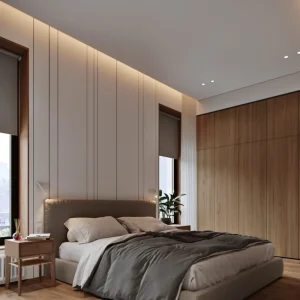
Comfortable-bedroom-with-soft-evening-lighting-balanced-furniture-placement-and-a-restful-atmosphere
Explore More Bedroom Guides
If you want to refine bed positioning further, How to Make a Bedroom Feel More Expensive expands how visual proportion changes perception.
For readers focused on atmosphere, Bedroom Decor Ideas That Feel Calm and Intentional shows how layout and decoration reinforce each other.
You may also like reading the next article in this bedroom series as the cluster continues through practical comfort, visual calm, and long term usability.