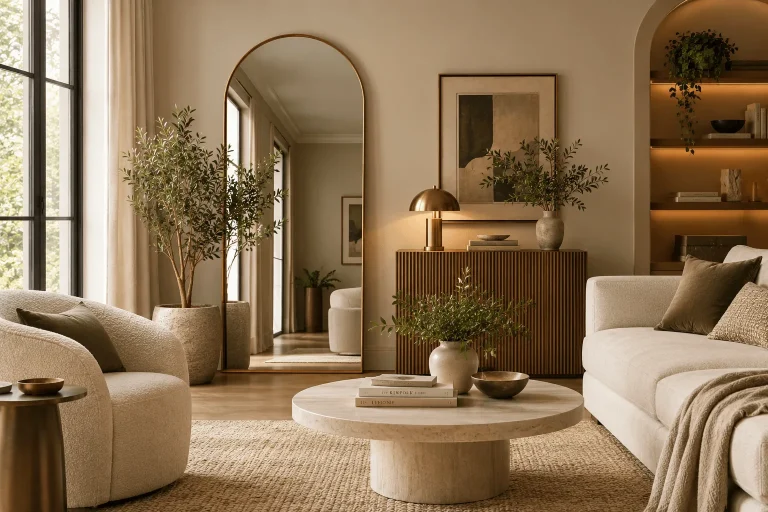
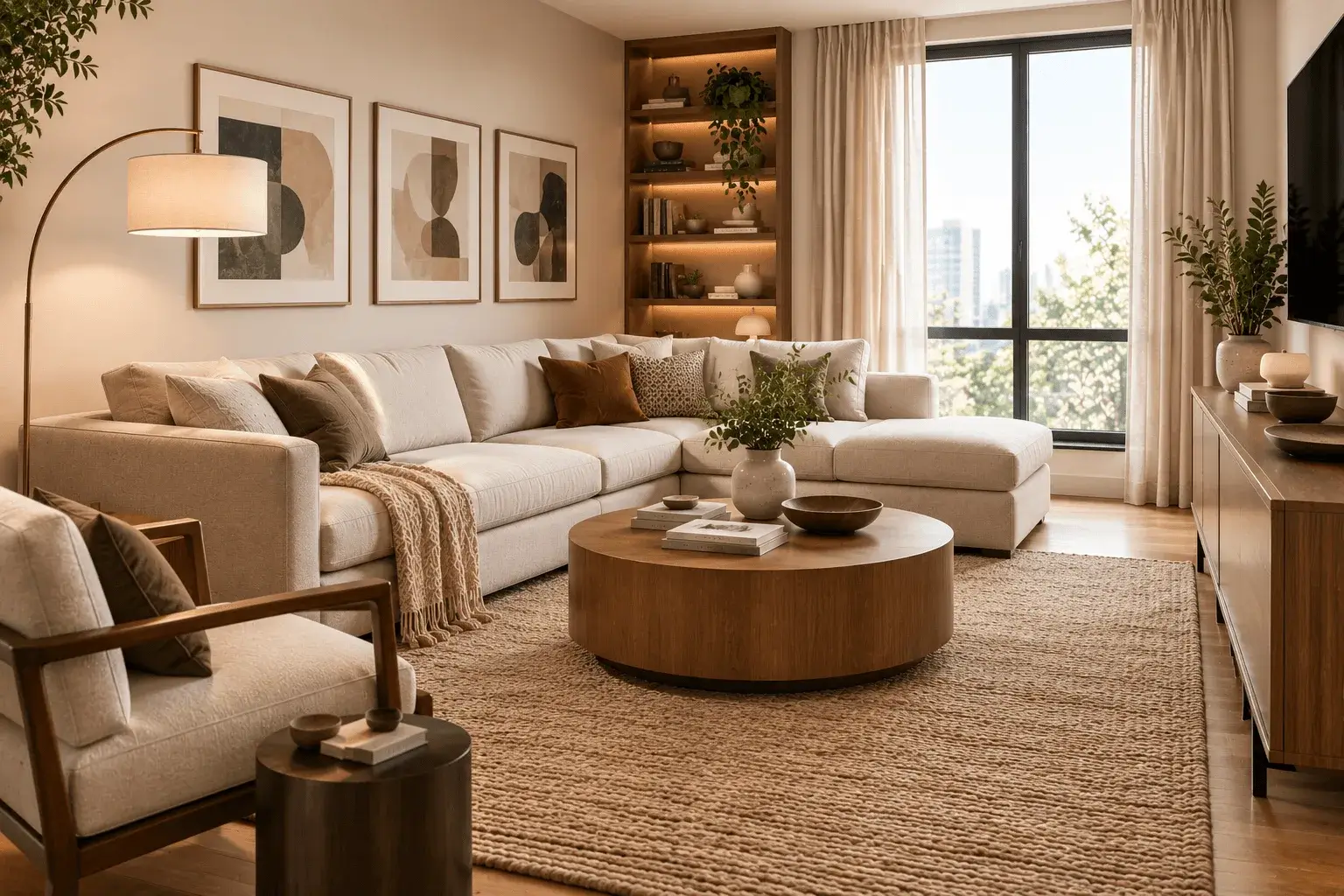
Choosing a sofa is often one of the biggest decorating decisions people make, yet many homeowners focus on color or style before considering size. While appearance certainly matters, the dimensions of a sofa influence how a living room feels, functions and flows every single day.
A sofa that is too large can overwhelm the room, limit circulation and make everyday activities feel uncomfortable. One that is too small may leave the space feeling incomplete while offering less seating than the household actually needs.
Finding the right balance is less about following standard measurements and more about understanding how the room will be used over time.
In this sofa size guide, you’ll discover how to choose dimensions that improve comfort, create better proportions and support everyday living without sacrificing style.
Key Takeaways
- Choosing the right sofa size improves comfort, circulation and the overall balance of the room.
- Room proportions, traffic flow and daily routines are more important than simply choosing the biggest sofa available.
A well-sized sofa becomes the foundation of the living room. Once its proportions feel right, arranging the rest of the furniture becomes much easier and the entire space feels naturally more comfortable.
Why Sofa Size Matters More Than Most People Realize
Many people assume that sofa shopping begins by selecting a favorite design.
In reality, size should almost always come first.
Because the sofa is typically the largest piece of furniture in the living room, it establishes the visual scale for everything around it. Coffee tables, side tables, accent chairs, rugs and lighting all relate to its dimensions.
An oversized sofa can dominate the room, making circulation difficult and leaving little space for additional furniture.
A sofa that feels too small may have the opposite effect. Even in a beautifully decorated room, it can make the seating area appear disconnected and less inviting.
The most successful living rooms achieve a sense of balance where furniture feels appropriately scaled to both the room and the people using it every day.
Good proportions make a room feel comfortable long before anyone notices individual decorative details.
Measure the Room Before Measuring the Sofa
One of the most common mistakes homeowners make is shopping for a sofa before understanding the room itself.
While it is tempting to fall in love with a particular design in a showroom, that sofa may feel completely different once placed inside a living room with existing furniture, windows and walkways.
Start by measuring the available floor space rather than focusing on the wall where the sofa will sit.
Consider nearby doorways, fireplaces, windows and architectural features that influence furniture placement.
It also helps to think beyond the sofa itself.
A comfortable seating area usually includes side tables, a coffee table, lighting and enough space for people to move naturally through the room.
Leaving room for these elements from the beginning prevents the space from feeling overcrowded later.
If possible, use painter’s tape on the floor to outline the sofa’s dimensions.
Walking around the taped area often reveals whether circulation feels comfortable before making a purchase.
This simple step can prevent costly mistakes while making it much easier to visualize how the finished room will function.
How Much Space Should You Leave Around a Sofa?
Comfort depends not only on the size of the sofa but also on the space surrounding it.
Even a perfectly sized sofa can feel overwhelming if there is not enough room to move comfortably.
As a general principle, pathways should remain open so people can walk naturally without constantly navigating around furniture.
Coffee tables should be positioned close enough to remain functional while still allowing easy access to seating.
Side tables should support convenience without crowding the seating arrangement.
Maintaining generous circulation also helps a room feel larger than its actual dimensions.
Instead of filling every available inch with furniture, leaving intentional empty space allows the room to breathe.
This visual openness contributes just as much to comfort as the furniture itself.
As discussed in Living Room Layout Guide, circulation is one of the strongest indicators of a well-planned living room.
Rooms that feel effortless to move through generally become more enjoyable to use every day.
Standard Sofa Sizes Explained
Although manufacturers vary slightly, most sofas fall within a few common size categories.
Understanding these general dimensions makes it easier to compare models while planning the rest of the room.
| Sofa Type | Typical Width | Best For |
|---|---|---|
| Loveseat | 48–72 inches | Small apartments, reading corners and compact living rooms |
| Three-seat sofa | 72–90 inches | Most family living rooms and everyday seating |
| Four-seat sofa | 90–108 inches | Larger rooms with generous circulation space |
| Sectional sofa | Varies widely | Open layouts, large families and flexible seating arrangements |
These measurements should always be treated as general references rather than fixed rules.
Arm styles, cushion depth and overall proportions vary considerably between manufacturers.
A sofa with slim arms may provide significantly more seating than another model with the same overall width.
Likewise, deeper cushions often increase comfort for lounging while requiring additional floor space.
Looking beyond the overall dimensions helps homeowners select furniture that better matches both the room and their preferred way of relaxing.
Choosing the Right Sofa Size for Small Living Rooms
Small living rooms require thoughtful planning, but they do not necessarily require tiny furniture.
Many homeowners assume that choosing the smallest sofa available will automatically make the room feel larger.
In practice, proportion matters far more than absolute size.
A compact three-seat sofa with clean lines may create a more balanced appearance than an oversized loveseat with bulky arms and deep cushions.
Furniture with visible legs often contributes to a lighter visual impression because more floor remains visible beneath it.
Slim arms also maximize seating without increasing the sofa’s overall footprint.
When space is limited, every inch should serve a purpose.
Instead of adding several small seating pieces that interrupt circulation, a well-proportioned sofa paired with one or two flexible accent chairs often creates a more comfortable arrangement.
Keeping nearby furniture visually light also helps preserve openness.
Glass coffee tables, nesting tables or slim side tables can complement the seating area without making the room feel crowded.
Many of these strategies work alongside the ideas discussed in Small Living Room Decor Ideas, where furniture placement and visual balance play equally important roles.
Large Living Rooms Need Balance Too
Large living rooms present a different challenge.
Instead of feeling crowded, they can easily feel empty if the furniture is undersized.
A sofa that appears perfectly proportioned in a showroom may seem surprisingly small once placed inside an expansive room with high ceilings and generous floor space.
Rather than pushing all furniture against the walls, consider creating a defined conversation area.
Allow the sofa to anchor the seating arrangement while accent chairs, rugs and occasional tables help establish a comfortable gathering space.
In larger rooms, floating the sofa away from the wall often improves both function and appearance.
This approach creates more intentional zones while making the room feel cohesive instead of scattered.
Multiple seating areas can also work well when the room serves different purposes, such as entertaining guests, reading or watching television.
The goal is not to fill every corner but to maintain visual balance throughout the space.
Sectional vs Standard Sofa
One of the biggest decisions homeowners face involves choosing between a traditional sofa and a sectional.
Neither option is universally better.
The right choice depends on how the room functions and how the household uses the space.
A standard sofa offers greater flexibility.
It can be rearranged more easily, paired with accent chairs and adapted as decorating styles change over time.
For homeowners who enjoy updating their layouts periodically, this flexibility can be a significant advantage.
Sectionals provide generous seating while defining the living area naturally.
They work particularly well in open-concept homes where the seating arrangement also helps separate different functional zones.
Families who regularly gather to watch movies or entertain guests often appreciate the additional seating without needing multiple individual chairs.
However, sectionals require careful planning.
Because of their size, they are more difficult to relocate and may limit future furniture arrangements.
Thinking about long-term flexibility is just as important as considering immediate comfort.
This comparison serves as an introduction to Is a Sectional Sofa Worth It for Everyday Living?, where the advantages and tradeoffs are explored in greater depth.
How Sofa Size Affects Visual Balance
A sofa influences much more than seating capacity.
Its dimensions shape the entire visual composition of the living room.
An oversized sofa may make nearby furniture appear too small, while an undersized model can leave the room feeling disconnected.
Visual balance comes from the relationship between all major elements rather than from any single piece.
The rug should feel proportional to the seating area.
Coffee tables should neither dominate nor disappear.
Side tables should complement the sofa without competing for attention.
Artwork and lighting should reinforce the scale established by the furniture.
Even ceiling height can influence how substantial a sofa appears within the room.
Rooms with taller ceilings often accommodate larger furniture comfortably because the vertical proportions remain balanced.
As explored in Living Room Layout Guide, successful interiors rely on harmony between furniture, circulation and architectural features instead of focusing on individual pieces in isolation.
When every element feels appropriately scaled, the room naturally becomes more inviting and easier to enjoy every day.
Living With the Right Sofa Size
The right sofa size often disappears into the background, and that is precisely the point.
Instead of dominating the room or making movement difficult, it quietly supports everyday life. Family members can walk comfortably around it, conversations feel more natural, and the room remains flexible enough for relaxing, entertaining or simply enjoying a quiet evening.
Over time, homeowners rarely remember the exact dimensions they chose.
What they notice is how comfortable the room feels to use every single day.
A sofa that fits the proportions of the space continues to perform well long after decorating trends have changed, making it one of the most valuable long-term furniture decisions.
Practical Checklist Before Choosing a Sofa Size
✓ Measure the room before shopping.
✓ Leave comfortable walkways around the sofa.
✓ Consider how many people use the space every day.
✓ Think about traffic flow, not only seating capacity.
✓ Match the sofa scale to nearby furniture.
✓ Test seat depth and seat height whenever possible.
✓ Allow space for side tables and lighting.
✓ Consider future furniture additions.
✓ Choose proportions that support daily comfort.
✓ Prioritize function before appearance.
You May Also Like
Beige Sofa Living Room Ideas
Discover how a beige sofa creates a versatile foundation for different decorating styles.
Is a Sectional Sofa Worth It for Everyday Living?
Learn when a sectional improves comfort and when a traditional sofa may be the better choice.
Living Room Layout Guide: Creating Better Flow and Everyday Comfort
See how furniture placement and circulation work together to create a more comfortable living room.
Conclusion
Choosing the right sofa size is about much more than fitting furniture inside a room. It is about creating comfortable circulation, balanced proportions and seating that supports the way people actually live.
By measuring carefully, understanding everyday routines and considering the relationship between the sofa and the surrounding furniture, homeowners can create living rooms that feel both practical and inviting. The right sofa size guide helps transform what could be an expensive mistake into a long-term investment in comfort and functionality.
Take Away
• Measure the room before choosing a sofa.
• Prioritize circulation as much as seating.
• Match sofa proportions to the scale of the room.
• Consider future furniture and layout flexibility.
• A well-sized sofa improves comfort for years.
Frequently Asked Questions
What is the best sofa size guide for a living room?
A sofa size guide helps homeowners choose dimensions that fit the room comfortably while maintaining good circulation and balanced proportions.
How much space should I leave around a sofa?
Most living rooms benefit from leaving comfortable walking paths around the sofa so movement feels natural and the space does not become crowded.
Is a bigger sofa always better?
No. A larger sofa can overwhelm the room if it restricts circulation or dominates the layout. The best size depends on the room’s dimensions and everyday needs.
How do I know if a sofa is too large?
If the sofa blocks walkways, limits furniture placement or makes the room feel cramped, it is probably larger than the space comfortably supports.
Should I choose a sectional or a standard sofa?
That depends on how the room is used. Sectionals work well for larger seating needs, while standard sofas often provide greater flexibility in smaller or multi-purpose living rooms.